Logo

Log In Sign Up |  An official publication of: American College of Emergency Physicians
Navigation
  • Home
  • Multimedia
    • Podcasts
    • Videos
  • Clinical
    • Airway Managment
    • Case Reports
    • Critical Care
    • Guidelines
    • Imaging & Ultrasound
    • Pain & Palliative Care
    • Pediatrics
    • Resuscitation
    • Trauma & Injury
  • Resource Centers
    • mTBI Resource Center
  • Career
    • Practice Management
      • Benchmarking
      • Reimbursement & Coding
      • Care Team
      • Legal
      • Operations
      • Quality & Safety
    • Awards
    • Certification
    • Compensation
    • Early Career
    • Education
    • Leadership
    • Profiles
    • Retirement
    • Work-Life Balance
  • Columns
    • ACEP4U
    • Airway
    • Benchmarking
    • Brief19
    • By the Numbers
    • Coding Wizard
    • EM Cases
    • End of the Rainbow
    • Equity Equation
    • FACEPs in the Crowd
    • Forensic Facts
    • From the College
    • Images in EM
    • Kids Korner
    • Medicolegal Mind
    • Opinion
      • Break Room
      • New Spin
      • Pro-Con
    • Pearls From EM Literature
    • Policy Rx
    • Practice Changers
    • Problem Solvers
    • Residency Spotlight
    • Resident Voice
    • Skeptics’ Guide to Emergency Medicine
    • Sound Advice
    • Special OPs
    • Toxicology Q&A
    • WorldTravelERs
  • Resources
    • ACEP.org
    • ACEP Knowledge Quiz
    • Issue Archives
    • CME Now
    • Annual Scientific Assembly
      • ACEP14
      • ACEP15
      • ACEP16
      • ACEP17
      • ACEP18
      • ACEP19
    • Annals of Emergency Medicine
    • JACEP Open
    • Emergency Medicine Foundation
  • About
    • Our Mission
    • Medical Editor in Chief
    • Editorial Advisory Board
    • Awards
    • Authors
    • Article Submission
    • Contact Us
    • Advertise
    • Subscribe
    • Privacy Policy
    • Copyright Information

Highlights from the ACEP17 Research Forum

By Alexander T. Limkakeng, Jr., MD, MHSc, FACEP; and Joseph S. Piktel, MD, FACEP | on April 13, 2018 | 0 Comment
ACEP17 Features
  • Tweet
  • Click to email a link to a friend (Opens in new window) Email
Print-Friendly Version
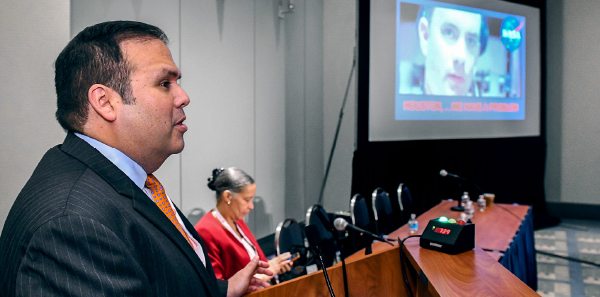
Presenters at the ACEP17 Research Forum.

We’ve all seen this patient: past medical history of congestive heart failure (CHF) and creatinine of 5.6 who presents in septic shock. The much-discussed SEP-1 quality metric mandates an intravenous fluid bolus (30 ml/kg), but clinicians fear causing pulmonary edema, leading to a need for intubation. These two abstracts look at institutional databases and found that even in patients with CHF and end-stage renal disease (ESRD), following SEP-1 decreased mortality. Furthermore, there was no increase in intubation in septic patients with CHF and ESRD when clinicians followed SEP-1.

You Might Also Like
  • ACEP17 Research Forum Events Happening Sunday
  • ACEP17 Research Forum Events Happening Monday
  • ACEP17 Research Forum Events Happening Tuesday
Explore This Issue
ACEP Now: Vol 37 – No 04 – April 2018

While noting, once again, the caveat of observational data and likely inclusion bias, this still provides some reassurance to providers caring for septic patients with CHF or ESRD.

Figure 1: Visit rates to acute care venues for all conditions, 2008–2015. ED=emergency department; UC=urgent care; RC=retail clinics; Tele=telehealth.

Figure 1: Visit rates to acute care venues for all conditions, 2008–2015. ED=emergency department; UC=urgent care; RC=retail clinics; Tele=telehealth.
Ann Emerg Med. 2017;70(4 suppl):S69.

A Randomized Study of Naproxen Plus Placebo, Orphenadrine, or Methocarbamol for Acute Low Back Pain

Friedman BW, Irizarry, E, Solorzano, C, et al

Back pain continues to be a common reason for ED visits, and Dr. Friedman and colleagues continue to search for effective treatments. This double-blind trial randomized patients to receive naproxen plus a one-week supply of either orphenadrine (Norflex) 100mg, methocarbamol (Robaxin) 750mg, or placebo. Unfortunately, 34 percent of naproxen+placebo patients reported moderate or severe low back pain versus 33 percent of naproxen+orphenadrine and 39 percent of naproxen+ methocarbamol patients. This study reinforces an approach that emphasizes nonsteroidal anti-inflammatory drugs and education for patients with musculoskeletal back pain.

Do Intranasal Vasoconstrictors Increase Blood Pressure?

Bellew SD, Johnson KL, Kummer T

This study calls to mind another common ED scenario: the epistaxis patient with severe hypertension. In this elegant randomized, double-blinded, placebo-controlled trial, a convenience sample of patients was assigned to one of four arms: phenylephrine 0.25%, oxymetazoline 0.05%, lidocaine 1% with epinephrine 1:100,000, or bacteriostatic 0.9% sodium chloride in cotton soaked nasal pledgets. They did not find any changes in blood pressure over the 30 minutes after drug administration between any of the arms. This suggests that vasoconstrictors cause minimal acute blood pressure changes when applied nasally via soaked pledgets.

High Sensitivity Troponin T (hsTnT) Identifies Patients at Very Low Risk of Adverse Events

Peacock WF, Baumann B.M, Bruton D, et al

There has been much literature published on the utility of high-sensitivity troponin assays. This study reports on their use in an American cohort. This Roche-funded study examined a three-hour protocol in 1,264 ED patients suspected of having acute coronary syndrome, finding that in the 974 (77.1 percent) patients with both a zero- and three-hour hsTnT<19 ng/L a 30-day adverse cardiac event occurred in seven patients for a negative predictive value of 99.3 percent (95 percent CI, 99.05–99.55).

Telehealth for Low-acuity EMS: One Fire-based System Experience with 10,000 Patients

Gonzalez MG, Persse DE, Gleisberg GR, et al

Telemedicine in the Emergency Department: A Novel, Academic Approach to Optimizing Operational Metrics and Patient Experience

Sharma R, Clark S, Torres-Lavoro J, et al

Pages: 1 2 3 | Single Page

Topics: ACEPACEP17American College of Emergency PhysiciansAnnual Scientific AssemblyAwardsclinic visit trendscongestive heart failurefirearm mortalityfirearmsGunshigh-sensitivity troponinintranasal vasoconstrictorsLow Back PainNaproxenPulmonary EmbolismRivaroxabanSEP-1Septic ShockTelemedicine

Related

  • PCC versus Andexanet Alfa for Factor Xa Reversal

    October 9, 2025 - 0 Comment
  • Case Report: Rare Pulmonary Embolism After Routine PIVC Insertion

    September 22, 2025 - 1 Comment
  • Discharge Tachycardia: Remember the Big 4 and Don’t Play with Fire

    May 8, 2025 - 2 Comments

Current Issue

ACEP Now: November 2025

Download PDF

Read More

No Responses to “Highlights from the ACEP17 Research Forum”

Leave a Reply Cancel Reply

Your email address will not be published. Required fields are marked *


*
*


Wiley
  • Home
  • About Us
  • Contact Us
  • Privacy
  • Terms of Use
  • Advertise
  • Cookie Preferences
Copyright © 2025 by John Wiley & Sons, Inc. All rights reserved, including rights for text and data mining and training of artificial technologies or similar technologies. ISSN 2333-2603
