Logo

Log In Sign Up |  An official publication of: American College of Emergency Physicians
Navigation
  • Home
  • Multimedia
    • Podcasts
    • Videos
  • Clinical
    • Airway Managment
    • Case Reports
    • Critical Care
    • Guidelines
    • Imaging & Ultrasound
    • Pain & Palliative Care
    • Pediatrics
    • Resuscitation
    • Trauma & Injury
  • Career
    • Practice Management
      • Reimbursement & Coding
      • Legal
      • Operations
    • Awards
    • Certification
    • Early Career
    • Education
    • Leadership
    • Profiles
    • Retirement
    • Work-Life Balance
  • Compensation Reports
  • Columns
    • ACEP4U
    • Airway
    • Benchmarking
    • By the Numbers
    • EM Cases
    • End of the Rainbow
    • Equity Equation
    • FACEPs in the Crowd
    • Forensic Facts
    • From the College
    • Kids Korner
    • Medicolegal Mind
    • Opinion
      • Break Room
      • New Spin
      • Pro-Con
    • Pearls From EM Literature
    • Policy Rx
    • Practice Changers
    • Problem Solvers
    • Residency Spotlight
    • Resident Voice
    • Skeptics’ Guide to Emergency Medicine
    • Sound Advice
    • Special OPs
    • Toxicology Q&A
    • WorldTravelERs
  • Resources
    • mTBI Resource Center
    • ACEP.org
    • ACEP Knowledge Quiz
    • CME Now
    • Annual Scientific Assembly
      • ACEP14
      • ACEP15
      • ACEP16
      • ACEP17
      • ACEP18
      • ACEP19
    • Annals of Emergency Medicine
    • JACEP Open
    • Emergency Medicine Foundation
  • Issue Archives
  • Archives
    • Brief19
    • Coding Wizard
    • Images in EM
    • Care Team
    • Quality & Safety
  • About
    • Our Mission
    • Medical Editor in Chief
    • Editorial Advisory Board
    • Awards
    • Authors
    • Article Submission
    • Contact Us
    • Advertise
    • Subscribe
    • Privacy Policy
    • Copyright Information

Full Circle: The Power of Long-Term Mentorship in Emergency Medicine

By Leah Enser | on February 10, 2026 | 0 Comment
Features
Share:  Print-Friendly Version

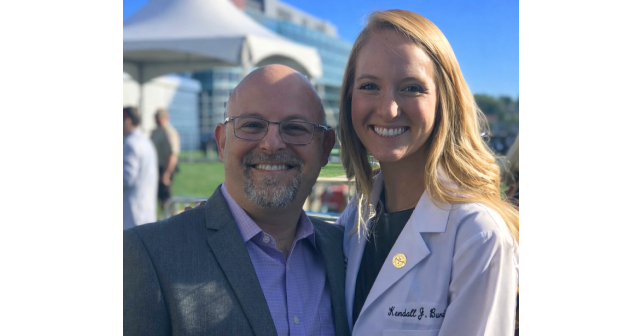
When Kendall Donohue, MD, matched into a pediatric emergency medicine fellowship, she was embarking on a path shaped over more than a decade and guided in part by Eric Fleegler, MD, MPH, a mentor who had known her family since before she was born.

You Might Also Like
  • 2020 ACEP Leadership Award Winners
  • How to Build a Community of Mentors to Support Your Career
  • Emergency Physician Parents Share How They’re Managing the COVID-19 Crisis
Explore This Issue
ACEP Now: February 2026 (Digital)

Dr. Fleegler’s connection to Dr. Donohue’s family dates to his days as a medical student at the University of Pennsylvania. His parents lived in Ambler, Pennsylvania, where they became close friends with their next-door neighbors, Dr. Donohue’s parents. After Dr. Donohue was born, she and her two brothers became regular visitors — practically family — at Dr. Fleegler’s family home.

“Kids from the neighborhood would come over to my mom’s house a lot. She was kind of in this grandmother role,” recalled Dr. Fleegler. “She had chests of toys for them, and she would make them Jell-O in the shape of race cars. Kendall and these neighborhood kids became ‘the Jell-O kids’ to us.”

Years later, while in high school, Dr. Donohue began thinking seriously about becoming a physician. She returned to her family friend Dr. Fleegler, describing her interests in medicine and science and seeking advice on what she could do next.

“He said, ‘I’m doing this research project on social medicine, and I think that would be a great opportunity for you to learn and get some experience,’” she recalled.

At the time, Dr. Fleegler was a pediatric emergency physician in Boston with a research focus on social determinants of health. That summer, Dr. Donohue joined his team working on software for longitudinal tracking of chronic disease symptoms. What began as a summer research project evolved into a long-term collaboration. Over the next decade, Dr. Fleegler and Dr. Donohue worked together as mentor and mentee, supervisor and trainee, attending and resident, and eventually research collaborators and colleagues.

“We first started working together about 12 years ago, and we’ve never actually had any period of time where we stopped working together on something,” said Dr. Fleegler.

Their story is one shaped by geography. Dr. Fleegler met Dr. Donohue because their families happened to live next door to one another. In a bit of poetic symmetry, years later, they collaborated on research using geographic information systems (GIS) to map how location shapes access to emergency care. They have now co-authored five papers together, exploring geographic inequities along with other topics including social needs screening in the emergency department, access to pediatric trauma care, and associations between historic redlining (the federal policy restricting housing and credit services by geographic area) and firearm violence.

Pages: 1 2 3 | Single Page

Topics: Career DevelopmentEducationFellowshipMentorshipPediatric Emergency MedicinePediatricsSocial Medicine

Related

  • Do Pediatric Seizures Have an Association with the Weather?

    March 10, 2026 - 0 Comment
  • Physicians in the C-Suite Still Recognize Needs of Docs in the Trenches

    March 9, 2026 - 0 Comment
  • March 2026 News from the College

    February 26, 2026 - 0 Comment

Current Issue

ACEP Now: March 2026

Download PDF

Read More

No Responses to “Full Circle: The Power of Long-Term Mentorship in Emergency Medicine”

Leave a Reply Cancel Reply

Your email address will not be published. Required fields are marked *


*
*


Wiley
  • Home
  • About Us
  • Contact Us
  • Privacy
  • Terms of Use
  • Advertise
  • Cookie Preferences
Copyright © 2026 by John Wiley & Sons, Inc. All rights reserved, including rights for text and data mining and training of artificial technologies or similar technologies. ISSN 2333-2603
