
A year ago, I had never heard of Amal Mattu. A few weeks ago, he replied to one of my Tweets. Two years ago, I had never heard of Scott Weingart. Last fall, I had breakfast with him and six other people at the ACEP Scientific Assembly in Denver. Three years ago I had never heard of Michelle Lin. Now I am an official contributor to Academic Life in EM. Right now you think you have no idea what “FOAM” is. But actually, you do.
Explore This Issue
ACEP News: Vol 32 – No 02 – February 2013Coined at the International Conference on Emergency Medicine 2012 conference in Dublin over a pint of Guinness, Free Open-Access Meducation (“FOAM”) is a new term for what is by now an “old” concept, a decade in the making: the continuously growing and updated body of practical medical knowledge – with a focus on Emergency Medicine – being shared globally online for the purpose of medical education and improving patient care. At absolutely no cost whatsoever.
At the core, FOAM is relatively easy to describe. It is composed mainly of blogs, audio and video podcasts, and Tweets. But within these categories lies a wealth of knowledge and options to explore. Blog content ranges from online journal article reviews like Ryan Radecki’s Emergency Medicine Literature of Note, in which he routinely skewers research methods in the primary literature, to Stephen Smith’s ECG blog, which uses a case-based format to teach this challenging topic expertly. Podcasts are similarly diverse, covering basic EM topics (Steve Carroll’s EM Basic), subspecialties (Mike Mallin and Matt Dawson’s Ultrasound podcast and Andrews Sloas’s PEM ED podcast), expert opinion on advanced topics (Rob Orman’s ERCast and Dr. Weingart’s EmCrit) and evidence-based medicine (the amazingly well-researched and always thought provoking podcast de rigueur, Smart EM, by David Newman and Ashley Shreves).
In short, FOAM brings passionate teachers to passionate students, globally, continuously, and instantaneously.
And this is where Twitter comes in. Misunderstood, mistrusted, and misused by many, Twitter has become a central tool in the FOAM movement and truly deserves its own paragraph. As a relatively recent adoptor of Twitter, I remember well my early suspicion, based on mainstream, non-educational use. But judging Twitter by how most people use it is like judging PBS by what is on MTV.
Twitter serves two #FOAMed functions (# is pronounced “hashtag” and it is how you search for topics on Twitter; the FOAM movement uses the hashtag #FOAMed). First, Twitter is the hub in the hub-spoke model. It is the one-stop place you can go to see what is new and click on direct links to EM educational content. “FOAMers” Tweet to announce or recommend a new blog post or web-based resource, be it a new smartphone app, a video, or a Paucis Verbis card (ask Dr. Lin).
When a new podcast episode reaches iTunes, a Tweet goes out. When someone gives a talk and posts it on YouTube, a Tweet goes out. When someone finds an interesting paper and wants others’ opinions, a Tweet goes out. But it does not end with an announcement into the ether.
This is where the game change is: As far as FOAM use goes, Twitter can best be described as a 24-hour-per-day conversation by and for people who care and are well-informed about emergency medicine. Twitter is where FOAM became a community of people, constantly interacting and educating each other, all in the same place, playing by the same rules. Ideas come at all levels, from medical students, to residents, fellows, and attendings all the way up the line to the most influential thought leaders in the field. The 140-character limit stifles diatribes and monologues while facilitating genuine conversation. Amazingly, this process is how I came to have pancakes in Denver with Dr. Scott Weingart (yes, he teaches in my residency, but I’m the only one with this claim to fame) and a handful of FOAM giants.
If research is organized curiosity, FOAM is asynchronous learning on steroids. Why? Because virtually every person consistently contributing content is available and willing to answer questions from anyone, defend positions, and – dare I say it – admit it when they are wrong.
People are learning from each other and unlike in the past, FOAM means that asynchronous learning no longer has to be a solo endeavor. And the central locale increasingly is Twitter. People still write emails to authors and content creators, and still post on message boards on blogs. But if you want a vast array of opinions on any topic, one Tweet can reach thousands of people in an instant.
The replies come in faster than you could get to the bibliography on uptodate.com and often contain direct links to evidence-based medicine papers. Twitter has replaced many users’ journal watches. The ensuing debates happen months before letters to the editor can be published in the Annals.
Why do people create FOAM content? For the same reason they give talks. But unlike live talks, FOAM in any of its forms can be accessed anytime, anywhere, by anyone for as long as the link works. And the audience is the type that educators want. People utilizing FOAM do so because they have genuine interest.
Attendance is not compulsory. But if you want to know what is actually happening in EM around the world, FOAM is quickly becoming “required reading.” As the creators of the Life in the Fastlane blog (led by some of Australia’s leading EM minds) say, “If you want to know how we practiced medicine 5 years ago, read a textbook. If you want to know how we practiced medicine 2 years ago, read a journal.
“If you want to know how we practice medicine now, go to a (good) conference. If you want to know how we will practice medicine in the future, listen in the hallways and use FOAM.”
I almost went the entire article without mentioning the dreaded term “social media.” That is because FOAM is not social media the way most people use it – i.e., to share videos of Yorkshire terriers playing Bach on YouTube. Rather, FOAM harnesses social media tools, not designed for us but taken to its zenith by us. We are the first generation of doctors, nurses, PAs, and students using web-based resources to improve medical education and patient care.
These resources are already helping the EM world feel like a small and friendly place. Global medical education for EM has truly found its home: FOAM. The more voices join the conversation, the better. And while still in its infancy and the metaphorical glass is quickly becoming full of FOAM, the cup will never run over. The glass just keeps getting bigger.
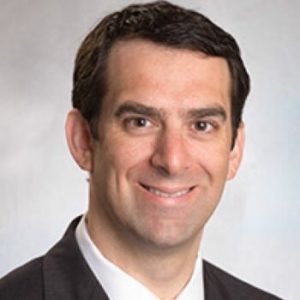
Dr. Faust is an EM resident at Mount Sinai Hospital, New York, and tweets about #FOAMed and classical music @JeremyFaust.
Pages: 1 2 3 | Multi-Page


No Responses to “FOAMed appeal is simple: Get more, pay nothing”