Logo

Log In Sign Up |  An official publication of: American College of Emergency Physicians
Navigation
  • Home
  • Multimedia
    • Podcasts
    • Videos
  • Clinical
    • Airway Managment
    • Case Reports
    • Critical Care
    • Guidelines
    • Imaging & Ultrasound
    • Pain & Palliative Care
    • Pediatrics
    • Resuscitation
    • Trauma & Injury
  • Resource Centers
    • mTBI Resource Center
  • Career
    • Practice Management
      • Benchmarking
      • Reimbursement & Coding
      • Care Team
      • Legal
      • Operations
      • Quality & Safety
    • Awards
    • Certification
    • Compensation
    • Early Career
    • Education
    • Leadership
    • Profiles
    • Retirement
    • Work-Life Balance
  • Columns
    • ACEP4U
    • Airway
    • Benchmarking
    • Brief19
    • By the Numbers
    • Coding Wizard
    • EM Cases
    • End of the Rainbow
    • Equity Equation
    • FACEPs in the Crowd
    • Forensic Facts
    • From the College
    • Images in EM
    • Kids Korner
    • Medicolegal Mind
    • Opinion
      • Break Room
      • New Spin
      • Pro-Con
    • Pearls From EM Literature
    • Policy Rx
    • Practice Changers
    • Problem Solvers
    • Residency Spotlight
    • Resident Voice
    • Skeptics’ Guide to Emergency Medicine
    • Sound Advice
    • Special OPs
    • Toxicology Q&A
    • WorldTravelERs
  • Resources
    • ACEP.org
    • ACEP Knowledge Quiz
    • Issue Archives
    • CME Now
    • Annual Scientific Assembly
      • ACEP14
      • ACEP15
      • ACEP16
      • ACEP17
      • ACEP18
      • ACEP19
    • Annals of Emergency Medicine
    • JACEP Open
    • Emergency Medicine Foundation
  • About
    • Our Mission
    • Medical Editor in Chief
    • Editorial Advisory Board
    • Awards
    • Authors
    • Article Submission
    • Contact Us
    • Advertise
    • Subscribe
    • Privacy Policy
    • Copyright Information

Endovascular Therapy With or Without tPA—What Do the Studies Say?

By Ken Milne, MD | on July 15, 2020 | 0 Comment
Skeptics' Guide to EM
  • Tweet
  • Click to email a link to a friend (Opens in new window) Email
Print-Friendly Version
Chris Whissen & Shutterstock.com

You Might Also Like
  • Endovascular Therapy May be Effective for Strokes from More Distal Occlusions
  • Endovascular Intervention for Stroke May Become Alternative to tPA
  • When Every Second Counts, Know When to Use tPA
Explore This Issue
ACEP Now: Vol 39 – No 07 – July 2020

Chris Whissen & Shutterstock.com

The Case

A 61-year-old healthy female presents with two hours of right-side weakness as well as slurred speech. She has a National Institutes of Health Stroke Score/Scale (NIHSS) of 10, and you are concerned about a large vessel occlusion (LVO) based on the high NIHSS as well as the presence of both an upper extremity drift and the speech abnormality. A noncontrast computed tomography (CT) scan of her head shows no evidence of a bleed. A CT angiogram plus CT perfusion demonstrate a clot in the left proximal middle cerebral artery (MCA), with a small infarcted area and a large penumbra. She is a candidate to receive endovascular therapy (EVT) based on your institution’s current guidelines, but she is also within the current window for the administration of tissue plasminogen activator (tPA).

Clinical Question

Should you give tPA while waiting for your neurointerventional team to arrive, or is EVT alone noninferior to EVT with tPA?
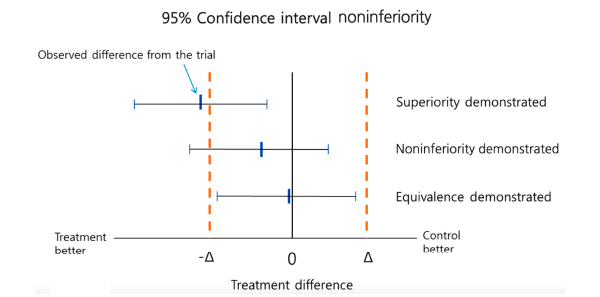
Figure 1: Testing Superiority and Equivalence/Noninferiority

Figure 1: Testing Superiority and Equivalence/Noninferiority
Korean J Pediatr. 2012;55(11):403-407. CC BY-NC

Background: Thrombolytics as a possible treatment for acute ischemic stroke (AIS) has been discussed for decades. The famous NINDS trial led to tPA being approved for AIS within three hours of onset in those patients who met strict criteria.1 ECASS III was published in 2008 and expanded the window to 4.5 hours.2 ACEP has published guidelines on the safety and efficacy of tPA for patients with AIS. The ACEP guidelines give level B and level C recommendations.3

The controversy over the use of tPA for AIS does not seem to be going away. A recent reanalysis of ECASS III failed to show the commonly assumed benefit but confirmed the potential increase in harm of tPA. 4,5

The treatment of AIS did substantially change with the publication of the MR CLEAN trial.6 This was the first study demonstrating a benefit to endovascular treatment of a specific subset of ischemic stroke patients—specifically, those with large vessel occlusions presenting within six hours of symptom onset. MR CLEAN was followed by a number of other publications seeking to replicate and refine treatment as well as expand the window for treatment.

One major question regarding EVT treatment was whether the use of systemic thrombolytics like tPA results in better outcomes or if it simply exposes the patient to increased risks at a higher cost.

Reference: Yang P, Zhang Y, Zhang L, et al. Endovascular thrombectomy with or without intravenous alteplase in acute stroke. N Engl J Med. 2020;382(21):1981-1993.

Pages: 1 2 3 | Single Page

Topics: Acute Ischemic StrokeEndovascular TherapyStrokeThrombolysistPA

Related

  • ACEP Clinical Policy on Thrombolytics for Management of Acute Ischemic Stroke

    July 3, 2025 - 0 Comment
  • Thrombolytics in Stroke: Moving Beyond Controversy to Comprehensive Care

    December 7, 2024 - 0 Comment
  • The Latest Research in Neurologic Emergencies

    September 6, 2024 - 0 Comment

Current Issue

ACEP Now: November 2025

Download PDF

Read More

About the Author

Ken Milne, MD

Ken Milne, MD, is chief of emergency medicine and chief of staff at South Huron Hospital, Ontario, Canada. He is on the Best Evidence in Emergency Medicine faculty and is creator of the knowledge translation project the Skeptics Guide to Emergency Medicine.

View this author's posts »

No Responses to “Endovascular Therapy With or Without tPA—What Do the Studies Say?”

Leave a Reply Cancel Reply

Your email address will not be published. Required fields are marked *


*
*


Wiley
  • Home
  • About Us
  • Contact Us
  • Privacy
  • Terms of Use
  • Advertise
  • Cookie Preferences
Copyright © 2025 by John Wiley & Sons, Inc. All rights reserved, including rights for text and data mining and training of artificial technologies or similar technologies. ISSN 2333-2603
