
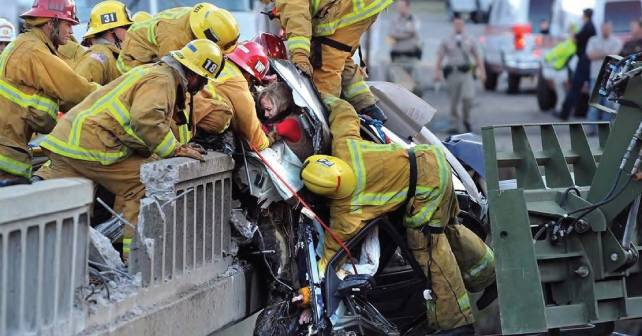
Jon Krohmer, MD, FACEP, who says he has “the EMS blood type,” practically had a front row seat to the growth of EMS care starting as a volunteer EMT more than 50 years ago. “The evolution of EMS really mirrors the evolution of emergency physicians.” Dr. Krohmer said.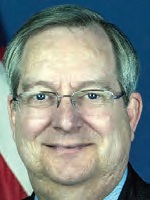
Explore This Issue
ACEP Now: Vol 43 – No 05 – May 2024“When EMS really blossomed, physician involvement waned a little bit because there was a very large demand as EMS programs were developing. But there weren’t the physician resources to support that need,” he said.
“But since the mid 80s, we have realized that EMS is the clinical practice of emergency medicine outside of the emergency department. So physicians need to be involved. That was the time that ACEP stepped up.”
In 1974–50 years ago this month—President Gerald Ford saw the life-saving work of EMS teams and declared a national “EMS Week” to honor these men and women and the incredible difference they make on the field and in the trenches.
This year is the 50th anniversary of the first National EMS Week, designed to honor EMS professionals.
At that time, there was physician involvement in EMS, however they weren’t necessarily emergency physicians simply because there weren’t many of them at the time. Emergency medicine wasn’t recognized as a clinical specialty of medicine until 1979. But over the last 20 to 30 years, ACEP and National Association of EMS Physicians (NAEMSP) together have been very intentional about increasing EMS educational activities for emergency physicians, as well as increasing their advocacy for EMS initiatives.
As a result, there has been a significant uptick in emergency physicians who have focused their clinical practice on EMS. There is now an EMS subspecialty within the American Board of Emergency Medicine that to date, has produced about 1,200 board certified EMS physicians throughout the country. There are also hundreds of other emergency physicians involved in EMS as part of their practice but aren’t board certified as EMS subspecialists.

Since 1974, EMS Week has been an annual tribute to the dedication of Emergency Medical Services professionals and is celebrated during the third week of May.
According to Dr. Krohmer, this is encouraging since “it’s important that all emergency physicians have a good understanding of EMS, because they are either serving as a medical director for an EMS agency, or their clinical practice in the emergency department is significantly influenced by EMS.”
Emergency physicians who are not EMS specialized can turn to a number of resources for assistance. Both ACEP and the NAEMSP have educational courses and many states also have training programs that can help explain state rules and regulations, as well protocol development, and assist them in developing robust education and quality improvement programs.
From the national perspective, EMS care looks very different depending on where you live.

EMS Week helps inform the public about the importance of EMS and
is often used to encourage individuals to learn basic life-saving skills like CPR and first aid.
For example, rural EMS teams must depend more on EMS volunteers, they face staffing and sustainability requirements, they experience more financial stress, and they also depend more on their local physicians. However, more and more, there are a good number of subspecialty physicians who are moving to rural environments.
Dustin Holland, MD, MPH, FACEP, has worked in both rural and urban environments. He began as a volunteer EMT outside of Las Vegas, then moved to an ED in the city, handling calls on the Las Vegas Strip. He now serves a more suburban setting in Carson City, where he works as an emergency physician with rural EMS teams, something the agencies haven’t had in the past.
Nevada is a great example of the importance of an emergency physician and EMS trained physicians, Dr. Holland explained. Other than Las Vegas and Reno, the rest of the state is rural and needs coverage. “The challenges, obviously they vary, depending on what type of agency it is … (but) you can run into an issue where those are usually the agencies that require the most help and teaching and education and quality review because they have very long transport times,” he said. “They are actually providing patient care for a lot longer, and if that patient is really sick, things can go south pretty rapidly. So you have to have well-trained EMS clinicians in these areas where they have to provide care for a longer amount of time.”

EMS Week facilitates collaboration among EMS agencies, policy makers, organizations, and communities.
In urban settings, transport times can be 5 to 10 minutes to the closest hospital, but for the rural Nevada area, “it could be 45 minutes,” Dr. Holland said. “It’s very different. It’s unfortunate that sometimes these are the agencies that need the most help, but they’re not getting it because no one really works out there that’s trained as an EMS physician.”
How can rural areas begin to get the access they need to emergency physicians who are EMS trained? According to Dr. Holland,” I think we’re on the right track. We’re seeing more and more EMS fellowships established around the country. It’s also the most popular subspecialty within emergency medicine.”
He also suggested incentivizing positions for EMS-trained physicians to work rurally, similar to incentive programs for primary care physicians. “Small agencies have small budgets. They are barely scraping by and a lot of them rely on volunteers, so it’s very hard for some of these agencies to pay a person to come out and spend quality time with them to do training and education,” Dr. Holland said.
Fifty years ago, the attitude used to be, “all you need is diesel. Get the patient to the ER as quickly as you can and let the real medical people do their job,” Dr. Holland said. Thankfully, those days are gone and the paradigm has shifted completely. The attitude now is, “we need to provide high quality care on-scene and we need to take our time doing it,” Dr. Holland explained. “We don’t need to rush to the hospital except in certain situations where the treatment can’t be provided in the field.”
Ms. Stanesic is a freelance writer for ACEP.
Pages: 1 2 3 | Multi-Page



One Response to “Emergency Medicine and EMS Have Grown in Parallel Tracks for 50 Years”
June 9, 2024
Marvin Wayne, MDThanks Jon, and Dustin, I started as an EMS Medical Director 50 years ago. I’ve seen changes I would have never imagined, and maybe, in some small way, contributed to those changes. As we move forward I’m sure that, with the needed support, changes to provide care and more important, caring, will continue to occur.