Logo

Log In Sign Up |  An official publication of: American College of Emergency Physicians
Navigation
  • Home
  • Multimedia
    • Podcasts
    • Videos
  • Clinical
    • Airway Managment
    • Case Reports
    • Critical Care
    • Guidelines
    • Imaging & Ultrasound
    • Pain & Palliative Care
    • Pediatrics
    • Resuscitation
    • Trauma & Injury
  • Resource Centers
    • mTBI Resource Center
  • Career
    • Practice Management
      • Benchmarking
      • Reimbursement & Coding
      • Care Team
      • Legal
      • Operations
      • Quality & Safety
    • Awards
    • Certification
    • Compensation
    • Early Career
    • Education
    • Leadership
    • Profiles
    • Retirement
    • Work-Life Balance
  • Columns
    • ACEP4U
    • Airway
    • Benchmarking
    • Brief19
    • By the Numbers
    • Coding Wizard
    • EM Cases
    • End of the Rainbow
    • Equity Equation
    • FACEPs in the Crowd
    • Forensic Facts
    • From the College
    • Images in EM
    • Kids Korner
    • Medicolegal Mind
    • Opinion
      • Break Room
      • New Spin
      • Pro-Con
    • Pearls From EM Literature
    • Policy Rx
    • Practice Changers
    • Problem Solvers
    • Residency Spotlight
    • Resident Voice
    • Skeptics’ Guide to Emergency Medicine
    • Sound Advice
    • Special OPs
    • Toxicology Q&A
    • WorldTravelERs
  • Resources
    • ACEP.org
    • ACEP Knowledge Quiz
    • Issue Archives
    • CME Now
    • Annual Scientific Assembly
      • ACEP14
      • ACEP15
      • ACEP16
      • ACEP17
      • ACEP18
      • ACEP19
    • Annals of Emergency Medicine
    • JACEP Open
    • Emergency Medicine Foundation
  • About
    • Our Mission
    • Medical Editor in Chief
    • Editorial Advisory Board
    • Awards
    • Authors
    • Article Submission
    • Contact Us
    • Advertise
    • Subscribe
    • Privacy Policy
    • Copyright Information

Emergency Medicine and EMS Have Grown in Parallel Tracks for 50 Years

By Stephanie Stanesic | on May 9, 2024 | 1 Comment
Features
  • Tweet
  • Click to email a link to a friend (Opens in new window) Email
Print-Friendly Version

Emergency physicians who are not EMS specialized can turn to a number of resources for assistance. Both ACEP and the NAEMSP have educational courses and many states also have training programs that can help explain state rules and regulations, as well protocol development, and assist them in developing robust education and quality improvement programs.

You Might Also Like
  • ACEP, National Association of Emergency Medical Technicians Celebrate EMS Week May 17–23
  • EMS the Newest Subspecialty of Emergency Medicine
  • ACEP, NAEMT Partner to Celebrate EMS Week
Explore This Issue
ACEP Now: Vol 43 – No 05 – May 2024

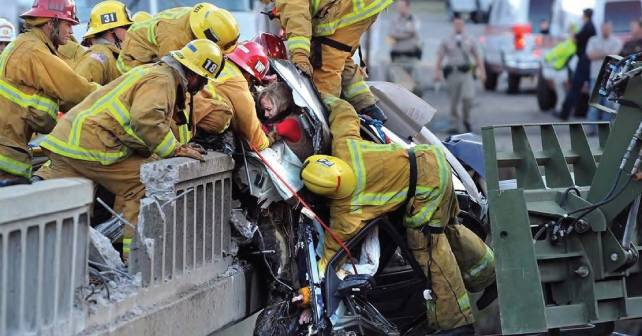
From the national perspective, EMS care looks very different depending on where you live.

EMS Week helps inform the public about the importance of EMS and

is often used to encourage individuals to learn basic life-saving skills like CPR and first aid.

For example, rural EMS teams must depend more on EMS volunteers, they face staffing and sustainability requirements, they experience more financial stress, and they also depend more on their local physicians. However, more and more, there are a good number of subspecialty physicians who are moving to rural environments.

Dustin Holland, MD, MPH, FACEP, has worked in both rural and urban environments. He began as a volunteer EMT outside of Las Vegas, then moved to an ED in the city, handling calls on the Las Vegas Strip. He now serves a more suburban setting in Carson City, where he works as an emergency physician with rural EMS teams, something the agencies haven’t had in the past.

Nevada is a great example of the importance of an emergency physician and EMS trained physicians, Dr. Holland explained. Other than Las Vegas and Reno, the rest of the state is rural and needs coverage. “The challenges, obviously they vary, depending on what type of agency it is … (but) you can run into an issue where those are usually the agencies that require the most help and teaching and education and quality review because they have very long transport times,” he said. “They are actually providing patient care for a lot longer, and if that patient is really sick, things can go south pretty rapidly. So you have to have well-trained EMS clinicians in these areas where they have to provide care for a longer amount of time.”

EMS Week facilitates collaboration among EMS agencies, policy makers, organizations, and communities.

In urban settings, transport times can be 5 to 10 minutes to the closest hospital, but for the rural Nevada area, “it could be 45 minutes,” Dr. Holland said. “It’s very different. It’s unfortunate that sometimes these are the agencies that need the most help, but they’re not getting it because no one really works out there that’s trained as an EMS physician.”

Pages: 1 2 3 | Single Page

Topics: Emergency Medical ServicesEmergency Medical TechniciansEMSEMTNational EMS Week

Related

  • Event Medicine: Where Fun and Safety Sing in Perfect Harmony

    October 9, 2025 - 1 Comment
  • Trauma First Aid at the 2025 Boston Marathon

    September 22, 2025 - 0 Comment
  • Prehospital Buprenorphine Is a Powerful Tool in the Opioid-Crisis Fight

    June 4, 2025 - 0 Comment

Current Issue

ACEP Now: November 2025

Download PDF

Read More

One Response to “Emergency Medicine and EMS Have Grown in Parallel Tracks for 50 Years”

  1. June 9, 2024

    Marvin Wayne, MD Reply

    Thanks Jon, and Dustin, I started as an EMS Medical Director 50 years ago. I’ve seen changes I would have never imagined, and maybe, in some small way, contributed to those changes. As we move forward I’m sure that, with the needed support, changes to provide care and more important, caring, will continue to occur.

Leave a Reply Cancel Reply

Your email address will not be published. Required fields are marked *


*
*


Wiley
  • Home
  • About Us
  • Contact Us
  • Privacy
  • Terms of Use
  • Advertise
  • Cookie Preferences
Copyright © 2025 by John Wiley & Sons, Inc. All rights reserved, including rights for text and data mining and training of artificial technologies or similar technologies. ISSN 2333-2603
