Logo

Log In Sign Up |  An official publication of: American College of Emergency Physicians
Navigation
  • Home
  • Multimedia
    • Podcasts
    • Videos
  • Clinical
    • Airway Managment
    • Case Reports
    • Critical Care
    • Guidelines
    • Imaging & Ultrasound
    • Pain & Palliative Care
    • Pediatrics
    • Resuscitation
    • Trauma & Injury
  • Resource Centers
    • mTBI Resource Center
  • Career
    • Practice Management
      • Benchmarking
      • Reimbursement & Coding
      • Care Team
      • Legal
      • Operations
      • Quality & Safety
    • Awards
    • Certification
    • Compensation
    • Early Career
    • Education
    • Leadership
    • Profiles
    • Retirement
    • Work-Life Balance
  • Columns
    • ACEP4U
    • Airway
    • Benchmarking
    • Brief19
    • By the Numbers
    • Coding Wizard
    • EM Cases
    • End of the Rainbow
    • Equity Equation
    • FACEPs in the Crowd
    • Forensic Facts
    • From the College
    • Images in EM
    • Kids Korner
    • Medicolegal Mind
    • Opinion
      • Break Room
      • New Spin
      • Pro-Con
    • Pearls From EM Literature
    • Policy Rx
    • Practice Changers
    • Problem Solvers
    • Residency Spotlight
    • Resident Voice
    • Skeptics’ Guide to Emergency Medicine
    • Sound Advice
    • Special OPs
    • Toxicology Q&A
    • WorldTravelERs
  • Resources
    • ACEP.org
    • ACEP Knowledge Quiz
    • Issue Archives
    • CME Now
    • Annual Scientific Assembly
      • ACEP14
      • ACEP15
      • ACEP16
      • ACEP17
      • ACEP18
      • ACEP19
    • Annals of Emergency Medicine
    • JACEP Open
    • Emergency Medicine Foundation
  • About
    • Our Mission
    • Medical Editor in Chief
    • Editorial Advisory Board
    • Awards
    • Authors
    • Article Submission
    • Contact Us
    • Advertise
    • Subscribe
    • Privacy Policy
    • Copyright Information

Early Recognition in the Emergency Dept Is Key to Stopping Elder Abuse

By Heather Rozzi, MD, FACEP; and Ralph Riviello, MD, FACEP | on September 25, 2020 | 0 Comment
Forensic Facts
  • Tweet
  • Click to email a link to a friend (Opens in new window) Email
Print-Friendly Version
Michelle Frey, BSN, RN-BC, SANE-A, SANE-B, WellSpan York Hospital, York, PA

Case Outcome

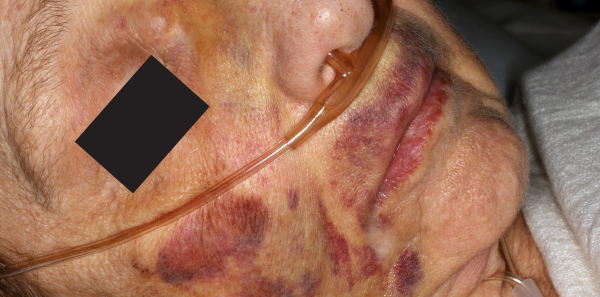
The emergency physician was concerned that the rash was actually bruising and suspected elder abuse. Labs, X-rays, and CT scans were negative. A forensic nurse examiner was consulted. On exam, in addition to the bruises, there was evidence of genital injury and vaginal discharge, which subsequently tested positive for chlamydia. Based on the concern for abuse, police and adult protective services were consulted. An investigation identified a dietary worker at the nursing home as the perpetrator. 

You Might Also Like
  • How to Recognize Signs of Elder Abuse, Mistreatment
  • The Recognition of Child Abuse
  • TEN-4 FACES P: A Mnemonic to Help You Spot Signs of Child Abuse
Explore This Issue
ACEP Now: Vol 39 – No 09 – September 2020

Dr. Rozzi is an emergency physician, director of the Forensic Examiner Team at WellSpan York Hospital in York, Pennsylvania, and chair of the Forensic Section of ACEP.

Dr. Riviello is chair and professor of emergency medicine at the University of Texas Health Science Center at San Antonio.

Key Points

  • Elder abuse is a serious health problem.
  • Any elder is potentially at risk.
  • Elder abuse may not always be readily evident.
  • The risk factors for elder abuse are contributing factors, not direct causes.
  • Health care workers should screen elders and have a high index of suspicion when red flags are present.
  • Treatment includes a multidisciplinary approach including geriatric medicine, social services, law enforcement, and adult protective services.

References

  1. Hall JE, Karch DL, Crosby A. Elder Abuse Surveillance: Uniform definitions and recommended core data elements. Version 1.0. National Center for Injury Prevention and Control, Centers for Disease Control and Prevention. CNPEA website. Accessed July 27, 2020.
  2. Acierno R, Hernandez MA, Amstadter AB, et. al. Prevalence and correlates of emotional, physical, sexual, and financial abuse and potential neglect in the United States: The National Elder Mistreatment Study. Am J Public Health. 2010;100(2):292-297.
  3. Logan JE, Haileyesus T, Ertl A, et al. Nonfatal assaults and homicides among adults aged ≥60 years – United States, 2002-2016. MMWR Morb Mortal Wkly Rep. 2019;68(13):297-302.
  4. Wilkins N, Tsao B, Hertz M, et al. Connecting the dots: an overview of the links among multiple forms of violence. Centers for Disease Control and Prevention website. Accessed July 27, 2020.
  5. Abuse of the elderly. In: Krug EG, Dahlberg LL, Mercy JA, et al, eds. World report on violence and health. 2002:125-145. World Health Organization website. Accessed July 27, 2020.
  6. Red flags for elder abuse. Center of Excellence on Elder Abuse & Neglect website. University of California Irvine, Irvine, CA;. Accessed July 27, 2020.

Pages: 1 2 | Single Page

Topics: AbuseCase ReportsElder AbuseElderlyGeriatric Care

Related

  • Patterns of Injury in Elder Abuse

    November 6, 2025 - 0 Comment
  • Case Report: Rare Pulmonary Embolism After Routine PIVC Insertion

    September 22, 2025 - 1 Comment
  • Annals ECG of the Month: Acute Coronary Occlusion

    August 4, 2025 - 0 Comment

Current Issue

ACEP Now: November 2025

Download PDF

Read More

No Responses to “Early Recognition in the Emergency Dept Is Key to Stopping Elder Abuse”

Leave a Reply Cancel Reply

Your email address will not be published. Required fields are marked *


*
*


Wiley
  • Home
  • About Us
  • Contact Us
  • Privacy
  • Terms of Use
  • Advertise
  • Cookie Preferences
Copyright © 2025 by John Wiley & Sons, Inc. All rights reserved, including rights for text and data mining and training of artificial technologies or similar technologies. ISSN 2333-2603