

Have you ever thought about taking your career in an entirely new direction? Maybe you’re in the community and you want to get back to academics. For me, it was the opposite. This is my story: why I did it, what I do now, and what I’ve learned. My hope in sharing is that it might help you think through what matters to you as you look into the future of your own career in medicine.
Explore This Issue
ACEP Now: Vol 39 – No 01 – January 2020After 15 years in academic medicine at the University of Pennsylvania in Philadelphia and George Washington University in Washington, D.C., I took a new job at US Acute Care Solutions (USACS) in September 2018 as its national director of clinical innovation. In all honesty, my move was met with both positive and negative feedback. There were many well-wishers (thank you!) but others with pointed questions: Why leave a successful academic career, particularly given the controversial role of management groups like USACS in emergency medicine?
Well, here is why. The first part of my career was dedicated almost entirely to scholarship—primarily writing papers (I love writing) and writing grants (I love less), teaching, and clinical practice. Along the way, I enjoyed success in publishing, great interactions with colleagues, and satisfaction in advancing science in emergency care. I also had opportunities to work in policy circles around Washington, D.C., and in academic leadership.
Like many of you, I follow the Facebook group EM Docs. In many posts I read, I sense undercurrents of angst and burnout. Discussions abound on desires for life redesign, often through reflections on clinical cases or other remarkable work situations.
Sometimes EM Docs posts are disheartening. Many suggest: “This is not what I signed up for!” Yet in reality, that’s mostly wrong. We actually knew the pain points. Maybe we just romanticized emergency medicine or didn’t fully comprehend its cumulative effects. Perhaps it’s not medicine that changes, it’s us who change as we grow and age. To no surprise, your 30-year-old self should have different goals than your 50-year-old self, with greater experience in life’s successes and failures. Call it what you will—midlife crises or another name—emergency physicians regularly re-examine identity, specifically why we do what we do and to what end.
In the 2018 book, Designing Your Life: How to Build a Well-Lived, Joyful Life, authors Bill Burnett and Dave Evans—who also lead the Stanford Life Design Lab—apply design thinking to life and career redesign. The book offers many tools: journaling and self-reflection and a road map for getting “unstuck” through creating and prototyping alternative life plans. The goal of life redesign is to improve job satisfaction and overall happiness across all aspects of life.
Redesigning My Life
As I read this book, nagging questions started haunting me about my career in academics: Can I do this for the next 20 years? If I do, will I have the greatest impact? Am I still growing and learning?
I wasn’t so sure. Borrowing from a Designing Your Life concept, my work view (ie, why I was working so hard) did not exactly match my life view (ie, what was most worthwhile to me). I had summited my mid-40s, and my pace of learning had slowed. The marginal excitement from the next paper or grant had waned. The reality of complex stakeholders in academics becomes tiresome. I thought to myself: Instead of sitting in an ivory tower writing papers about how to change acute care, maybe I could go and actually try to be a change agent myself. Maybe I could have greater impact in a different role?
My change was not so radical. I did not leave health care or even emergency medicine. I went from one EM community to another, from one platform to another, and from academics to private enterprise (which, in practicality, have similar goals: to provide excellent care at a margin). Instead of just innovating in a single hospital, I am now able to innovate across more than 200 USACS sites and over 6 million ED visits. Much changed, but much stayed the same, like my ability to produce scholarship through the USACS Research Group and my clinical practice.
So what is my new position? As the USACS national director of clinical innovation, I try to design and implement programs that allow emergency physicians to deliver innovative care, adapt to market changes, remain competitive financially, and operate in novel environments that best leverage our skillset. The goal is to find and implement win-win projects that address age-old struggles in our practice. For example, I am working to implement a system that assesses care experience after discharge and admission with good response rates. This will provide actionable feedback (unlike Press Ganey–like instruments) and allow us to learn more about patients’ recovery and follow-up experiences.
Another area of focus is in novel payment models: programs with private and public insurers that align emergency care and population health, allowing us to take financial risk from (and benefit from) good care decisions and value-based care. This includes efforts aimed at lowering rates of CT scan use when clinically unnecessary and lowering hospital admissions. I am also helping to develop new programs in telemedicine, opioids, and direct-to-business models for USACS.
Lessons Learned
Reflecting on my personal career redesign and exposure to the business of emergency care, here are a few lessons:
- Midcareer change can create tremendous learning. Aging can bring complacency without change. Career change disrupts habits and can generate dramatic learning (at least, it did for me), particularly when shouldering new responsibilities. For example, I had to learn the language of business (comparing business and academic physician lingo is not unlike comparing Mandarin and English).
- Emergency medicine as we know it is under siege. This may come as no surprise, but broader forces in medicine and health policy are focused on reducing ED visits and keeping patients away from hospitals (and us). Furthermore, there are great efforts underway to reduce payments to physicians through surprise billing legislation and other policies. In the future, we will probably make either somewhat less or a lot less money for seeing patients. It also means we will increasingly see sicker patients and those with self-pay or public insurance. Sorry if you didn’t know that.
- Despite this, emergency physicians bring unique value. When it comes to delivering on value-based care, emergency physicians’ abilities to care for the acutely ill and injured patient are unrivaled. In the changing world of new care and payment models, these skills will become increasingly marketable. Don’t worry, you will always have a job. But you may have to be nimble regarding how and where you practice.
- Real innovation in emergency care is really, really hard. Trying to implement new approaches is entering a shark pit surrounded by landmines. Even innovations that conceptually make all the sense in the world sometimes get crushed because of competing interests or complacency. Do not discount the powerful effect of personalities, those who create barriers versus those who facilitate.
- The success formula to innovation is good idea + alignment + the right team + persistence. Having a good idea is the easy part. Everyone has good ideas. But you have to have an idea that aligns stakeholder interests and is facilitated by the right people. Show return-on-investment and avoid stomping on someone else’s budget. Even getting this recipe right requires persistence because failure is the default and success is the exception.
- Business in emergency medicine is not evil. Feel free to disagree. Great vitriol divides our specialty over how we should organize. Realize that medicine is a business and care cannot be delivered unless there is a business model. In my view, all organizations—large for-profit groups, democratic groups, and nonprofit academic centers—act in their own financial interests within the existing legal framework. I see no angels and no demons. Particularly given lesson 2 above, I find it more fruitful to fight-out than fight-in in emergency medicine.
- Re-examine your life, and then redesign and pivot if necessary. When it comes to your life redesign, take all four aspects into consideration: work, play, love, and health. Take stock of where you are and what alternative realities might look like. Along with Designing Your Life, there are a lot of great books out there on the topic. To quote the 1980’s hit Ferris Bueller’s Day Off, “Life moves pretty fast. If you don’t stop and look around once in a while, you could miss it.”
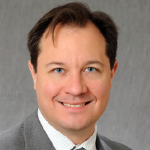 Dr. Pines is the national director of clinical innovation at US Acute Care Solutions and professor of emergency medicine at Drexel University in Philadelphia.
Pages: 1 2 3 4 | Multi-Page



No Responses to “Dr. Jesse Pines Reflects on Changing Paths from Academia to Business”