

It was a seemingly ordinary drive through Texas that changed John Prescott, MD’s, life and made him realize that emergency medicine was his calling.
Explore This Issue
ACEP Now: January 2026As a young U.S. Army physician contemplating flight surgery, he was driving on a deserted highway between San Antonio and Fort Hood when a convertible with its top down and a passenger with her feet on the dashboard sped past his four-cylinder Toyota Corolla, which was barely going 55 mph. A couple of miles down the road, he came upon this car flipped over on the median. “I thought, ‘Oh my God, what am I going to do?’” he said.
The ground was littered with beer cans, the driver was dead, and the passenger — pregnant and critically injured — had been ejected from the vehicle but survived, although the fetus would not. Armed with only basic medical knowledge and aided by a nurse anesthetist who had been passing by, and then a paramedic in another car with a bag full of equipment, the three worked to save the surviving victim until help arrived.
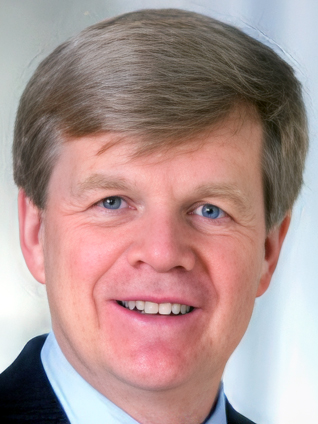
Dr. Prescott
“That’s the day I decided I was going to go into emergency medicine,” said the now-retired Dr. Prescott, professor emeritus with the West Virginia University department of emergency medicine, where he was one of its founding members. “I never wanted to be in a position again where I could not take care of a patient or assess the situation and take definitive action.”
This desire to be prepared for anything draws many physicians to emergency medicine. For Jennifer Oman, MD, who initially considered trauma surgery, it was the ability to practice comprehensive care that attracted her. “I like being able to take care of all ages,” she said. “There’s a little bit of ortho and a little bit of cardiology and a little bit of pediatrics. There’s not really anything you don’t see.”
Dr. Oman, a board-certified emergency physician in Orange County, California, said her specialty-defining moment was one morning at 3 a.m. on her surgery rotation when she was called to the emergency department for a consult. “It was super fun and there was a lot going on. I loved it, but all of the surgeons were complaining about how they hated the emergency department and how tired they were,” she said. As soon as it was decided the patient needed to go to the operating room, the surgeons were suddenly wide awake and happy, whereas Dr. Oman said she couldn’t keep her eyes open and all she wanted was to go back to the emergency department.
Pages: 1 2 3 4 | Single Page


One Response to “Despite Drawbacks, Emergency Medicine Remains a Great Specialty”
January 27, 2026
Anthony Markham, MDEmergency Medicine is not what it should be as a specialty. It should not be everything for everyone at any hour. It has been bastardized by politicians and corporations, “healthcare and private equity”.
I’m old enough to remember when the biggest problem was contract management groups. In hindsight, those were the days!
I retired a year ago after 34 years in the emergency department. Please forgive me for the quote, “Some of it was magic, some of it was tragic, but I had a good life all the way”.