Logo

Log In Sign Up |  An official publication of: American College of Emergency Physicians
Navigation
  • Home
  • Multimedia
    • Podcasts
    • Videos
  • Clinical
    • Airway Managment
    • Case Reports
    • Critical Care
    • Guidelines
    • Imaging & Ultrasound
    • Pain & Palliative Care
    • Pediatrics
    • Resuscitation
    • Trauma & Injury
  • Resource Centers
    • mTBI Resource Center
  • Career
    • Practice Management
      • Benchmarking
      • Reimbursement & Coding
      • Care Team
      • Legal
      • Operations
      • Quality & Safety
    • Awards
    • Certification
    • Compensation
    • Early Career
    • Education
    • Leadership
    • Profiles
    • Retirement
    • Work-Life Balance
  • Columns
    • ACEP4U
    • Airway
    • Benchmarking
    • Brief19
    • By the Numbers
    • Coding Wizard
    • EM Cases
    • End of the Rainbow
    • Equity Equation
    • FACEPs in the Crowd
    • Forensic Facts
    • From the College
    • Images in EM
    • Kids Korner
    • Medicolegal Mind
    • Opinion
      • Break Room
      • New Spin
      • Pro-Con
    • Pearls From EM Literature
    • Policy Rx
    • Practice Changers
    • Problem Solvers
    • Residency Spotlight
    • Resident Voice
    • Skeptics’ Guide to Emergency Medicine
    • Sound Advice
    • Special OPs
    • Toxicology Q&A
    • WorldTravelERs
  • Resources
    • ACEP.org
    • ACEP Knowledge Quiz
    • Issue Archives
    • CME Now
    • Annual Scientific Assembly
      • ACEP14
      • ACEP15
      • ACEP16
      • ACEP17
      • ACEP18
      • ACEP19
    • Annals of Emergency Medicine
    • JACEP Open
    • Emergency Medicine Foundation
  • About
    • Our Mission
    • Medical Editor in Chief
    • Editorial Advisory Board
    • Awards
    • Authors
    • Article Submission
    • Contact Us
    • Advertise
    • Subscribe
    • Privacy Policy
    • Copyright Information

Data Supporting Therapeutic Hypothermia for Cardiac Arrest Aren’t So Hot

By Ryan Patrick Radecki, MD, MS | on November 23, 2021 | 2 Comments
Pearls From the Medical Literature
  • Tweet
  • Click to email a link to a friend (Opens in new window) Email
Print-Friendly Version
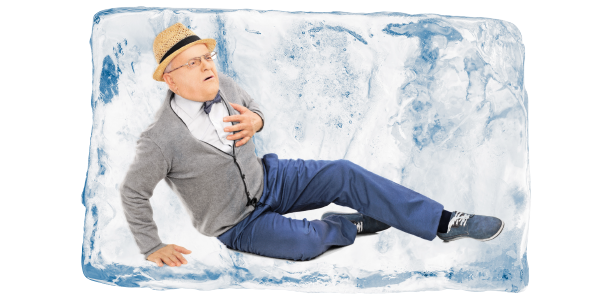
Chris Whissen & Shuttestock.com

You Might Also Like
  • Therapeutic Hypothermia Offers No Survival Benefit for Comatose Patients After Cardiac Arrest
  • Research on Therapeutic Hypothermia for Post-Arrest Patients Helps Refine Temperature-Management Strategies
  • Critical Decisions: Therapeutic Hypothermia After Cardiac Arrest
Explore This Issue
ACEP Now: Vol 40 – No 11 – November 2021

References

  1. Hypothermia after Cardiac Arrest Study Group. Mild therapeutic hypothermia to improve the neurologic outcome after cardiac arrest. N Engl J Med. 2002;346(8):549-556.
  2. Peberdy MA, Callaway CW, Neumar RW, et al. Post-cardiac arrest care: 2010 American Heart Association guidelines for cardiopulmonary resuscitation and emergency cardiovascular care. Circulation. 2010;122(18 Suppl 3):S768-S786. Errata, Circulation. 2011;123(6):e237,124(15):e403.
  3. Nielsen N, Wetterslev J, Cronberg T, et al. Targeted temperature management at 33°C versus 36°C after cardiac arrest. N Engl J Med. 2013;369(23):2197-2206.
  4. Moler FW, Silverstein FS, Holubkov R, et al. Therapeutic hypothermia after out-of-hospital cardiac arrest in children. N Engl J Med. 2015;372(20):1898-1908.
  5. Lascarrou J-B, Merdji H, Le Gouge A, et al. Targeted temperature management for cardiac arrest with nonshockable rhythm. N Engl J Med. 2019;381(24):2327-2337.
  6. Dankiewicz J, Cronberg T, Lilja G, et al. Hypothermia versus normothermia after out-of-hospital cardiac arrest. N Engl J Med. 2021;384(24):2283-2294.
  7. Kim F, Nichol G, Maynard C, et al. Effect of prehospital induction of mild hypothermia on survival and neurological status among adults with cardiac arrest: a randomized clinical trial. JAMA. 2014;311(1):45-52.

Pages: 1 2 | Single Page

Topics: Cardiac ArrestCritical CareHypothermia

Related

  • Why the Nonrebreather Should be Abandoned

    December 3, 2025 - 0 Comment
  • Non-Invasive Positive Pressure Ventilation in the Emergency Department

    October 1, 2025 - 0 Comment
  • Emergency Department Management of Prehospital Tourniquets

    October 1, 2025 - 0 Comment

Current Issue

ACEP Now: November 2025

Download PDF

Read More

About the Author

Ryan Patrick Radecki, MD, MS

Ryan Patrick Radecki, MD, MS, is an emergency physician and informatician with Christchurch Hospital in Christchurch, New Zealand. He is the Annals of Emergency Medicine podcast co-host and Journal Club editor and can be found on Twitter @emlitofnote.

View this author's posts »

2 Responses to “Data Supporting Therapeutic Hypothermia for Cardiac Arrest Aren’t So Hot”

  1. December 13, 2021

    Douglas F. Kupas, MD, FACEP, FAEMS Reply

    I find this article to dangerously oversimplify the science behind hypothermia after cardiac arrest.

    The European TTM trials had significant weaknesses when comparing their study demographics with those of the average out-of-hospital cardiac arrests in most of the United States. (Maybe the OOHCAs in the authors country of New Zealand have different demographics that are biasing his interpretation?)The patients in TTM had incredibly high rates of bystander CPR, and the patients had very high rates of shockable initial rhythm – as well as other demographic differences from the US. Additionally, the time to cool patients was exceedingly long in the TTM trial which may have proven that “if you have delayed cooling, patients do no better than with no cooling”. The ongoing NIH funded ICECAP study requires cooling to target temperature within 4 hours of the 911 call – a huge difference from the leniency in cooling times in these TTM trials.

    I am most concerned about the conclusion of this overly simplistic ACEP Now article that suggests that we should stop cooling based upon this trade journal article. If we applied the current evidence for epinephrine in cardiac arrest to this same scrutiny, there is more support for hypothermia. Emergency and critical care physicians should use caution in using this ACEP article (and the TTM trials) by themselves to make an argument for major changes in the practice of cooling.

    • January 23, 2022

      Ryan Radecki Reply

      I think we probably agree more than we disagree on the science.

      You mention ICECAP and other ongoing efforts to determine new delivery approaches with potential benefits – as do I, in the concluding paragraphs.

      This summary should be construed, as you rightly note, to indicate the *current* approach – as likely reflected in the trial procedures – is unlikely to be of benefit to patients. I think we are actually arguing for the same thing – “major change in the practice of cooling”, and if evidence suggests greater alacrity is the beneficial element, that would be the change for which you argue.

Leave a Reply Cancel Reply

Your email address will not be published. Required fields are marked *


*
*


Wiley
  • Home
  • About Us
  • Contact Us
  • Privacy
  • Terms of Use
  • Advertise
  • Cookie Preferences
Copyright © 2025 by John Wiley & Sons, Inc. All rights reserved, including rights for text and data mining and training of artificial technologies or similar technologies. ISSN 2333-2603
