
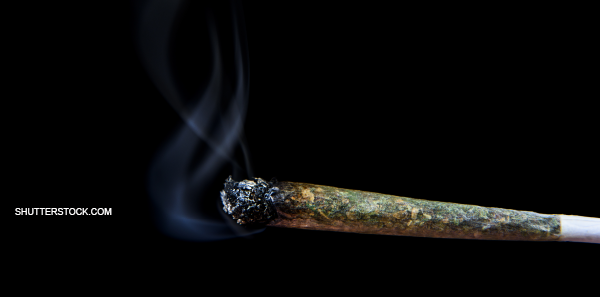
The greatest concern that I have is the confusion between medical and recreational marijuana. Patients are being diagnosed and treated from the marijuana shops by those without any medical training. I have had patients bring in bottles with a recommended strain of cannabis and frequency of use for a stated medical problem given at the recommendation of a marijuana shop employee. My colleagues report similar encounters, with one reporting seeing two separate patients with significantly altered sensorium and with bottles labeled 60 percent THC. They were taking this with opioids and benzodiazepines. In some cases, places outside of medical clinics, like local marijuana shops, are being used to give screening examinations for medical marijuana cards.4 Reportedly, no records are available from these visits when requested by other medical providers. A large number of things treated with marijuana, often with no cited research at all or with severe misinterpretation of research, are advertised online. These include statements that marijuana treats cancer (numerous types), cystic fibrosis, both diarrhea and constipation, hypoglycemia, nightmares, writer’s cramp, and numerous other conditions.5–7
Explore This Issue
ACEP Now: Vol 36 – No 05 – May 2017Although there are likely some very effective ways to use the cannabinoid receptor (probably better termed the anandamide receptor), putting shops on every street corner and having nonmedical personnel giving medical advice is a very poor way to use this as a medicine. Furthermore, to suggest that combustion (smoking) be the preferred route of medication delivery is harmful.3,8–10 I am also concerned that this is being widely distributed and utilized as a medicine prior to safety and efficacy studies having been completed; widely varying dosing regimens, concentrations, and formulations are being developed, sold, and utilized. Patients are not being informed of the adverse effects associated with marijuana use, but instead, they are being told, “There are no adverse effects.” I am in favor of using the anandamide receptor for treatment purposes. However, we should do this safely and appropriately. What is occurring now is neither safe nor appropriate.
There are numerous adverse effects of marijuana that are significant. Marijuana use may lead to irreversible changes in the brain.3,9,11,12 Marijuana use correlates with adverse social outcomes.3 It is strongly associated with the development of schizophrenia.13–16 Dependence can lead to problem use.17,18 There are adverse effects on cardiovascular function, and smoking leads to poor respiratory outcomes.3,19,20 Traffic fatalities associated with marijuana have increased in Colorado.1 Pregnant women are using marijuana, which may lead to adverse effects on the fetus, and pediatric exposures are a much more common occurrence.21,22
Different Approach Is Needed
We should approach mass marijuana production and distribution as we would any other large-scale public health problem. We should do what we can to limit exposure, and we should provide clear, unbiased education. In the case of prevention efforts being unsuccessful, we need to provide immediate treatment and assistance in stopping use. If we are going to use this as a medication, then we should use it as we use other medications. It should have to undergo the same scrutiny, Food and Drug Administration approval, and regulation that any other medication does. Why are we allowing a pass on a medication that very likely would carry with it a black-box warning?
Pages: 1 2 3 4 | Single Page



9 Responses to “Opinion: Dangers of Marijuana Experienced Firsthand”
May 29, 2017
Charles R CaffreyInteresting take! Can you comment on how many patients you see harmed from marijuana intoxication vs. alcohol intoxication? Both being unregulated in your state. In my experience, the devastating effects from alcohol seem to far outpace that of marijuana, in terms of addiction, trauma, suicide risk, end-organ damage, etc. However, I don’t practice in an environment where marijuana is legal, so perhaps marijuana is much more of a scourge in your practice setting. It seems that the Colorado Dept of Health has some interesting statistics regarding marijuana use in your state, including that daily or near-daily use of marijuana among adults in Colorado is much lower than daily use of alcohol. Further, past-month marijuana use along Colorado teens is almost identical to the national average.
June 10, 2017
YeVondaOne of the blading concerns mentioned in the article is non- medical employees diagnosing & prescribing in pot shops. Thankfully that’s not yet an occurrence in our CO liquor stores.
June 14, 2017
Brad RobertsThanks for the comment! Alcohol certainly remains a problem as well. I don’t have any specific data to say which is more of a contributing factor. I would say compared to New Mexico, I am seeing significantly more paranoia/anxiety/psychotic type symptoms and these correlate with MJ more than alcohol. Depression, SI, seem more correlated with alcohol- just anecdotally.
October 6, 2018
Aleksey DorofeyevBrad Roberts. I noticed something all too familiar. The most dangerous parts are limited to smoking, as well as “They were taking this with opioids and benzodiazepines”.
Trust me. My friend committed suicide after mixing xanax and lean. Alone they are fine, together they will accelerate a complete rewiring of the brain. Please consider OPIODS and benzos to be a more dangerous combination than any other medication out there.
Please research the effects of OPIODS and BENZOS COMBINED. Not seperate. I will guarentee you any patients that mix those drugs will be permanently mentally crippled.
May 29, 2017
Erik St.Pierre MDGreat article. Fairly new concept in Maine, but I am expecting the same to happen here. Everyone is excited about the increased tax revenue, but I doubt that it will be redirected at healthcare and drug rehabilitation. You can add marijuana to the list that includes alcohol, lottery tickets, and casinos as a really “poor”” way to generate tax revenue.
June 11, 2017
Pamela McCollno only a poor way but no way as the state of Colorado has a deficit after the cost of marijuana impaired driving costs- that alone ate up any tax revenue – not even mentioning the social and medical costs – other studies show millions of onpaid bills hospitals face dealing with marijuana cases. Then there is the increase in drop outs at $350,00 to society per case and the list goes on and on – we can not afford as taxpayers for this small minority to use this drug for a temporary intoxicating high.
July 14, 2017
medicoUpon what data are you basing your assertion that we “ate up any tax revenue” on impaired driving costs?
June 11, 2017
Todd B. Taylor, MDI have a very simple way to look at this burgeoning issue.
Who exactly do we think is “safe” or reasonable to use cannabis? Certainly not airline pilots, bus drivers, law enforcement, doctors, nurses, & pharmacists? Right, they are all regulated & will likely lose their license, assuming they get caught.
But what about Uber\Lyft drivers? What about school teachers, daycare workers, truck drivers, heavy machine operators?
Or what about the 218M US drivers? Right, they are going to be responsible & not drive when acutely intoxicated. But unlike alcohol, there’s no objective way to determine that. So, do we put very driver in jail who tests positive for cannabis they used two weeks ago?
So, for the people YOU count on every day to provide services to you & your family, who do you feel ok with them using cannabis on a regular basis? Might want to think about that the next time you sit down to get your hair cut.
Problem is, when the general public thinks about voting YES for a pot referendum, they are just thinking about how THEY would use it (responsibly) & would never give it to teenagers. Apparently, they fail to understand how the world really works. Put a McDonalds on every corner & the world gets fat. Put a Pot Dispensary on every corner & the world (including kids) gets stoned. Well, at least kids can’t get sugary drinks in schools.
October 21, 2018
AnnaThank you for your wonderful article. I have Epilepsy and marijuana and CBD Oil make my seizures WORSE. I can’t even be near anyone smoking because the 2nd hand smoke will cause me to go into a seizure.
If it’s really a medicine then it needs to be tested by the FDA and approved. Even then, one mans medicine is another mans poison.
Thank you for bravely speaking out.