

The Importance of Proning
Prone positioning has been a standard of care among intubated patients with acute respiratory distress syndrome for 20 years. However, the coronavirus pandemic was the first time in history that a large number of patients were awake when proned but not intubated, Dr. Levitan noted.
Explore This Issue
ACEP Now: Vol 40 – No 04 – April 2021When COVID-19 first hit the United States, many clinicians believed that all patients should be intubated early on. Part of this was due to concern of spreading the virus if patients weren’t on ventilators. But it was also believed, based on the severity of patients’ X-rays and their low oxygenation, that intubation would be inevitable in all of these patients, Dr. Levitan said.
As discovered in New York, however, many patients who were treated with noninvasive oxygenation (including high-flow nasal cannula) managed to recover without intubation.
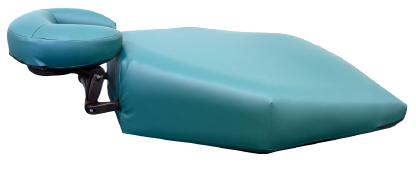
Oakworks proning
cushion.
OakWorks
If intubation could be avoided, it occurred to Dr. Levitan and other clinicians that this would be a tremendous win for patients, hospitals, and the entire health care system. The resources needed for intubated patients are substantially greater than for patients who can be managed with high-flow nasal cannula or other noninvasive ventilation options.
In addition, intubated patients require tremendous amounts of sedation, and many develop thrombosis, renal failure, or neurological injury.
The benefits of awake proning were demonstrated in a study published by Dr. Levitan and colleagues.1 The study showed among patients with advanced COVID-19 lung injury, two-thirds of patients avoided intubation during hospitalization.
Lead study author Nicholas D. Caputo, MD, an emergency physician at NYC Health + Hospitals/Lincoln in the Bronx, said, “The Prone2Help cushions have provided patients with a level of comfort they need in order to prone for an extended period of time. Some patients who couldn’t prone at all were able to do so with these cushions.”
Anand Swaminathan, MD, MPH, FACEP, assistant professor of emergency medicine at St. Joseph’s Regional Medical Center in Paterson, New Jersey, had similar sentiments. “The cushions have been extremely helpful in facilitating proning,” he said. “This has been particularly true for patients with higher body mass indexes. We continue to use the cushions today to great effect.”
Pulse Oximetry’s Benefits
Awake proning requires frequent monitoring with pulse oximetry and ongoing assessments of work of breathing. Some proned patients’ oxygenation improves, but their effort to breathe doesn’t improve enough to avert intubation, Dr. Levitan noted.
He believes that severe illness and mortality due to COVID-19 can be greatly diminished by detecting lung injury early on with pulse oximetry. In fact, he maintains that all patients diagnosed with COVID-19 should have pulse oximetry monitoring for two weeks after diagnosis. (Visit ACEPNow.com to read an article on pulse oximetry by Dr. Levitan.) If patients are identified when they still have only mild hypoxia and are treated with nasal cannula and proning as well as dexamethasone, they can often avoid critical illness, Dr. Levitan believes.
Dr. Levitan has been working to make pulse oximetry monitoring a standard of care that all public health agencies implement for patients diagnosed with COVID-19. Currently, Vermont is the only state that does this universally for all COVID-19 patients. Impressively, it has had fewer cases per capita and deaths per capita than any other state. Many of the nation’s leading health care systems, including Mayo Clinic, have also taken this approach. Recently, New York City distributed 250,000 pulse oximeters to hospitals, enabling all COVID-19 patients to be monitored.
Pages: 1 2 3 | Single Page


No Responses to “Cushions Help Larger COVID-19 Patients with Proning”