
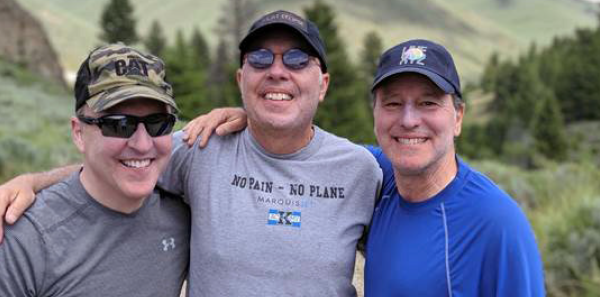
As COVID-19 cases continued to escalate in the United States in April 2020, Richard M. Levitan, MD, FACEP, an emergency physician at Littleton Regional Healthcare, a 25-bed hospital in Littleton, New Hampshire, wanted to do something to help.
Explore This Issue
ACEP Now: Vol 40 – No 04 – April 2021Work was actually slower for him at that time because people were avoiding emergency departments and there weren’t any COVID-19 cases in the rural, mountainous area. So, he decided to volunteer at Bellevue Hospital in New York City, where he did his residency in emergency medicine.
When he arrived, the number of beds in Bellevue’s ICU had been expanded fivefold, and several hundred patients were in the emergency department with COVID-19 pneumonia. Unbeknownst to him, his time at the hospital would have a far greater impact on his own outlook than he could ever have imagined.
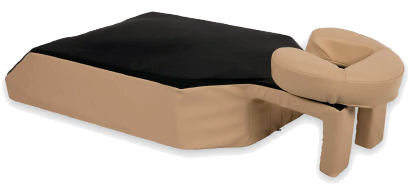
Earthlite proning cushion.
EarthLite
Dr. Levitan and other New York City physicians quickly became concerned about an insufficient supply of ventilators. But as they began to care for a high number of COVID-19 patients, many clinicians became convinced that the best way to care for these patients was to avoid intubation if possible. They also began to believe that turning patients onto their stomachs (ie, prone positioning) significantly improved oxygenation and avoided intubation. Proning helps aerate the posterior and lower parts of the lungs, areas that are often the most affected by COVID-19. These practices pioneered by New York City clinicians would go on to become the standard of care nationally over the next few months.
Proning can be difficult for many patients, however. In particular, heavier patients complained of back pain and were extremely uncomfortable proning on emergency department stretchers. Knowing the substantial benefits of proning, Dr. Levitan sought a way to make it possible for patients to prone more comfortably. He surmised that a cushion supporting a patient’s torso and hips could make the position more comfortable.
Implementing a Vision
Armed with his idea, Dr. Levitan asked a California company that makes pregnancy massage mattresses to overnight some samples. An obese husband and wife with severe COVID-19 at Bellevue Hospital were the first to try them out. “They were quite comfortable on the cushions,” he said. “Their oxygenation went up significantly, they didn’t have to work so hard to breathe, and they fell asleep. They averted intubation.”
Dr. Levitan shared this success story with his two brothers, who were eager to help him get cushions to other hospitals. It was important that free samples would be available so hospitals could avoid the administrative burden of ordering them during a pandemic. They ultimately decided that the best way to accomplish this would be to create a charitable organization.
Dr. Levitan’s twin brother, Robert Levitan, a technology entrepreneur, worked to get charitable approval from the state of New York, and “Prone2Help” was born. A creative services company, Sid Lee, donated its time and talents to create a website (Prone2Help.org) and logo for the nonprofit organization.
Two mattress manufacturers, Earthlite in California and Oakworks Medical in Pennsylvania, worked with Dr. Levitan to design the cushions. “They had been shut down due to COVID and reopened as essential businesses,” Dr. Levitan said. “They were grateful for the opportunity to make a product to help out with the pandemic and gave the charity reduced pricing.” Any hospital administrator, physician, or nurse can go to Prone2Help.org and request a cushion for free, along with free shipping.
Robert, who serves as Prone2Help’s executive director, also worked with FedEx to get a significant shipping discount for the nonprofit. The cushions ship directly from the manufacturer to a hospital, sometimes in just one day.
Dan Levitan, Dr. Levitan’s older brother who works in venture capital, focused his efforts on fundraising for the nonprofit. To date, Prone2Help has donated 1,200 proning cushions to 512 hospitals across the United States.
“The initiative that doctors and nurses took to order the cushions has been incredible,” Robert said. “Their level of dedication is inspiring.”
One hundred percent of donations to Prone2Help go toward paying for cushions and shipping them. Everyone associated with the organization is an unpaid volunteer.
Pages: 1 2 3 | Single Page


No Responses to “Cushions Help Larger COVID-19 Patients with Proning”