
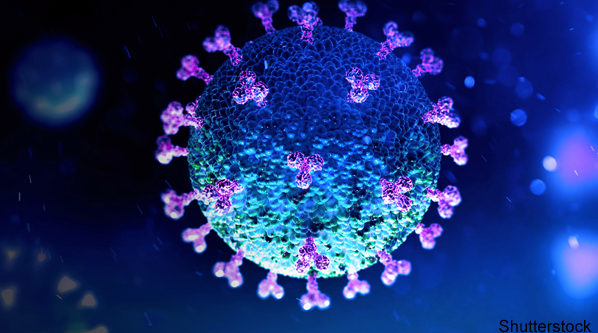
Vaccine development in the setting of an outbreak of a highly infectious viral pathogen can be a valuable step in minimizing spread of the disease. In the SARS outbreak, no viable vaccine was available, and although an S-protein-based vaccine to SARS coronavirus has shown efficacy in animal models, no coronavirus vaccine has been released for human use.8 Challenges in the development of attenuated coronavirus vaccines include the use of highly concentrated native coronavirus by laboratory workers, which potentially can lead to inadvertent transmission of disease to those working on vaccine development.9 Similar difficulties in developing a vaccine to the current coronavirus can be anticipated, although clinical trials are already under way.
Explore This Issue
ACEP Now: Vol 39 – No 03 – March 2020Clinical Management
Among the most daunting tasks for the ED worker evaluating possible COVID-19 patients is triage. Current Centers for Disease Control and Prevention (CDC) guidelines for determining whether a patient should appropriately be considered a “person under investigation” (PUI) are listed in Table 1.
Table 1: CDC Guidelines for Identifying Persons Under Investigation19
| Exposure | Symptoms | |
|---|---|---|
| Close contact* with laboratory confirmed COVID-19 patient within 14 days of symptom onset | AND | Fever** OR lower respiratory illness (LRI)*** |
| History of travel from affected areas within 14 days of onset | AND | Fever AND LRI requiring hospitalization*** |
| No source of exposure has been identified | AND | Fever AND severe acute LRI requiring hospitalization AND without alternative diagnosis |
* Close contact defined as being within six feet of a confirmed case for prolonged period or having direct contact with infectious secretions of a COVID-19 case. ** Observed or subjective. *** CDC cites cough and shortness of breath as examples.
Note that these are guidelines designed as a national public health response to an outbreak. They do not always translate smoothly into a busy ED triage system. At our institution, the rule-out COVID-19 triage process is based on recommendations by Koenig during the MERS coronavirus outbreak, summarized as “Identify, Isolate, and Inform.”10
Identification should ideally occur prior to or during triage. At our institution, the electronic medical record requires the triage nurse to ask every patient about recent international travel. A positive screen prompts further automated questions regarding travel to China or other areas with many cases and whether the patient has had cough, shortness of breath, or fever. Of note, during previous outbreaks of MERS coronavirus and Ebola virus, we determined that broader regional terms like “the Arabian Peninsula” or “West Africa” were not familiar to all staff and sometimes led to both over- and under-triage. We now limit the triage form to specific countries relevant to a current outbreak.
If the patient screens positive for both travel to an affected area and any of the aforementioned symptoms, they need some kind of isolation. A surgical mask is applied, and a provider is notified. In most cases, the provider notifies the infectious disease team, who can help determine whether the patient meets CDC PUI inclusion criteria and can inform the local department of public health and the CDC.
Infection Prevention
After a potential PUI is identified and a surgical mask has been placed on the patient, the CDC states that they be moved to an airborne infection isolation room (AIIR).11,12 In facilities that have limited availability of an appropriate bed, any private room with a closed door may be temporized until an AIIR is available. Patients undergoing observation by state departments of health may contact emergency departments prior to their arrival so that an AIIR might be available sooner. However, advance warning is not always possible. Facilities without AIIRs should transfer PUIs to facilities that do.
Pages: 1 2 3 4 5 | Single Page



5 Responses to “COVID-19 for the Emergency Physicians: What You Need to Know”
March 15, 2020
Nadia T.What are the recommendations as to what to do with patients who have mild/moderate symptoms (not to a degree that requires admission) but are PUI due to possible exposure? Do we keep them in isolation in the ED until test results come back? Do you send them home to self quarantine? Also when these mild/moderate cases come back with positive tests results what do you do with them? Admit for isolation? Discharge to self quarantine?
There seems to be a lot of sound recommendations for severely ill patients but not for those with mild/moderate symptoms…..any guidance would be highly appreciated.
May 13, 2020
Cathy ByrdHas acyclovir been used in the treatment for coved19?
April 13, 2020
Debra GrundmanHas Valacyclovir been trialed to treat Covid 19 ?
April 15, 2020
Dr Sanya jainWhy valacyclovir was not given to covid patient along with antihistamines
May 13, 2020
Cathy ByrdAre the children who are getting this new disease up to date on there vaccinations?