Logo

Log In Sign Up |  An official publication of: American College of Emergency Physicians
Navigation
  • Home
  • Multimedia
    • Podcasts
    • Videos
  • Clinical
    • Airway Managment
    • Case Reports
    • Critical Care
    • Guidelines
    • Imaging & Ultrasound
    • Pain & Palliative Care
    • Pediatrics
    • Resuscitation
    • Trauma & Injury
  • Resource Centers
    • mTBI Resource Center
  • Career
    • Practice Management
      • Benchmarking
      • Reimbursement & Coding
      • Care Team
      • Legal
      • Operations
      • Quality & Safety
    • Awards
    • Certification
    • Compensation
    • Early Career
    • Education
    • Leadership
    • Profiles
    • Retirement
    • Work-Life Balance
  • Columns
    • ACEP4U
    • Airway
    • Benchmarking
    • Brief19
    • By the Numbers
    • Coding Wizard
    • EM Cases
    • End of the Rainbow
    • Equity Equation
    • FACEPs in the Crowd
    • Forensic Facts
    • From the College
    • Images in EM
    • Kids Korner
    • Medicolegal Mind
    • Opinion
      • Break Room
      • New Spin
      • Pro-Con
    • Pearls From EM Literature
    • Policy Rx
    • Practice Changers
    • Problem Solvers
    • Residency Spotlight
    • Resident Voice
    • Skeptics’ Guide to Emergency Medicine
    • Sound Advice
    • Special OPs
    • Toxicology Q&A
    • WorldTravelERs
  • Resources
    • ACEP.org
    • ACEP Knowledge Quiz
    • Issue Archives
    • CME Now
    • Annual Scientific Assembly
      • ACEP14
      • ACEP15
      • ACEP16
      • ACEP17
      • ACEP18
      • ACEP19
    • Annals of Emergency Medicine
    • JACEP Open
    • Emergency Medicine Foundation
  • About
    • Our Mission
    • Medical Editor in Chief
    • Editorial Advisory Board
    • Awards
    • Authors
    • Article Submission
    • Contact Us
    • Advertise
    • Subscribe
    • Privacy Policy
    • Copyright Information

Case Report: Foot Amputation in the Field

By Todd Burgbacher, DO, FACEP; Joseph Endemano, DO; and Brian Conner, DO | on November 5, 2024 | 2 Comments
Case Report
  • Tweet
  • Click to email a link to a friend (Opens in new window) Email
Print-Friendly Version

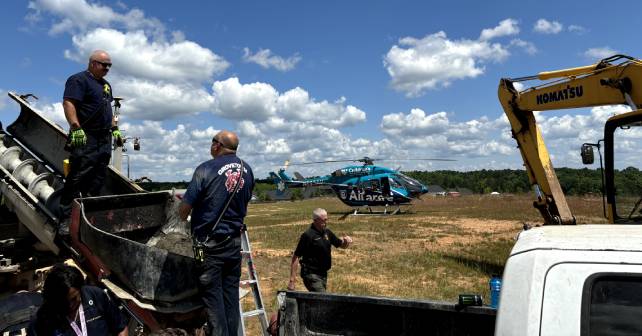
EMS and Fire are called to a new development construction site for a 22-year-old male who is possibly entrapped in a concrete machine. Prior to arrival, a bystander placed a belt on the patients legs, as a makeshift tourniquet. Upon arrival, they find a young male partially standing up inside the hopper of a concrete curb laying machine. Further investigation reveals his right leg was stuck in the auger of this machine with his mangled foot sticking out of the chute at the bottom. The fire crew requested a heavy rescue for additional resources. The EMS crew placed a second tourniquet, began two large bore IVs, and started intravenous fluids. Additionally, they called for an EMS helicopter for transport.

You Might Also Like
  • ‘Road House Rules’ for EMS Interactions in ED
  • Rescue Team Doctor at the Surfside Condo Collapse Shares Experience
  • How To Identify and Treat Patellar Dislocation Versus Knee Dislocation
Explore This Issue
ACEP Now: Vol 43 – No 11 – November 2024
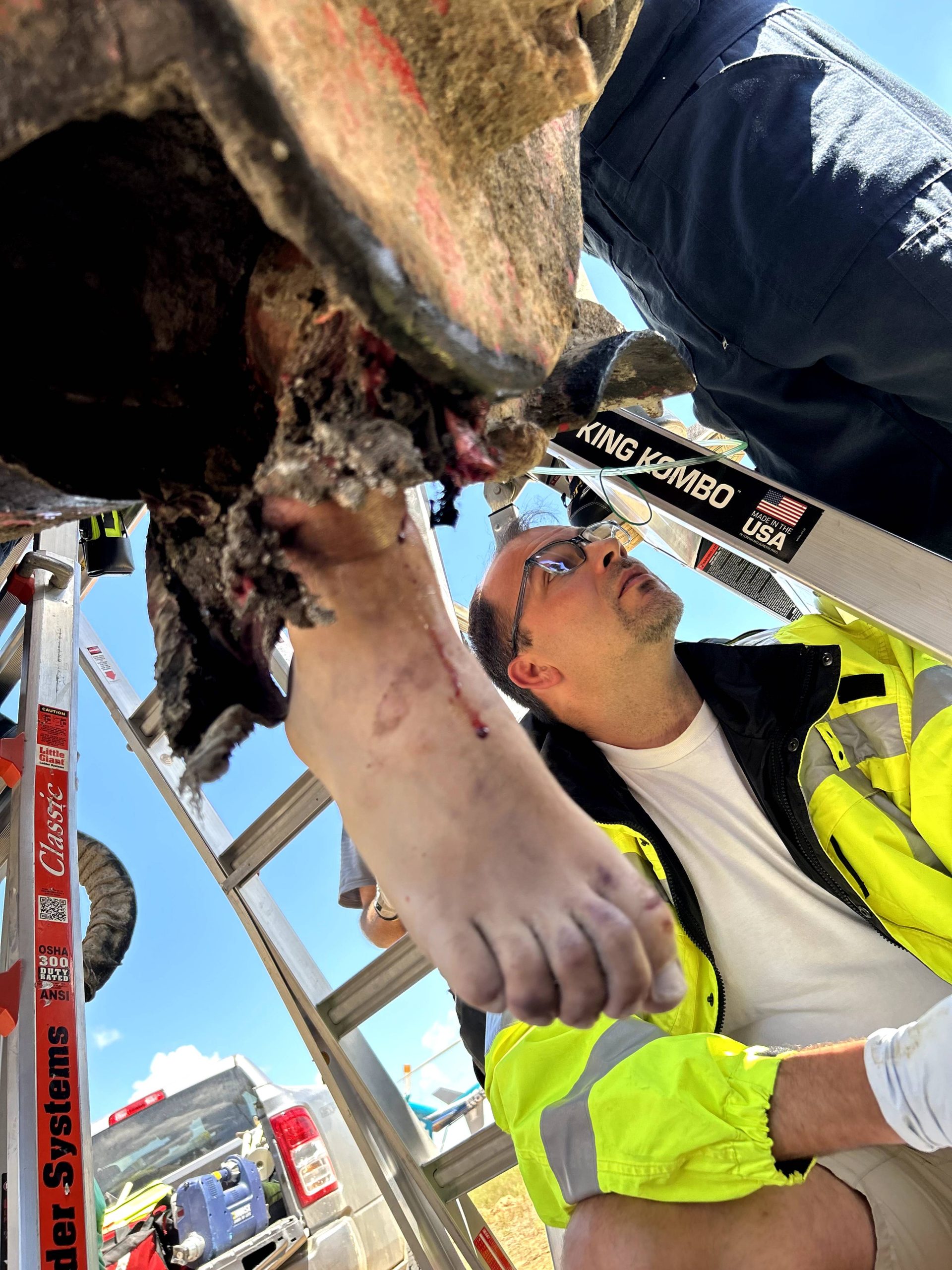
The patient’s foot dangles from the auger. (Click to enlarge.)

The Level 1 trauma center, Wellstar MCG Health, dispatched its EMS helicopter AirCare, but also made a request for their EMS physician response vehicle to respond. Three EMS physicians happened to be in a conference and available. Both AirCare and the EMS physician team arrived on scene within 30 minutes. Prior to their arrival, the fire department had commandeered a construction excavator and a heavy equipment operator to set up a lift to pull the patient out. The articulating arm was moved above the patient and a harness and rigging was attached to secure the patient in preparation to lift him out of the concrete machine.

Assessment

When the physician team arrived, AirCare had just landed and was performing their assessment. A quick scene size-up found the patient to be awake and alert, but tachycardic in 130s, respirations in 20s on RA, systolic blood pressure 90s, shock index of 1.4, and diaphoretic. The patient’s foot, noted to be a complete fracture dislocation of ankle joint and three-quarters amputated, was only being held by soft tissue. There was no palpable pulse and capillary refill time was greater than five 5 seconds; however, the patient had two tourniquets in place at this point.
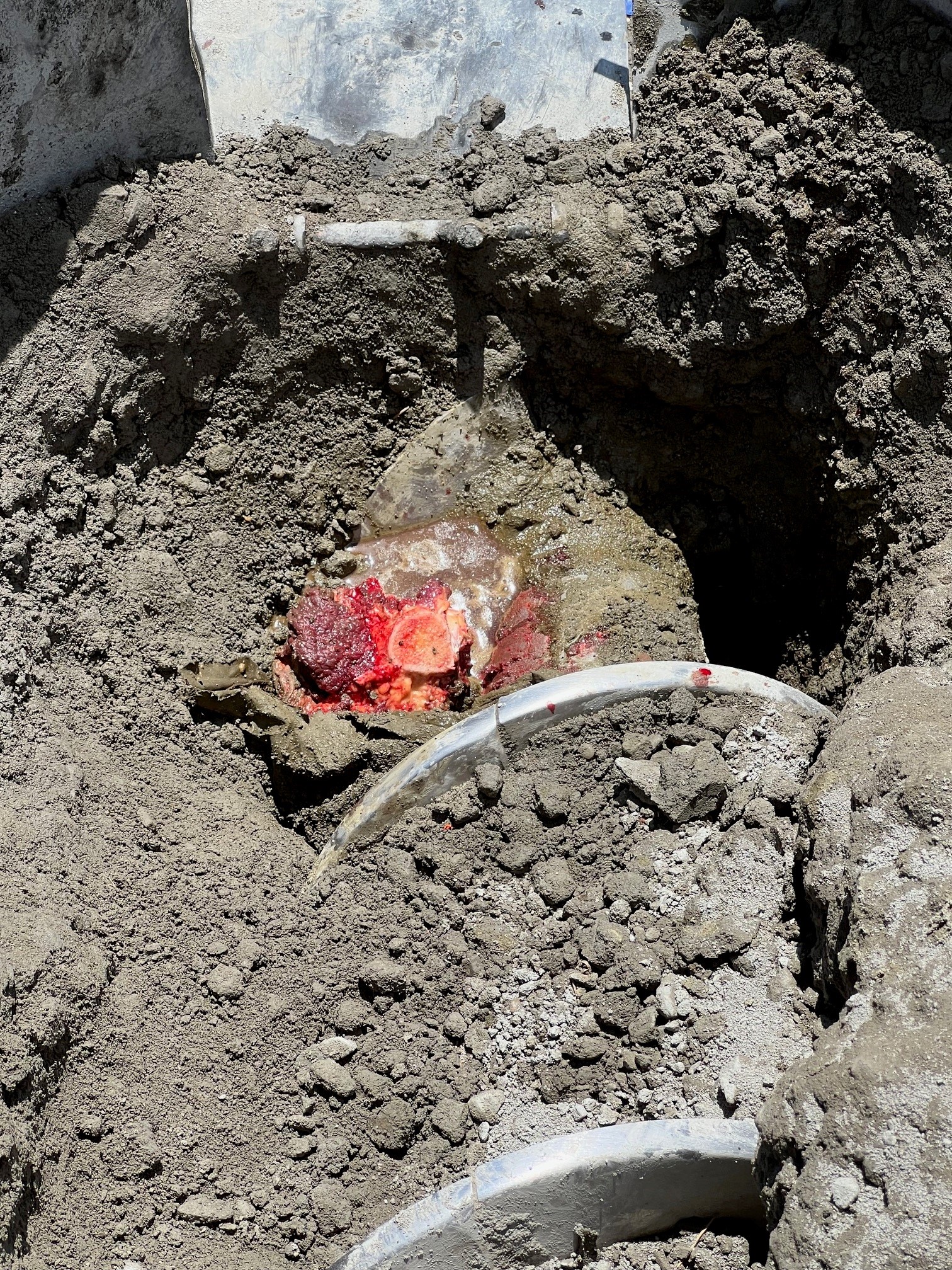
The second, higher, amputation site. (Click to enlarge.)

A quick discussion with rescue personnel revealed that the machine could not be put in reverse safely and that the machinery could not be taken apart in a timely fashion. The three physicians on scene concurred that the patient was not stable (initially given IV fluids with improvement in blood pressure, but now hypotensive), and his foot would need to be amputated. Simultaneously there was a request for the AirCare crew to give whole blood, tranexamic acid, and Ancef.

Pages: 1 2 3 4 | Single Page

Topics: AmputationClinicalTrauma & Injury

Related

  • Non-Invasive Positive Pressure Ventilation in the Emergency Department

    October 1, 2025 - 0 Comment
  • Emergency Department Management of Prehospital Tourniquets

    October 1, 2025 - 0 Comment
  • ACEP’s October 2025 Poll: How Often Do You Read Your Own X-Rays?

    September 30, 2025 - 0 Comment

Current Issue

ACEP Now: November 2025

Download PDF

Read More

2 Responses to “Case Report: Foot Amputation in the Field”

  1. December 2, 2024

    Kyle Jaschen Reply

    Great read Dr. Burgbacher! Any issues with the saw getting thru the femur? Was it battery powered or corded? How long and what type was the blade?

    • January 15, 2025

      Joseph Endemano Reply

      No problem getting through the femur. A reciprocating saw (sawzall) was used from one of the fire engines on scene.

Leave a Reply Cancel Reply

Your email address will not be published. Required fields are marked *


*
*


Wiley
  • Home
  • About Us
  • Contact Us
  • Privacy
  • Terms of Use
  • Advertise
  • Cookie Preferences
Copyright © 2025 by John Wiley & Sons, Inc. All rights reserved, including rights for text and data mining and training of artificial technologies or similar technologies. ISSN 2333-2603