
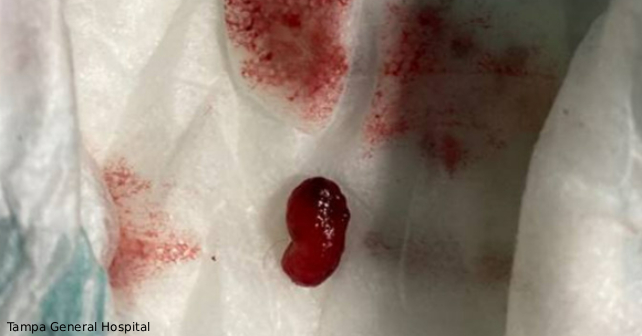
Rectal prolapse in children involves protrusion of rectal mucosa through the anal sphincter and is most often seen in those under 4 years of age. While constipation and straining are typical causes, less common etiologies include anatomic variants (i.e., cystic fibrosis or Hirschsprung’s) and rare pathologies such as polyps. Juvenile polyps are the most frequent colonic polyps in children. They occur in one to two percent of the population, usually under age 10, and most commonly in the 2 to –6-year-old age range. They are benign hamartomas usually located in the rectosigmoid colon.
Explore This Issue
ACEP Now: January 2026Histologically, juvenile polyps exhibit dilated mucus-filled glands within an inflamed stroma, distinguishing them from adenomatous polyps or syndromic polyposis conditions. Although usually sporadic, multiple lesions or a positive family history should raise suspicion for juvenile polyposis syndrome, which carries a risk of gastrointestinal malignancy and warrants surveillance. They commonly present with painless rectal bleeding, which is often minimal, but there have been case reports detailing hemorrhagic shock requiring surgical or endovascular management. Additionally, polyps may prolapse, most of which self-reduce or can be manually reduced, but the literature does detail cases requiring hot snare polypectomy for unreducible polyps with rectal prolapse. Recurrent polyp prolapse should undergo surgical removal.
Lastly, they may self-amputate and be expelled, causing self-limiting pain and bleeding. A literature search resulted in only one other case report of self-amputated polyp but was complicated by intestinal parasitic infection. This case underscores the value of including juvenile polyps in the diagnostic consideration of pediatric rectal bleeds. Since this is usually a painless, self-limiting disorder, the frequency may be higher and go under-reported.
 Dr. Sean Eden graduated Drexel University’s Physician Assistant program in 2016 followed by Rutgers University’s New Jersey Medical School in 2025. He is currently a PGY1 in the Emergency Medicine Residency of the University of South Florida, Tampa General Hospital and serves as a medical officer for the United States Air Force National Guard.
 Alanna Cordner is a proud Florida native who graduated from the University of Florida in 2021. She is currently a fourth-year medical student at the University of South Florida Morsani College of Medicine in Tampa, pursuing a career in Emergency Medicine.
 Dr. Jasmine Patterson trained at Wake Forest in N.C. and is an EM/PEM doctor at Tampa General hospital since 2016. She has been a core faculty member for the Department of Emergency Medicine at the University of South Florida and medical director of the pediatric emergency department at Tampa General Hospital since 2020.
Pages: 1 2 3 | Single Page



No Responses to “Case Report: A Pediatric Amputated Juvenile Polyp”