Logo

Log In Sign Up |  An official publication of: American College of Emergency Physicians
Navigation
  • Home
  • Multimedia
    • Podcasts
    • Videos
  • Clinical
    • Airway Managment
    • Case Reports
    • Critical Care
    • Guidelines
    • Imaging & Ultrasound
    • Pain & Palliative Care
    • Pediatrics
    • Resuscitation
    • Trauma & Injury
  • Resource Centers
    • mTBI Resource Center
  • Career
    • Practice Management
      • Benchmarking
      • Reimbursement & Coding
      • Care Team
      • Legal
      • Operations
      • Quality & Safety
    • Awards
    • Certification
    • Compensation
    • Early Career
    • Education
    • Leadership
    • Profiles
    • Retirement
    • Work-Life Balance
  • Columns
    • ACEP4U
    • Airway
    • Benchmarking
    • Brief19
    • By the Numbers
    • Coding Wizard
    • EM Cases
    • End of the Rainbow
    • Equity Equation
    • FACEPs in the Crowd
    • Forensic Facts
    • From the College
    • Images in EM
    • Kids Korner
    • Medicolegal Mind
    • Opinion
      • Break Room
      • New Spin
      • Pro-Con
    • Pearls From EM Literature
    • Policy Rx
    • Practice Changers
    • Problem Solvers
    • Residency Spotlight
    • Resident Voice
    • Skeptics’ Guide to Emergency Medicine
    • Sound Advice
    • Special OPs
    • Toxicology Q&A
    • WorldTravelERs
  • Resources
    • ACEP.org
    • ACEP Knowledge Quiz
    • Issue Archives
    • CME Now
    • Annual Scientific Assembly
      • ACEP14
      • ACEP15
      • ACEP16
      • ACEP17
      • ACEP18
      • ACEP19
    • Annals of Emergency Medicine
    • JACEP Open
    • Emergency Medicine Foundation
  • About
    • Our Mission
    • Medical Editor in Chief
    • Editorial Advisory Board
    • Awards
    • Authors
    • Article Submission
    • Contact Us
    • Advertise
    • Subscribe
    • Privacy Policy
    • Copyright Information

Atrial Fibrillation Assessment Tips, Via a Dance Club Analogy

By Trent Stephenson, DO, FACEP | on January 14, 2019 | 2 Comments
Features
  • Tweet
  • Click to email a link to a friend (Opens in new window) Email
Print-Friendly Version
ILLUSTRATION: Chris Whissen & shutterstock.com

Have you ever thought of the cardiac conduction system as a night club—Club Ventricle? Who knows, you might have to stop yourself from busting a move the next time you’re assessing atrial fibrillation in your emergency department!

You Might Also Like
  • ACEP15 Session: Treatment Update for Atrial Fibrillation
  • Get the Latest Update on Atrial Fibrillation
  • Diltiazem Achieves More Rapid Rate Control in Atrial Fibrillation than Metoprolol
Explore This Issue
ACEP Now: Vol 38 – No 01 – January 2019

Atrial Fibrillation

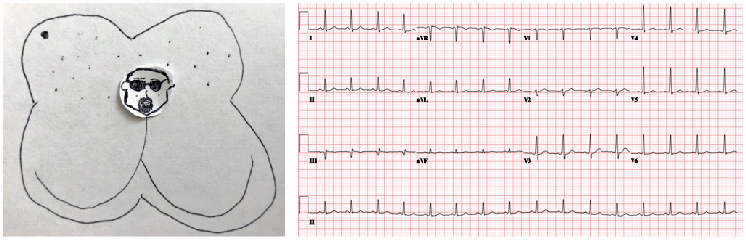
Atrial fibrillation has an atrial rate of 300–600 bpm. Picture it as 300–600 people trying to get into a club (ventricle). The atrioventricular (AV) node (bouncer) is only able to let 140–160 bpm (people) into the club at a time, and the rate is irregular. All beats (people) are going through the same point of entry, so all beats are the same width.
Atrial Fibrillation


Wolff-Parkinson-White Syndrome (WPW)

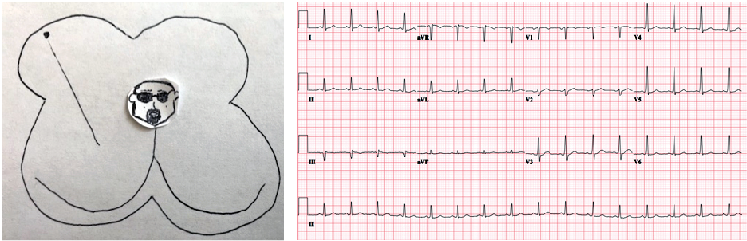
In WPW, beats are being conducted by an accessory pathway (the side door of the club) and not going through the AV node (bouncer). The side door of Kent is farther from the dance floor, so the QRS complex is wider as the people travel farther and do a dance move called the Delta Wave. Travel distance and dance moves take time.
Wolff-Parkinson-White Syndrome (WPW)


Atrial Fibrillation with Rapid Ventricular Response (RVR) After AV Nodal Blocking Agent

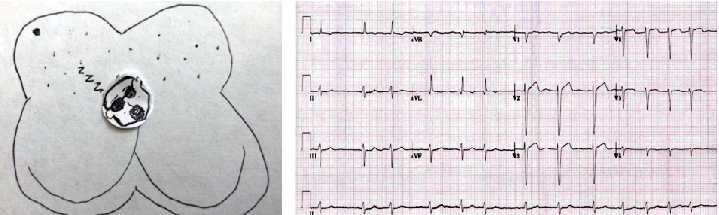
The AV node (bouncer) is inhibited. Now, fewer beats (people) will get into Club Ventricle because the bouncer is slower checking IDs and collecting a cover charges and cannot clear people as fast.
Atrial Fibrillation with Rapid Ventricular Response (RVR) After AV Nodal Blocking Agent


Atrial Fibrillation with RVR in a Patient with WPW

Some beats (people) are going through the main door with the AV node (bouncer). Those are the “straight and narrow” people, so the QRS complex will be narrower. Some beats (people) are going through the side door of Kent, and their path/QRS interval is wider. This sparks a dance competition in Club Ventricle with different QRS intervals (dance moves).
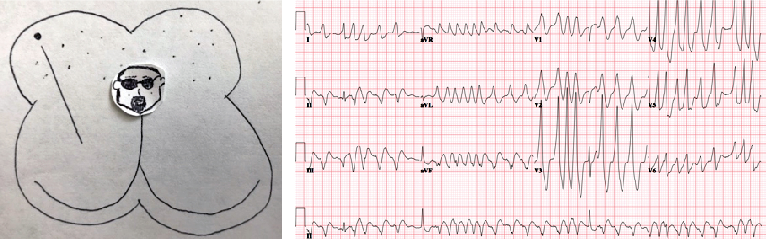
Atrial Fibrillation with RVR in a Patient with WPW


Atrial Fibrillation with RVR and WPW After an AV Nodal Blocking Agent Has Been Given

The AV node (bouncer) is inhibited by AV nodal blocking agents, so the beats (people) become impatient. Instead of waiting in line to go through the main door, they rush for the side door, which is now a faster point of entry. The club gets “turnt up” for a while but then gets shut down (ventricular fibrillation arrest).
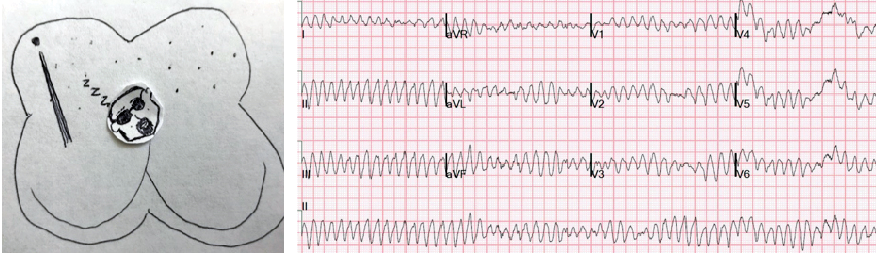
Atrial Fibrillation with RVR and WPW After an AV Nodal Blocking Agent Has Been Given


Treatment Options for Atrial Fibrillation with RVR and WPW

  • Procainamide acts like club security, running to the side door to slow down patrons from sneaking in. It prolongs the refractory period of the accessory pathway.
  • Cardioversion acts as a strobe light that lowers the seizure threshold of the partygoers and resets them after a short post-ictal period, bringing order to the club.

Take-Home Points

  • When dealing with atrial fibrillation, look closely at the widths of the QRS complexes. If they are different widths, then consider that an accessory pathway is being used in addition to the beats being transmitted through the AV node.
  • Look at the rate of atrial fibrillation. If the rate is 200–300 bpm at times, then also consider an accessory pathway.
  • Do not use AV nodal blocking agents in atrial fibrillation with RVR in the presence of WPW, as it allows the accessory pathway to take over.
  • Use procainamide or consider cardioversion in patients with atrial fibrillation with RVR and WPW.
  • The Delta Wave is an amazing dance move and can be used at most social events. Be cautious—you may get cardioverted!


Dr. StephensonDr. Stephenson is an emergency physician with Integrative Emergency Services in Dallas.

Pages: 1 2 | Multi-Page

Topics: Atrial FibrillationBedside EducationCardiacWolff-Parkinson-White Syndrome (WPW)

Related

  • Updated Guidelines on Atrial Fibrillation Management

    August 14, 2024 - 0 Comment
  • AF with RVR and HFrEF, CCB or BB?

    March 3, 2023 - 0 Comment
  • New Atrial Fibrillation Quality Initiative Available

    October 25, 2021 - 0 Comment

Current Issue

ACEP Now: November 2025

Download PDF

Read More

2 Responses to “Atrial Fibrillation Assessment Tips, Via a Dance Club Analogy”

  1. January 17, 2019

    R Holland, MD Reply

    Great article with simplified visuals and concepts every medical school student and resident will be able to understand.

  2. January 17, 2019

    E. Strunk, M.D. Reply

    Great article!

Leave a Reply Cancel Reply

Your email address will not be published. Required fields are marked *


*
*


Wiley
  • Home
  • About Us
  • Contact Us
  • Privacy
  • Terms of Use
  • Advertise
  • Cookie Preferences
Copyright © 2025 by John Wiley & Sons, Inc. All rights reserved, including rights for text and data mining and training of artificial technologies or similar technologies. ISSN 2333-2603
