Logo

Log In Sign Up |  An official publication of: American College of Emergency Physicians
Navigation
  • Home
  • Multimedia
    • Podcasts
    • Videos
  • Clinical
    • Airway Managment
    • Case Reports
    • Critical Care
    • Guidelines
    • Imaging & Ultrasound
    • Pain & Palliative Care
    • Pediatrics
    • Resuscitation
    • Trauma & Injury
  • Resource Centers
    • mTBI Resource Center
  • Career
    • Practice Management
      • Benchmarking
      • Reimbursement & Coding
      • Care Team
      • Legal
      • Operations
      • Quality & Safety
    • Awards
    • Certification
    • Compensation
    • Early Career
    • Education
    • Leadership
    • Profiles
    • Retirement
    • Work-Life Balance
  • Columns
    • ACEP4U
    • Airway
    • Benchmarking
    • Brief19
    • By the Numbers
    • Coding Wizard
    • EM Cases
    • End of the Rainbow
    • Equity Equation
    • FACEPs in the Crowd
    • Forensic Facts
    • From the College
    • Images in EM
    • Kids Korner
    • Medicolegal Mind
    • Opinion
      • Break Room
      • New Spin
      • Pro-Con
    • Pearls From EM Literature
    • Policy Rx
    • Practice Changers
    • Problem Solvers
    • Residency Spotlight
    • Resident Voice
    • Skeptics’ Guide to Emergency Medicine
    • Sound Advice
    • Special OPs
    • Toxicology Q&A
    • WorldTravelERs
  • Resources
    • ACEP.org
    • ACEP Knowledge Quiz
    • Issue Archives
    • CME Now
    • Annual Scientific Assembly
      • ACEP14
      • ACEP15
      • ACEP16
      • ACEP17
      • ACEP18
      • ACEP19
    • Annals of Emergency Medicine
    • JACEP Open
    • Emergency Medicine Foundation
  • About
    • Our Mission
    • Medical Editor in Chief
    • Editorial Advisory Board
    • Awards
    • Authors
    • Article Submission
    • Contact Us
    • Advertise
    • Subscribe
    • Privacy Policy
    • Copyright Information

ACEP17 Mills Lecture to Address Cognitive Bias in Emergency Department Patient Care

By Richard Quinn | on October 4, 2017 | 0 Comment
ACEP17 Features
  • Tweet
  • Click to email a link to a friend (Opens in new window) Email
Print-Friendly Version

Sheryl Heron, MD, MPH, FACEP, knows cognitive bias firsthand—and not just because she’s delivering this year’s James D. Mills, Jr. Memorial Lecture, “Overcoming Cognitive Blind Spots to Improve Outcomes” at 12:30 p.m. on Tuesday, Oct. 31.

You Might Also Like
  • We All Have Biases—It’s How You Manage Them That Matters
  • ACEP15 Rorrie Lecture to Address Emergency Department Superutilizers
  • ACEP15: Dr. Al Sacchetti’s Mills Lecture Hits Highs and Lows of a Career in Emergency Medicine
Explore This Issue
ACEP17 Preview: Vol 36 – No 09a – September 2017

It’s because Dr. Heron, the vice chair of administrative affairs in the Emory University department of emergency medicine, has been blinded herself. Like the time there was an African-American male reportedly found down with a concern for substance abuse.

Dr. Mills assumed from the team’s presentation that, because the patient was homeless, he was inebriated to the point of unconsciousness. In reality, the man was slated to sing for President Obama the next day at the White House and, in his excitement, mistakenly took too much Seroquel thinking it was blood pressure medication.

“Cognitive load takes a toll when moving quickly in a busy ER,” said Dr. Heron. “All of us, I am sure, have made judgments about our patients—and perhaps each other—that have been totally incorrect. The more we give room to the fact that we will make those mistakes, the more we are humbled.”
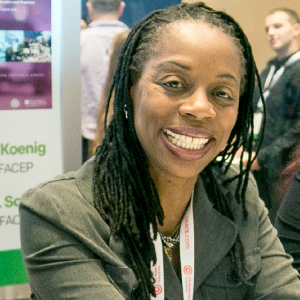
Dr. Heron

Dr. Heron
Darnell Scott

Cognitive biases subconsciously affect behavior and can ultimately impact the delivery of care. Bias can be based on race, ethnicity, culture—anything that can be the basis of a judgment.

Dr. Heron said the first step is acknowledging the bias.

“Cognitive bias is not a dirty word,” she said. “It’s not a code word for saying something is wrong with you, that you are a racist or a sexist or any -ism that one may put there. It’s really about pausing to stop and reflect and think, ‘Are my behaviors conducive to and in alignment with either a working environment or a patient encounter that is respectful and would optimize outcomes?’ ”

Dr. Heron will highlight the P.A.U.S.E. technique from Cook Ross to mitigate bias, which encourages physicians and others to:

  • Pay attention
  • Acknowledge your reactions
  • Understand those reactions/judgments
  • Search for constructive solutions
  • Execute on that strategy

“I would hope that everyone leaves with something … that will help them feel empowered,” Dr. Heron said. “To understand and appreciate why this matters, and [that] it matters, particularly in this time in history, when we need it the most.”


Richard Quinn is a freelance writer in New Jersey.

Rorrie Lecture

Don’t miss the Colin C. Rorrie, Jr. Lecture ”United We Stand: The Influence of Emergency Physicians on Key Health and Public Policy” at 12:30 p.m. on Monday, Oct. 30.

Pages: 1 2 | Single Page

Topics: ACEPACEP17American College of Emergency PhysiciansAnnual Scientific AssemblyBiasDiversityDr. Sheryl HeronEmergency MedicineEthnicityMills LecturePractice ManagementPrejudiceRace

Related

  • Florida Emergency Department Adds Medication-Dispensing Kiosk

    November 7, 2025 - 1 Comment
  • Q&A with ACEP President L. Anthony Cirillo

    November 5, 2025 - 0 Comment
  • How Does Emergency Medicine Navigate Consolidation Trends in Health Care?

    October 29, 2025 - 0 Comment

Current Issue

ACEP Now: November 2025

Download PDF

Read More

No Responses to “ACEP17 Mills Lecture to Address Cognitive Bias in Emergency Department Patient Care”

Leave a Reply Cancel Reply

Your email address will not be published. Required fields are marked *


*
*


Wiley
  • Home
  • About Us
  • Contact Us
  • Privacy
  • Terms of Use
  • Advertise
  • Cookie Preferences
Copyright © 2025 by John Wiley & Sons, Inc. All rights reserved, including rights for text and data mining and training of artificial technologies or similar technologies. ISSN 2333-2603
