Logo

Log In Sign Up |  An official publication of: American College of Emergency Physicians
Navigation
  • Home
  • Multimedia
    • Podcasts
    • Videos
  • Clinical
    • Airway Managment
    • Case Reports
    • Critical Care
    • Guidelines
    • Imaging & Ultrasound
    • Pain & Palliative Care
    • Pediatrics
    • Resuscitation
    • Trauma & Injury
  • Resource Centers
    • mTBI Resource Center
  • Career
    • Practice Management
      • Benchmarking
      • Reimbursement & Coding
      • Care Team
      • Legal
      • Operations
      • Quality & Safety
    • Awards
    • Certification
    • Compensation
    • Early Career
    • Education
    • Leadership
    • Profiles
    • Retirement
    • Work-Life Balance
  • Columns
    • ACEP4U
    • Airway
    • Benchmarking
    • Brief19
    • By the Numbers
    • Coding Wizard
    • EM Cases
    • End of the Rainbow
    • Equity Equation
    • FACEPs in the Crowd
    • Forensic Facts
    • From the College
    • Images in EM
    • Kids Korner
    • Medicolegal Mind
    • Opinion
      • Break Room
      • New Spin
      • Pro-Con
    • Pearls From EM Literature
    • Policy Rx
    • Practice Changers
    • Problem Solvers
    • Residency Spotlight
    • Resident Voice
    • Skeptics’ Guide to Emergency Medicine
    • Sound Advice
    • Special OPs
    • Toxicology Q&A
    • WorldTravelERs
  • Resources
    • ACEP.org
    • ACEP Knowledge Quiz
    • Issue Archives
    • CME Now
    • Annual Scientific Assembly
      • ACEP14
      • ACEP15
      • ACEP16
      • ACEP17
      • ACEP18
      • ACEP19
    • Annals of Emergency Medicine
    • JACEP Open
    • Emergency Medicine Foundation
  • About
    • Our Mission
    • Medical Editor in Chief
    • Editorial Advisory Board
    • Awards
    • Authors
    • Article Submission
    • Contact Us
    • Advertise
    • Subscribe
    • Privacy Policy
    • Copyright Information

A Patient Transfer Leads to a Lawsuit

By Eric Funk, MD | on September 25, 2020 | 0 Comment
Medicolegal Mind
  • Tweet
  • Click to email a link to a friend (Opens in new window) Email
Print-Friendly Version

Obtaining a Transfer

With her oxygen saturation holding in the 80s, the physician began the process to transfer her to a hospital with ICU capabilities. This process was unfortunately fraught with unnecessary delays. An emergency physician (Dr. H) at a regional medical center recommended that she be transferred to an academic center. The academic center was called, took down the patient’s information, and said they would call back, but 30 minutes later there was still no response. The doctor then tried a third hospital, and the cardiologist on-call declined the admission until the emergency physician consulted the patient’s outpatient cardiologist. The outpatient cardiologist worked at the first hospital that had been called, and he ultimately accepted the patient.

You Might Also Like
  • When Delayed Diagnosis Leads to a Malpractice Lawsuit
  • Elderly Patient Dies after Emergency Dept. Bounceback, Lawsuit Results
  • A Lack of Communication Let a Cancer Grow, Which Led to a Lawsuit
Explore This Issue
ACEP Now: Vol 39 – No 09 – September 2020

The patient departed the emergency department via helicopter with an oxygen saturation of approximately 80 percent. On arrival to the receiving hospital, her oxygen saturation was noted to be 40 percent. The anesthesia team was waiting for the patient at the bedside in the ICU, removed the King airway, and intubated the patient.

The patient’s status continued to decline. She sadly passed away five days after going into the emergency department, with the final diagnoses shown in Figure 2.
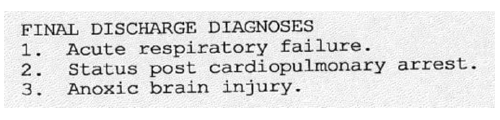
Figure 2

Figure 2

The Lawsuit

Figure 3

Figure 3

The patient’s family was understandably upset and contacted an attorney. The subsequent lawsuit is unusual and demonstrates an interesting legal twist emergency physicians should be aware of and understand. The lawsuit alleged an EMTALA violation by Dr. H, the emergency physician at the receiving hospital. He had originally recommended that the patient be transferred to a nearby academic medical center instead, but she ultimately was transferred to his facility after numerous phone calls. In addition to an alleged EMTALA violation, the lawsuit also alleged that he was negligent in his responsibility to the patient.

Dr. H was deposed (see Figure 3). He stated that he did not explicitly decline the transfer but that he was helping the sending physician brainstorm the best arrangement for the transfer.

Ultimately, Dr. H’s attorneys filed for summary judgment. The lawsuit was dismissed because EMTALA allows for legal action against hospitals but not against individual physicians. Further, the defense asserted that Dr. H could not be personally liable for negligence because he did not establish a relationship with the patient solely on the basis of taking a phone call about her possible transfer.

Pages: 1 2 3 4 | Single Page

Topics: Case ReportsEMTALAMalpracticePracticee Managementtransfer

Related

  • Q&A with ACEP President L. Anthony Cirillo

    November 5, 2025 - 0 Comment
  • How Evidence-Based Medicine Strengthens Your Malpractice Defense

    October 28, 2025 - 0 Comment
  • The Business of Emergency Medicine: Insurance Essentials

    October 9, 2025 - 0 Comment

Current Issue

ACEP Now: November 2025

Download PDF

Read More

No Responses to “A Patient Transfer Leads to a Lawsuit”

Leave a Reply Cancel Reply

Your email address will not be published. Required fields are marked *


*
*


Wiley
  • Home
  • About Us
  • Contact Us
  • Privacy
  • Terms of Use
  • Advertise
  • Cookie Preferences
Copyright © 2025 by John Wiley & Sons, Inc. All rights reserved, including rights for text and data mining and training of artificial technologies or similar technologies. ISSN 2333-2603
