
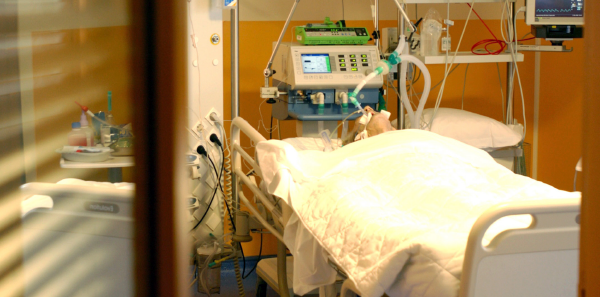
During a busy ED shift, you are called to the resuscitation bay to evaluate an 86-year-old woman found by EMS. She was found alone and unconscious and was intubated in the field for airway protection. Your workup in the emergency department reveals a large ascending aortic dissection that, per the surgeon, is likely fatal without emergent surgery. Soon, her family arrives and informs your team that the patient had previously requested “do not resuscitate” and “do not intubate” (DNI) directives and would not want invasive surgery. After speaking with the surgeons, the family requests that the patient be taken off the ventilator in keeping with the patient’s wishes. What are your next steps?
Explore This Issue
ACEP Now: Vol 40 – No 08 – August 2021As emergency physicians, intubating patients is an essential component of our job. We are well-versed in the procedures, medications, and equipment available to swiftly and safely secure a patient’s airway. But sometimes, as we gather more information, we will be asked to perform the opposite: to assist with terminal extubation. Although this decision may seem daunting, under the correct circumstances, terminal extubation is an important skill that, according to the American Board of Emergency Medicine Model of the Clinical Practice of Emergency Medicine, should be within the scope of practice of all emergency medicine clinicians.1
Terminal extubation should be considered if the patient has an advance directive specifying DNI or their decision maker clearly states that intubation is not consistent with the patient’s established wishes. Specific circumstances in which intubation may occur, then need to be reversed include cases in which a patient arrives actively coding with limited information, cannot communicate and has no decision maker readily available, arrives prior to discovering medical history that worsens prognosis, or is discovered to have a new fatal diagnosis for which intubation is deemed nonbeneficial.
In the most straightforward scenarios, there is a clear decision maker or written documentation requesting DNI and no prohibitive time nor resource constraints in the emergency department. One simple communication tip to help decision makers with this difficult decision is to refocus the discussion on the patient and their wishes: “Tell me about [patient name]. If [patient name] could talk with us right now, what do you think they would tell us to do?” If intubation is not part of the patient’s goals of care, the emergency physician should move forward with terminal extubation.
Once the decision to proceed is made and appropriate team members have been mobilized, emergency physicians should consider the timing of the extubation process. Depending on the circumstances, it may be prudent to await the arrival of other family members.
Terminal extubation may also be an appropriate option if a physician concludes aggressive care is nonbeneficial or not appropriate. For example, during the COVID-19 pandemic, with limited life-sustaining equipment (ventilators, extracorporeal membrane oxygenation) and limited ICU bed availability, some emergency physicians were asked to terminally extubate moribund patients. We acknowledge that there will also be circumstances in which the decision to terminally extubate is better made as an inpatient, including patients who lack a clear decision maker, a code status that cannot be clearly elucidated, an unclear prognosis, or prohibitive resource or time constraints in the emergency department. Despite this, we believe that terminal extubation in the emergency department is appropriate in some situations and therefore an important skill set for emergency physicians.
Pages: 1 2 3 4 | Single Page



No Responses to “A Patient- and Family-Focused Approach to Terminal Extubation”