Logo

Log In Sign Up |  An official publication of: American College of Emergency Physicians
Navigation
  • Home
  • Multimedia
    • Podcasts
    • Videos
  • Clinical
    • Airway Managment
    • Case Reports
    • Critical Care
    • Guidelines
    • Imaging & Ultrasound
    • Pain & Palliative Care
    • Pediatrics
    • Resuscitation
    • Trauma & Injury
  • Resource Centers
    • mTBI Resource Center
  • Career
    • Practice Management
      • Benchmarking
      • Reimbursement & Coding
      • Care Team
      • Legal
      • Operations
      • Quality & Safety
    • Awards
    • Certification
    • Compensation
    • Early Career
    • Education
    • Leadership
    • Profiles
    • Retirement
    • Work-Life Balance
  • Columns
    • ACEP4U
    • Airway
    • Benchmarking
    • Brief19
    • By the Numbers
    • Coding Wizard
    • EM Cases
    • End of the Rainbow
    • Equity Equation
    • FACEPs in the Crowd
    • Forensic Facts
    • From the College
    • Images in EM
    • Kids Korner
    • Medicolegal Mind
    • Opinion
      • Break Room
      • New Spin
      • Pro-Con
    • Pearls From EM Literature
    • Policy Rx
    • Practice Changers
    • Problem Solvers
    • Residency Spotlight
    • Resident Voice
    • Skeptics’ Guide to Emergency Medicine
    • Sound Advice
    • Special OPs
    • Toxicology Q&A
    • WorldTravelERs
  • Resources
    • ACEP.org
    • ACEP Knowledge Quiz
    • Issue Archives
    • CME Now
    • Annual Scientific Assembly
      • ACEP14
      • ACEP15
      • ACEP16
      • ACEP17
      • ACEP18
      • ACEP19
    • Annals of Emergency Medicine
    • JACEP Open
    • Emergency Medicine Foundation
  • About
    • Our Mission
    • Medical Editor in Chief
    • Editorial Advisory Board
    • Awards
    • Authors
    • Article Submission
    • Contact Us
    • Advertise
    • Subscribe
    • Privacy Policy
    • Copyright Information

Procedures and Skills

  • Modified Valsalva Maneuver Better Way to Manage Supraventricular Tachycardia

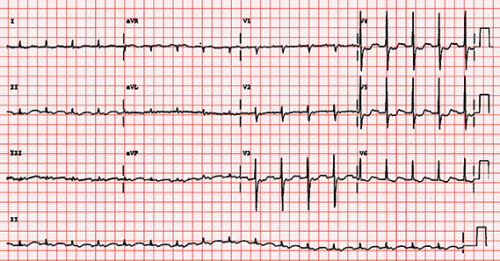
    Case: A 19-year-old male arrives at the ED complaining of palpitations. He is known to have supraventricular...
  • Tips for Using a Hyperangulated Video Laryngoscope

    Hyperangulated video laryngoscopes have blade shapes with a curvature more acute than a standard Macintosh blade. Commercial...
  • Emergency Department Management of Extensor Tendon Lacerations

    The hand is an intricate structure that provides us with the dexterity needed for our everyday lives....

Modified Valsalva Maneuver Better Way to Manage Supraventricular Tachycardia

May 17, 2016 - Ken Milne, MD - 2 Comments

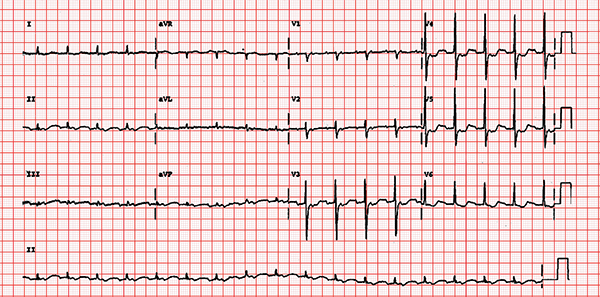
Case: A 19-year-old male arrives at the ED complaining of palpitations. He is known to have supraventricular…

Read More

Tips for Using a Hyperangulated Video Laryngoscope

December 15, 2015 - Richard M. Levitan, MD, FACEP - 2 Comments

Hyperangulated video laryngoscopes have blade shapes with a curvature more acute than a standard Macintosh blade. Commercial…

Read More

Emergency Department Management of Extensor Tendon Lacerations

December 15, 2015 - Terrance McGovern, DO, MPH, and Justin McNamee, DO - 0 Comment

The hand is an intricate structure that provides us with the dexterity needed for our everyday lives….

Read More

Using the Supraclavicular Approach to Ultrasound-Guided Subclavian Vein Cannulation

December 15, 2015 - Charmiane Lieu, MD, Gerin River, MD, Daniel Mantuani, MPH, MD, and Arun Nagdev, MD - 3 Comments

Central venous catheter placement is an essential procedure in emergency medicine, with the internal jugular vein (IJV)…

Read More

Emergency Interventions for Treating Cardiac Electrical Storms

November 18, 2015 - Terrance McGovern, DO, MPH, and Justin McNamee, DO - 3 Comments

You are down by five, and there are only three seconds left in the game with 80…

Read More

Expanded Testing for Pulmonary Embolism Leads CT Scan Overuse

November 18, 2015 - Ryan Patrick Radecki, MD, MS - 0 Comment

In the vast ocean of medicine, few diagnostic dilemmas descend so quickly into madness as does pulmonary…

Read More

Point-of-Care Pelvic Ultrasound Done by Emergency Physicians Comes Under Fire

November 17, 2015 - John Bailitz, MD, FACEP, Robinson M. Ferre, MD, FACEP, Rajesh N. Geria, MD, FACEP, Resa E. Lewiss, MD, FACEP, Jason T. Nomura, MD, FACEP, FACP, Christopher C. Raio, MD, MBA, FACEP, Guy Tarleton, MD, FACEP, and Vivek S. Tayal, MD, FACEP, on behalf of the ACEP Ultrasound Section - 0 Comment

Emergency physician–performed (EP) pelvic ultrasound has been shown to save lives, expedite patient care, and improve patient…

Read More

ACEP15 Session: Tips for Safer, More Efficient Ear Nose Throat Procedures

October 24, 2015 - Vanessa Caceres - 0 Comment

If you come to Wednesday’s session “Quick Tips: Rapid-Fire ENT Procedures in the ED,” you’ll get tips…

Read More

ACEP15 Preconference Workshops Feature Education in Procedural Skills, Labs

September 16, 2015 - ACEP Now - 0 Comment

Featuring consistently sold-out cadaver labs, preconference labs and workshops at ACEP15 are sure to improve your skills….
Read More

ACEP Board Approves tPA Clinical Policy

August 13, 2015 - ACEP Now - 1 Comment

ACEP’s “Clinical Policy: Use of Intravenous Tissue Plasminogen Activator for the Management of Acute Ischemic Stroke in…

Read More
  • ‹
  • 1
  • 2
  • 3
  • 4
  • ›
  • »

Wiley
  • Home
  • About Us
  • Contact Us
  • Privacy
  • Terms of Use
  • Advertise
  • Cookie Preferences
Copyright © 2025 by John Wiley & Sons, Inc. All rights reserved, including rights for text and data mining and training of artificial technologies or similar technologies. ISSN 2333-2603