
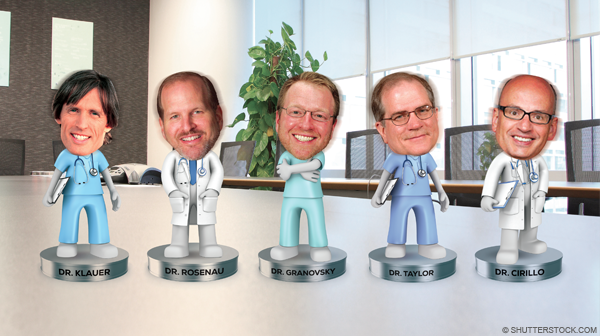
 Summarizing the ACA’s Shortcomings

Dr. Klauer: So what parts of the ACA are a bust to you?
Explore This Issue
ACEP Now: Vol 33 – No 01 – January 2014Dr. Granovsky: The degree of patient economic responsibility in the form of deductibles, co-pays, and coinsurance; loss of individual-physician relationships based on small and restrictive panels; the cancellation of whole swaths of health-insurance plans, in some zip codes as much as 5 percent of the citizens; the lack of messaging to us, as citizens, about the exchange process and how it works. The folks on this call know a lot about this stuff, but nobody else does, and it is complicated. And one specific issue related to IT: the inability to shop and compare without setting up an account [on the health-care exchange].
Dr. Rosenau: One of the things that disappointed us about the Affordable Care Act is that during its rollout, it seemed to almost forget that there was an emergency care system or a need for such. And because of the shortage of primary care doctors, we also know that there are many primary care doctors that just don’t have a spot open spontaneously to see a patient.
We want those who do get the health insurance coverage to know that coverage does not equal access because if it turns out to be Medicaid rates, a lot of primary care doctors and some specialists may not take those patients. And so it may actually increase the number of people coming to the emergency department. That happened in Massachusetts initially. Depending on how you look at it and what year you look at, there was about a 3 percent to 7 percent increase in emergency room visits to Massachusetts ERs after the law went into effect.
Dr. Cirillo: 1) Despite all of the time, political effort, and money that went into making ACA the law, it is projected that there will still be 31 million uninsured Americans by the year 2020. There were 50 million when the law went into effect in 2010. Seems like we should have gotten more than a 40 percent reduction for “landmark” major health care legislation. Imagine the uproar if when Medicare was passed in 1965, it only covered 40 percent of seniors over the age of 65.
2) The PPACA does not address the underlying fundamental reason for the “health-care crisis.” We, the medical community, spend too much money on things we can do to patients rather than what we should do for people. Until we as the medical community develop the intestinal fortitude to lead a discussion with this country about what is the “right” thing to do, then we will continue to send 95 year olds to the cardiac cath lab and ICU and spend valuable health care dollars with questionable results.



2 Responses to “What Will Obamacare Mean for Emergency Physicians?”
January 12, 2014
jpedmdRe. Dr. Klauer’s comment “So when it comes down to it, this is a shell game. You’re still paying $11,000 before anybody pays one penny of coverage for your family.”
This is just wrong, especially for the example cited – a family of 4, presumably with 2 children and 2 adults. Remember there is substantive free preventative care mandated under the ACA that is often the predominant type of care needed for young healthy families. See:
https://www.healthcare.gov/what-are-my-preventive-care-benefits/
May 27, 2015
Pennsylvania Governor Acts to Ensure Federal Health Care Subsidies - ACEP Now[…] Pennsylvania Governor Tom Wolf said on Friday the state will set up its own health care exchange if needed to save insurance subsidies for thousands of residents under the federal government’s 2010 Affordable Care Act. […]