Logo

Log In Sign Up |  An official publication of: American College of Emergency Physicians
Navigation
  • Home
  • Multimedia
    • Podcasts
    • Videos
  • Clinical
    • Airway Managment
    • Case Reports
    • Critical Care
    • Guidelines
    • Imaging & Ultrasound
    • Pain & Palliative Care
    • Pediatrics
    • Resuscitation
    • Trauma & Injury
  • Resource Centers
    • mTBI Resource Center
  • Career
    • Practice Management
      • Benchmarking
      • Reimbursement & Coding
      • Care Team
      • Legal
      • Operations
      • Quality & Safety
    • Awards
    • Certification
    • Compensation
    • Early Career
    • Education
    • Leadership
    • Profiles
    • Retirement
    • Work-Life Balance
  • Columns
    • ACEP4U
    • Airway
    • Benchmarking
    • Brief19
    • By the Numbers
    • Coding Wizard
    • EM Cases
    • End of the Rainbow
    • Equity Equation
    • FACEPs in the Crowd
    • Forensic Facts
    • From the College
    • Images in EM
    • Kids Korner
    • Medicolegal Mind
    • Opinion
      • Break Room
      • New Spin
      • Pro-Con
    • Pearls From EM Literature
    • Policy Rx
    • Practice Changers
    • Problem Solvers
    • Residency Spotlight
    • Resident Voice
    • Skeptics’ Guide to Emergency Medicine
    • Sound Advice
    • Special OPs
    • Toxicology Q&A
    • WorldTravelERs
  • Resources
    • ACEP.org
    • ACEP Knowledge Quiz
    • Issue Archives
    • CME Now
    • Annual Scientific Assembly
      • ACEP14
      • ACEP15
      • ACEP16
      • ACEP17
      • ACEP18
      • ACEP19
    • Annals of Emergency Medicine
    • JACEP Open
    • Emergency Medicine Foundation
  • About
    • Our Mission
    • Medical Editor in Chief
    • Editorial Advisory Board
    • Awards
    • Authors
    • Article Submission
    • Contact Us
    • Advertise
    • Subscribe
    • Privacy Policy
    • Copyright Information

When Do Pediatric Ventriculoperitoneal Shunts Fail?

By Landon Jones, MD, and Richard M. Cantor, MD, FAAP, FACEP | on November 7, 2024 | 0 Comment
Kids korner
  • Tweet
  • Click to email a link to a friend (Opens in new window) Email
Print-Friendly Version

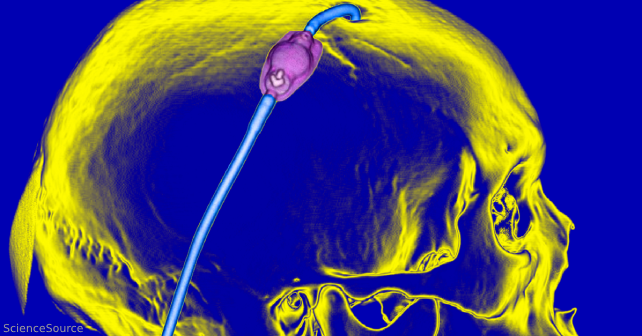
While most of the literature suggests a higher VP shunt failure rate in children younger than one year of age, a very small amount of literature argues differently. For example, one 11-year retrospective study looked at 137 children who received VP shunts for hydrocephalus.4 Ages ranged from 1.5 months to 8.5 years with an average age of 20.7 months. The incidence of VP shunt complication requiring revision was only 27 percent (n=37), and only 24 percent (n=9) of the total revisions presented within the first six months. Eighteen of the VP shunt revisions (49 percent) occurred more than 24 months after the initial placement. The patient population receiving the initial shunt, though, appeared to be older than most other studies and may have contributed to these variable findings.

You Might Also Like
  • How Much Does a Shoulder Roll (or Equivalent) Help Pediatric Intubation?
  • Pediatric Bronchiolitis, Croup Treatment Tips for Emergency Physicians
  • For Pediatric Lumbar Punctures, Stylet In or Out?
Explore This Issue
ACEP Now: Vol 43 – No 11 – November 2024

Overall, the literature suggests that most VP shunt malfunctions requiring revision probably occur within the first year of placement.

Summary

While VP shunt malfunctions can occur at any time in children, the majority of VP shunt malfunctions requiring revision appear to occur within the first year after placement.


Dr. Jones

Dr. Jones is associate professor at the department of emergency medicine and pediatrics and the program director of pediatric emergency medicine fellowship at the University of Kentucky in Lexington, Ky.

Dr. CantorDr. Cantor is the emeritus medical director for the Central New York Poison Control Center and professor of emergency medicine and pediatrics in Syracuse, N.Y.

References

  1. Ghritlaharey RK, Budhwani KS, Shrivastava DK, Srivastava J. Ventriculoperitoneal shunt complications needing shunt revision in children: a review of 5 years of experience with 48 revisions. Afr J Paediatr Surg. 2012;9(1):32-39.
  2. Ghritlaharey RK. Management of ventriculoperitoneal shunt complications in children: A review of 34 cases. Afr J Paediatr Surg. 2023;20(2):109-115.
  3. Riva-Cambrin J, Kestle JR, Holubkov R, et al. Risk factors for shunt malfunction in pediatric hydrocephalus: a multicenter prospective cohort study. J Neurosurg Pediatr. 2016;17(4):382-390.
  4. Pan P. Outcome analysis of ventriculoperitoneal shunt surgery in pediatric hydrocephalus. J Pediatr Neurosci. 2018;13(2):176-181.

Pages: 1 2 | Single Page

Topics: Pediatricsshuntsventriculoperitoneal shunts

Related

  • FACEPs in the Crowd: Dr. John Ludlow

    November 5, 2025 - 0 Comment
  • Nail Bed Injuries: What to Do—or Not to Do

    August 18, 2025 - 0 Comment
  • Differential Diagnosis of an Infant with Easy Bleeding, Bruising

    August 14, 2025 - 0 Comment

Current Issue

ACEP Now: November 2025

Download PDF

Read More

No Responses to “When Do Pediatric Ventriculoperitoneal Shunts Fail?”

Leave a Reply Cancel Reply

Your email address will not be published. Required fields are marked *


*
*


Wiley
  • Home
  • About Us
  • Contact Us
  • Privacy
  • Terms of Use
  • Advertise
  • Cookie Preferences
Copyright © 2025 by John Wiley & Sons, Inc. All rights reserved, including rights for text and data mining and training of artificial technologies or similar technologies. ISSN 2333-2603
