
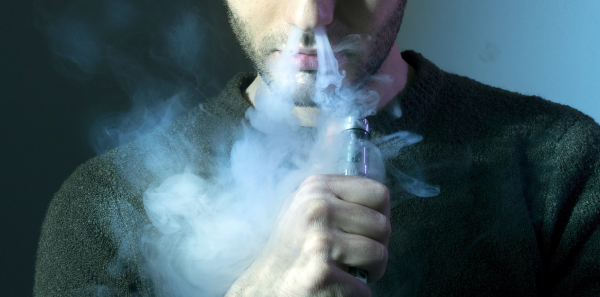
Given a lack of regulation from the federal government, some local governments have stepped in. Gov. Gretchen Whitmer recently outlawed the sale of flavored electronic cigarettes in Michigan (see “Vaping & Public Health Policy” sidebar below). This announcement was lauded by officials from the American Heart Association and the American Thoracic Society. In Vermont, a state law was recently passed increasing the age required to buy e-cigarettes to 21.
Explore This Issue
ACEP Now: Vol 38 – No 10 – October 2019Harm Avoidance
Aside from identifying patients with VAPI, we can begin to educate patients about the potential harms from vaping. If patients are unwilling or unable to abstain from vaping, they should avoid using adulterated vaping liquid or products containing tetrahydrocannabinol. For patients seeking to stop smoking, vaping should not be viewed as an aid; cessation strategies that have definitively been proven to be less dangerous should be tried first.
Dr. Farkas is assistant professor of pulmonary and critical care medicine at the University of Vermont in Burlington.
Pages: 1 2 3 | Single Page



3 Responses to “What You Need to Know About Vaping-Associated Pulmonary Injury”
October 22, 2019
David KnoxSeveral points in the article need more clarification. It is not the nicotine or THC that is causing VAPI. People have been inhaling those substances for years without this type of pulmonary inflammatory disease. The carrier oils, or other additives, or their heat generated byproducts are the culprits. The statistics show that 84% of cases have vaped THC containing products and 16% Nicotine only products. Cannabis differs from nicotine as it is not water soluble, and extracts are very viscous, therefore requiring a cutting oil to make it flow in the cartridge in order to evenly contact the heating element. Vitamin E acetate only started to be used as a cutting oil in 2018, so it is a prime suspect in this recent epidemic, but unfortunately does not account for all of the cases of VAPI. The other confounder is related to the legal status of cannabis in this country. In many cases, the vape products were purchased off the street, where there is no oversight as to the contents; counterfeit cartridges abound with who knows what in the mix. Alternatively, there is little incentive to purchase nicotine products on the black market.
Politicians have used this epidemic as a reason to ban flavorings from vaping products, not because they are necessarily the causative agent, but because it ties in to the concern of the appeal of vaping to adolescents, it serves as a tool to address that issue. Banning flavorings may not reduce the incidence of VAPI, other than by possibly reducing the overall number of vapers.
A recent study showed that vaping solutions with NO THC or Nicotine, only the common carrier oils, resulted in inflammation in the lungs of otherwise healthy persons who never vaped or smoked previously. Vaping these products, at temperatures below combustion, still generates many byproducts, including formaldehyde, acetaldehyde, acrolein, etc. Also, these oils vaporize with heat but they condense at body temperature, and precipitate in the airways. This is why tissues show macrophages in the lungs with vacuoles full of oil, but it is not clear that this accounts for the severe inflammatory reaction in VAPI. I would be more suspicious of a heat generated byproduct for some of these cases that do not conform to a diagnosis of lipoid pneumonia.
In absolute numbers, there are only a few thousand cases of VAPI amongst millions of vapers, making the cause even harder to find. This could be from a contaminant or additive, or may depend on any individuals inflammatory reaction to a substance that a majority of vapers tolerate.
To be clear, THC and Nicotine are the reasons WHY people are vaping, but they are NOT the cause of VAPI. It is hard to know if a product is adulterated in the current marketplace, but THC products off the street should certainly be suspect. I applaud the quick research being done on this problem, which hopefully will find a real solution soon. In the meantime, I will continue to advise patients that the long term, or even short term, consequences of vaping are unknown (but may be significant if YOU are the statistic), and this risk needs to be considered strongly in what or how they are using these products.
November 16, 2019
Erica RemerProviders need to be aware that VAPI is not the term that CDC has adopted. They are using, “EVALI,” which stands for “electronic cigarette/vaping associated lung illness.” A new ICD-10-CM code will be created to describe the condition, likely to be presented in March (2020). Providers should probably use the acronym, “EVALI,” instead of VAPI to ensure that the condition is captured accurately by the coders (once the code exists). Would also recommend if your EHR supports acronym expansions, build an Enterprise-wide expansion so there is never any ambiguity.
November 26, 2019
FrankIf you think you might have VAPI and go to the doctor.. what type of tests will they do to determine you have an injury?