
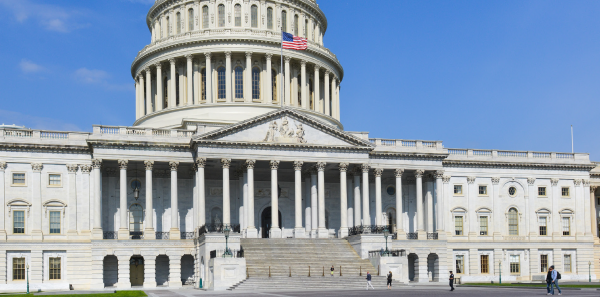
The political events of the last few months, including the attack on the U.S. Capitol on Jan. 6, 2021, were unprecedented and disturbing. Partisanship has divided the nation, perhaps more so than at any time since the Civil War. The partisan chasm between Americans has been widened by politicians who placate and campaign to those on the extremes of the far left and far right in order to stay in office, fearing a challenge from someone “more red or blue.” Fanning the flames of divisiveness between Americans are the media outlets, including television, radio, print, and social media, that have chosen to sensationally chase ratings and advertising revenue at the expense of the truth. Lost in the cacophony of fervent extremism are the moderates of the country, who have truly become the silent majority.
Explore This Issue
ACEP Now: Vol 40 – No 03 – March 2021Upon this volatile foundation of American democracy, the 117th Congress was sworn in on Jan. 3, and Joe Biden was inaugurated as the 46th President of the United States on Jan. 20. The Democrats now hold a Washington “trifecta” with a narrow majority in the U.S. House (221 Democrats, 211 Republicans, and three current vacancies), a Senate split evenly but under Democratic control, and a new administration led by President Biden.
We should all agree that policy rather than politics, should drive our actions in the coming term. For now, as we peer ahead into the next two years, there are two important concepts that are likely to define how and what the 117th Congress accomplishes.
In the Senate, Ties Go To…
With the election of Democrats in the two special Senate elections in Georgia in early January, the composition of the U.S. Senate in the 117th Congress was finalized and is now tied at 50-50. Technically, it’s 50 Republicans, 48 Democrats, and two Independents (Bernie Sanders from Vermont and Angus King from Maine). However, Independents get to choose which party they officially caucus with, and both Sen. Sanders and Sen. King chose the Democrats. Although the Senate is split 50-50, the Democrats technically hold control because the Vice President, as presiding officer of the Senate, is entitled to vote to break a tie. As the majority party, Democrats will chair all committees and set the agenda for committee business. However, all committees in the current Senate are composed of equal numbers of Democrats and Republicans, so passing bills out of committee will be impossible if all Senators vote solely along party lines.
In addition to the split in members complicating how the Senate conducts business, the Senate rules also allow for the unique power of a senator to filibuster. A filibuster (derived from a Dutch word for “pirate”) is the right of a single senator or group of senators to talk continuously (yes, even around the clock) to prevent a bill from being voted on. Even the potential threat of a filibuster can stop a bill from getting to the Senate floor. The process of ending a filibuster, termed “invoking cloture,” requires 60 votes to pass, which will be incredibly difficult given the composition of the Senate. Taking into account all of the political dynamics in the Senate, it will be challenging for major policy to be accomplished—except there is a way around the filibuster, via a special process called reconciliation…
Pages: 1 2 3 | Single Page




No Responses to “What to Expect from the 117th Congress”