Logo

Log In Sign Up |  An official publication of: American College of Emergency Physicians
Navigation
  • Home
  • Multimedia
    • Podcasts
    • Videos
  • Clinical
    • Airway Managment
    • Case Reports
    • Critical Care
    • Guidelines
    • Imaging & Ultrasound
    • Pain & Palliative Care
    • Pediatrics
    • Resuscitation
    • Trauma & Injury
  • Resource Centers
    • mTBI Resource Center
  • Career
    • Practice Management
      • Benchmarking
      • Reimbursement & Coding
      • Care Team
      • Legal
      • Operations
      • Quality & Safety
    • Awards
    • Certification
    • Compensation
    • Early Career
    • Education
    • Leadership
    • Profiles
    • Retirement
    • Work-Life Balance
  • Columns
    • ACEP4U
    • Airway
    • Benchmarking
    • Brief19
    • By the Numbers
    • Coding Wizard
    • EM Cases
    • End of the Rainbow
    • Equity Equation
    • FACEPs in the Crowd
    • Forensic Facts
    • From the College
    • Images in EM
    • Kids Korner
    • Medicolegal Mind
    • Opinion
      • Break Room
      • New Spin
      • Pro-Con
    • Pearls From EM Literature
    • Policy Rx
    • Practice Changers
    • Problem Solvers
    • Residency Spotlight
    • Resident Voice
    • Skeptics’ Guide to Emergency Medicine
    • Sound Advice
    • Special OPs
    • Toxicology Q&A
    • WorldTravelERs
  • Resources
    • ACEP.org
    • ACEP Knowledge Quiz
    • Issue Archives
    • CME Now
    • Annual Scientific Assembly
      • ACEP14
      • ACEP15
      • ACEP16
      • ACEP17
      • ACEP18
      • ACEP19
    • Annals of Emergency Medicine
    • JACEP Open
    • Emergency Medicine Foundation
  • About
    • Our Mission
    • Medical Editor in Chief
    • Editorial Advisory Board
    • Awards
    • Authors
    • Article Submission
    • Contact Us
    • Advertise
    • Subscribe
    • Privacy Policy
    • Copyright Information

West Virginia EPs Explain Challenges of Rural EM to Their Legislators

By ACEP Now | on June 2, 2023 | 0 Comment
Features
  • Tweet
  • Click to email a link to a friend (Opens in new window) Email
Print-Friendly Version

The emergency physicians from West Virginia gave their legislators vivid descriptions of how psychiatric boarding, specifically prolonged pediatric psych boarding, can really limit the beds available to see other patients who desperately need care.

You Might Also Like
  • Emergency Physicians as State Legislators
  • ACEP’s Role at Fundraiser for Speaker of the House Paul Ryan an Example of Access to Legislators through NEMPAC
  • Virginia College Publicizes New Opioid Prescribing Guidelines Beyond Medical Community, Opens Wider Discussion About Addiction
Explore This Issue
ACEP Now: Vol 42 – No 06 – June 2023

They found an understanding ear when meeting with the health advisor for Sen. Shelley Moore Capito, who had recently introduced one of the bills ACEP members were lobbying for during their meetings, S.1346: Improving Mental Health Access from the Emergency Department Act. The bill would help address a significant component of psychiatric boarding by providing grants to EDs to increase access to follow-up psychiatric care for patients, such as expedited placement, increased telepsychiatry support, expanded availability of inpatient psychiatric beds, increased coordination with regional service providers, and regional bed availability tracking and management programs, based on the individual needs of their EDs and communities. When the West Virginia contingent explained to their legislators why ED violence is such a concern, Dr. Kirbos set the scene.
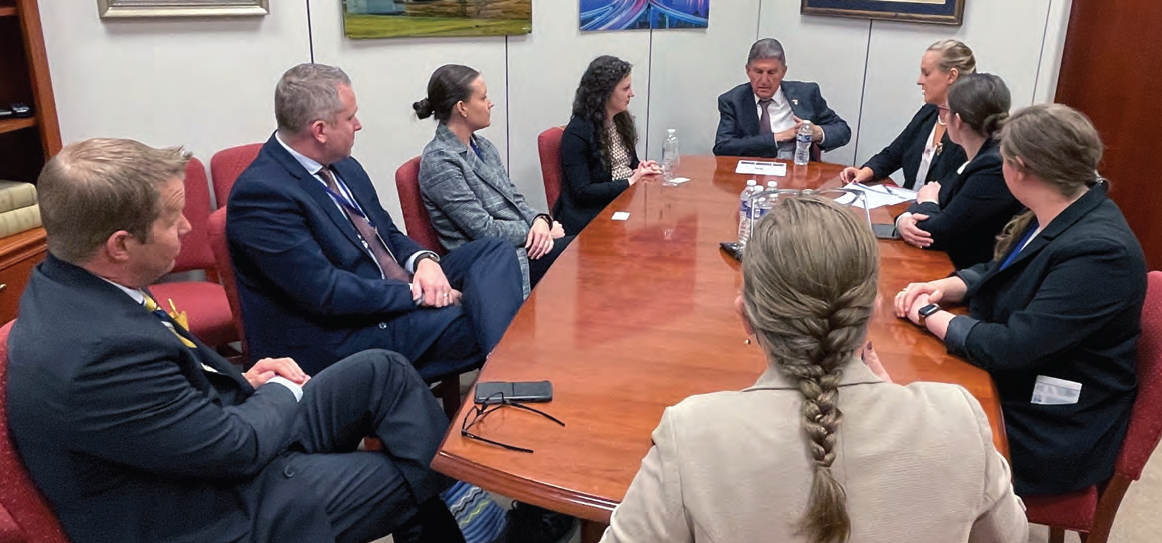
The West Virginia group of emergency physicians discusses ED boarding and workplace violence concerns with Sen. Joe Manchin at LAC23. (Click to enlarge.)

“Up until very recently, within the last couple months only, [Braxton Memorial] had no formal security guards,” Dr. Kirbos said. “It can be daunting when you have an all-female night shift team and a belligerent, violent patient presents. While we have been trained in de-escalation techniques and the use of proper safety chemical and physical restraints, our lack of security and/or police support is a real problem. The police force monitors multiple local towns and are stretched thin with resources overnight as well, so a call for response to our facility often takes at least 20 minutes.”

The group talked extensively about how the state’s high rates of drug use increases the risk of workplace violence for all health care workers. They asked their legislators to support the Workplace Violence Prevention for Health Care and Social Service Workers Act, and the Safety from Violence for Healthcare Workers Act, which would require employers to set safety protection standards for workers and provide additional funding and resources for security needs, respectively.

After a big day of meetings, the West Virginia emergency physicians felt like they did their best to help legislators understand how these national problems are affecting them in EDs across the state.

“There’s something special about going in person to speak to our state legislators,” said Dr. Kirbos. “It’s difficult to visualize and understand our needs through email or a phone call. Change best happens by showing up—telling our personal stories, painting a picture of what the small, critical access ED really looks like, giving a glimpse into the life and challenges that we lead as health care clinicians.”

Pages: 1 2 3 | Single Page

Topics: AdvocacyLeadershipLeadership & Advocacy ConferenceWest Virginia ACEP

Related

  • Q&A with ACEP President L. Anthony Cirillo

    November 5, 2025 - 0 Comment
  • ACEP4U: the ACEP/CORD Teaching Fellowship

    November 4, 2025 - 0 Comment
  • ACEP Announces Michael Fraser, PhD, MS, CAE, as Executive Director

    October 28, 2025 - 0 Comment

Current Issue

ACEP Now: November 2025

Download PDF

Read More

No Responses to “West Virginia EPs Explain Challenges of Rural EM to Their Legislators”

Leave a Reply Cancel Reply

Your email address will not be published. Required fields are marked *


*
*


Wiley
  • Home
  • About Us
  • Contact Us
  • Privacy
  • Terms of Use
  • Advertise
  • Cookie Preferences
Copyright © 2025 by John Wiley & Sons, Inc. All rights reserved, including rights for text and data mining and training of artificial technologies or similar technologies. ISSN 2333-2603
