Logo

Log In Sign Up |  An official publication of: American College of Emergency Physicians
Navigation
  • Home
  • Multimedia
    • Podcasts
    • Videos
  • Clinical
    • Airway Managment
    • Case Reports
    • Critical Care
    • Guidelines
    • Imaging & Ultrasound
    • Pain & Palliative Care
    • Pediatrics
    • Resuscitation
    • Trauma & Injury
  • Resource Centers
    • mTBI Resource Center
  • Career
    • Practice Management
      • Benchmarking
      • Reimbursement & Coding
      • Care Team
      • Legal
      • Operations
      • Quality & Safety
    • Awards
    • Certification
    • Compensation
    • Early Career
    • Education
    • Leadership
    • Profiles
    • Retirement
    • Work-Life Balance
  • Columns
    • ACEP4U
    • Airway
    • Benchmarking
    • Brief19
    • By the Numbers
    • Coding Wizard
    • EM Cases
    • End of the Rainbow
    • Equity Equation
    • FACEPs in the Crowd
    • Forensic Facts
    • From the College
    • Images in EM
    • Kids Korner
    • Medicolegal Mind
    • Opinion
      • Break Room
      • New Spin
      • Pro-Con
    • Pearls From EM Literature
    • Policy Rx
    • Practice Changers
    • Problem Solvers
    • Residency Spotlight
    • Resident Voice
    • Skeptics’ Guide to Emergency Medicine
    • Sound Advice
    • Special OPs
    • Toxicology Q&A
    • WorldTravelERs
  • Resources
    • ACEP.org
    • ACEP Knowledge Quiz
    • Issue Archives
    • CME Now
    • Annual Scientific Assembly
      • ACEP14
      • ACEP15
      • ACEP16
      • ACEP17
      • ACEP18
      • ACEP19
    • Annals of Emergency Medicine
    • JACEP Open
    • Emergency Medicine Foundation
  • About
    • Our Mission
    • Medical Editor in Chief
    • Editorial Advisory Board
    • Awards
    • Authors
    • Article Submission
    • Contact Us
    • Advertise
    • Subscribe
    • Privacy Policy
    • Copyright Information

Using Ultrasound to Make Surgical Decisions in Suspected Biliary Colic

By Ken Milne, MD | on July 7, 2023 | 0 Comment
Skeptics' Guide to EM
  • Tweet
  • Click to email a link to a friend (Opens in new window) Email
Print-Friendly Version

Case

A 50-year-old woman presents to the emergency department (ED) complaining of epigastric pain and nausea for 36 hours. The physical examination is consistent with biliary colic and the blood work shows a mild elevation in C-reactive protein while her white blood cell count and liver function tests are normal. You perform a biliary ultrasound (US) in the ED (BUSED) which shows a gallbladder (GB) full of stones, some GB wall thickening and a positive Murphy’s sign. Will this be enough for the general surgeon, or will they want an US performed by the radiology department to make their surgical decision?

You Might Also Like
  • Bedside Biliary Ultrasound
  • Evaluation and Management of Suspected Appendicitis
  • Solving the Emergency Surgical Care Crisis
Explore This Issue
ACEP Now: Vol 42 – No 07 – July 2023

Clinical Question

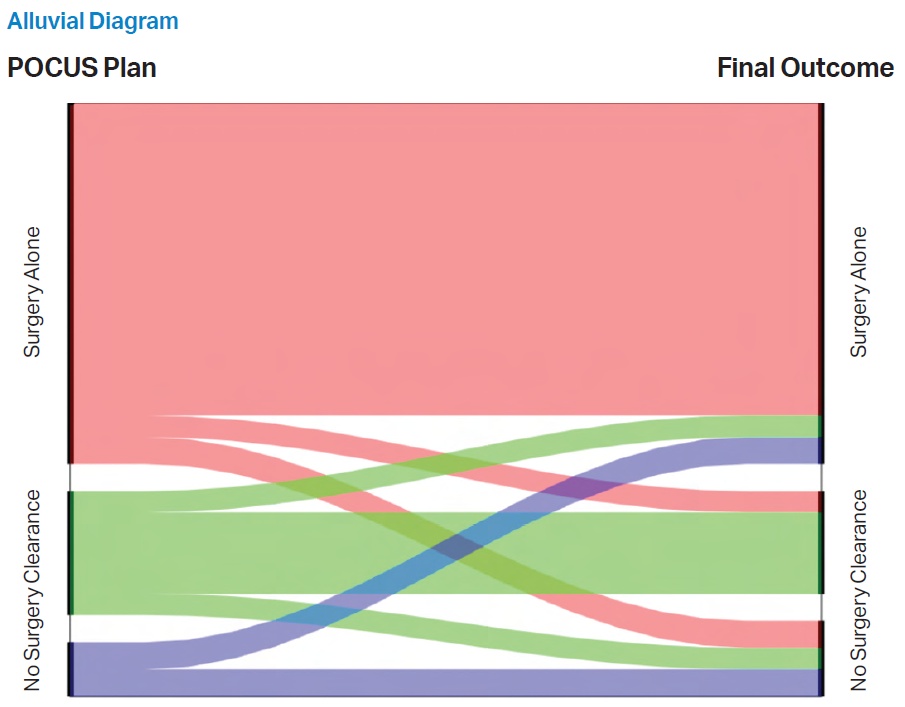
What is the value of radiology-performed US (RUS) compared to BUSED in terms of the surgical decision-making in acute biliary disease?
Click to enlarge.

Background

Ultrasound is typically the first-line imaging modality for the diagnosis of acute biliary disease. ED physician-performed point of care ultrasound (POCUS) has increased in popularity over the last decade. Several small trials have compared the accuracy of POCUS versus the “gold standard” of radiology performed ultrasound. Little is known regarding whether the department in which the US is performed (ED or radiology) impacts the surgeon’s clinical decision making.

Reference: Hilsden, et al. Point of care biliary ultrasound in the emergency department (BUSED) predicts final surgical management decisions. Trauma Surg Acute Care Open. 2022;7(1):e000944.

  • Population: Adult ED patients 18 years of age or older with abdominal pain whom the EM physician felt had biliary disease after performing a history, physical examination, and BUSED.
  • Excluded: Cases in which surgery was completed prior to formal ultrasound imaging, there was failure to gain consent, or patient’s age was less than 18 years.
  • Intervention: Surgical decision (offer surgery, endoscopic retrograde cholangiopancreatography/magnetic resonance cholangiopancreatography [ERCP/MRCP], or no surgery) based on the clinical, laboratory and BUSED data. There were 11 specially trained ED physicians and 20 surgeons.
  • Comparison: Surgical decision made after formal radiology ultrasound (RUS).
  • Outcome (Primary): Percentage of patients in which the management changed after RUS was performed.
  • Type of Study: Observational, prospective, cohort study performed at a tertiary care center in Canada.

Authors’ Conclusions
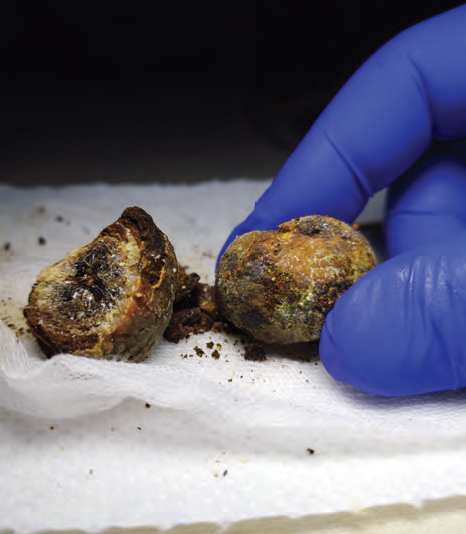
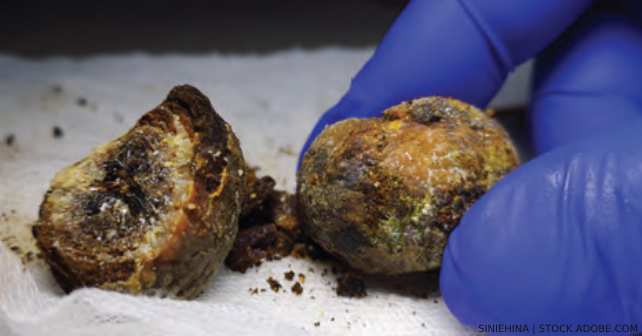
Gallstones removed via surgery.

This prospective study has shown that in the vast majority of cases the additional information afforded by formal RUS does not alter clinical management. Point-of-care biliary ultrasound has been demonstrated to be reliable in the diagnosis of acute biliary disease and offers a safe and efficient diagnostic pathway for patients presenting in the emergency department.

Pages: 1 2 | Single Page

Topics: biliary diseaseClinicalImaging & Ultrasound

Related

  • Non-Invasive Positive Pressure Ventilation in the Emergency Department

    October 1, 2025 - 0 Comment
  • Emergency Department Management of Prehospital Tourniquets

    October 1, 2025 - 0 Comment
  • ACEP’s October 2025 Poll: How Often Do You Read Your Own X-Rays?

    September 30, 2025 - 0 Comment

Current Issue

ACEP Now: November 2025

Download PDF

Read More

No Responses to “Using Ultrasound to Make Surgical Decisions in Suspected Biliary Colic”

Leave a Reply Cancel Reply

Your email address will not be published. Required fields are marked *


*
*


Wiley
  • Home
  • About Us
  • Contact Us
  • Privacy
  • Terms of Use
  • Advertise
  • Cookie Preferences
Copyright © 2025 by John Wiley & Sons, Inc. All rights reserved, including rights for text and data mining and training of artificial technologies or similar technologies. ISSN 2333-2603
