Logo

Log In Sign Up |  An official publication of: American College of Emergency Physicians
Navigation
  • Home
  • Multimedia
    • Podcasts
    • Videos
  • Clinical
    • Airway Managment
    • Case Reports
    • Critical Care
    • Guidelines
    • Imaging & Ultrasound
    • Pain & Palliative Care
    • Pediatrics
    • Resuscitation
    • Trauma & Injury
  • Resource Centers
    • mTBI Resource Center
  • Career
    • Practice Management
      • Benchmarking
      • Reimbursement & Coding
      • Care Team
      • Legal
      • Operations
      • Quality & Safety
    • Awards
    • Certification
    • Compensation
    • Early Career
    • Education
    • Leadership
    • Profiles
    • Retirement
    • Work-Life Balance
  • Columns
    • ACEP4U
    • Airway
    • Benchmarking
    • Brief19
    • By the Numbers
    • Coding Wizard
    • EM Cases
    • End of the Rainbow
    • Equity Equation
    • FACEPs in the Crowd
    • Forensic Facts
    • From the College
    • Images in EM
    • Kids Korner
    • Medicolegal Mind
    • Opinion
      • Break Room
      • New Spin
      • Pro-Con
    • Pearls From EM Literature
    • Policy Rx
    • Practice Changers
    • Problem Solvers
    • Residency Spotlight
    • Resident Voice
    • Skeptics’ Guide to Emergency Medicine
    • Sound Advice
    • Special OPs
    • Toxicology Q&A
    • WorldTravelERs
  • Resources
    • ACEP.org
    • ACEP Knowledge Quiz
    • Issue Archives
    • CME Now
    • Annual Scientific Assembly
      • ACEP14
      • ACEP15
      • ACEP16
      • ACEP17
      • ACEP18
      • ACEP19
    • Annals of Emergency Medicine
    • JACEP Open
    • Emergency Medicine Foundation
  • About
    • Our Mission
    • Medical Editor in Chief
    • Editorial Advisory Board
    • Awards
    • Authors
    • Article Submission
    • Contact Us
    • Advertise
    • Subscribe
    • Privacy Policy
    • Copyright Information

Toxicology Answer: What Garden Visitor Made This Mark?

By Jason Hack, MD | on June 15, 2021 | 0 Comment
Toxicology Q&A
  • Tweet
  • Click to email a link to a friend (Opens in new window) Email
Print-Friendly Version
Jason Hack (Oleander Photography)

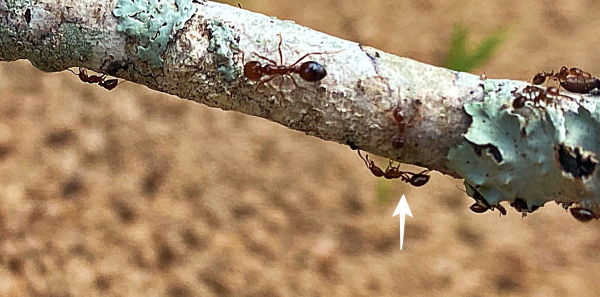
The Sting

For an unlucky person who wanders onto a colony (or is photographing the nest), bites will happen! The immediate sensation of a fire ant sting is one of intense burning at the area of a raised red welt, which subsides after 30 to 60 minutes. Within 24 hours, the affected area will develop pimple-like areas filled with white pus, a characteristic only of fire ant attacks. These lesions rupture over two to three days and are accompanied with reoccurrence of itching, pain, and swelling. The wounds often scar.

You Might Also Like
  • Toxicology Question: What Garden Visitor Made This Mark?
  • Toxicology Answer: Can This Toxic Plant Treat Certain Illnesses?
  • Toxicology Answer: What Flower Did the Greek Army Use Against a City?
Explore This Issue
ACEP Now: Vol 40 – No 06 – June 2021

Although most stings are merely painful and annoying, up to 16 percent of people can have anaphylactic reactions and require immediate treatment for life-threatening allergic symptoms.

Care of the Fire Ant Sting

  • The area should be washed with soap and cool water.
  • Isolated local symptoms are managed with ice, anti-inflammatory medications, topical steroids, and antihistamines.
  • Advise patients not to scratch or break the blisters, although from personal experience, this guidance is difficult to follow.
  • Maintain vigilance for superinfection and the development of local infection. 

Pages: 1 2 | Single Page

Topics: AntStingVenom

Related

  • Toxicology Answer: the Lionfish, a Dangerous, Non-Native Invader

    August 9, 2024 - 0 Comment
  • Toxicology Question: Which Sea-Dweller Causes Skin Necrosis Upon Contact?

    August 9, 2024 - 0 Comment
  • Toxicology Question: Is This Little Spider Friend or Foe?

    December 16, 2021 - 0 Comment

Current Issue

ACEP Now: November 2025

Download PDF

Read More

About the Author

Jason Hack, MD

Dr. Hack (Oleander Photography) is chief of the division of medical toxicology and vice chair for research at East Carolina University in Greenville, North Carolina. He enjoys taking photographs of beautiful toxic, medicinal, and benign flowers that he stumbles upon or grows in his garden. Contact him at ToxInRI@gmail.com, www.toxinRI.com, or on Instagram @oleanderphotography.

View this author's posts »

No Responses to “Toxicology Answer: What Garden Visitor Made This Mark?”

Leave a Reply Cancel Reply

Your email address will not be published. Required fields are marked *


*
*


Wiley
  • Home
  • About Us
  • Contact Us
  • Privacy
  • Terms of Use
  • Advertise
  • Cookie Preferences
Copyright © 2025 by John Wiley & Sons, Inc. All rights reserved, including rights for text and data mining and training of artificial technologies or similar technologies. ISSN 2333-2603