Logo

Log In Sign Up |  An official publication of: American College of Emergency Physicians
Navigation
  • Home
  • Multimedia
    • Podcasts
    • Videos
  • Clinical
    • Airway Managment
    • Case Reports
    • Critical Care
    • Guidelines
    • Imaging & Ultrasound
    • Pain & Palliative Care
    • Pediatrics
    • Resuscitation
    • Trauma & Injury
  • Resource Centers
    • mTBI Resource Center
  • Career
    • Practice Management
      • Benchmarking
      • Reimbursement & Coding
      • Care Team
      • Legal
      • Operations
      • Quality & Safety
    • Awards
    • Certification
    • Compensation
    • Early Career
    • Education
    • Leadership
    • Profiles
    • Retirement
    • Work-Life Balance
  • Columns
    • ACEP4U
    • Airway
    • Benchmarking
    • Brief19
    • By the Numbers
    • Coding Wizard
    • EM Cases
    • End of the Rainbow
    • Equity Equation
    • FACEPs in the Crowd
    • Forensic Facts
    • From the College
    • Images in EM
    • Kids Korner
    • Medicolegal Mind
    • Opinion
      • Break Room
      • New Spin
      • Pro-Con
    • Pearls From EM Literature
    • Policy Rx
    • Practice Changers
    • Problem Solvers
    • Residency Spotlight
    • Resident Voice
    • Skeptics’ Guide to Emergency Medicine
    • Sound Advice
    • Special OPs
    • Toxicology Q&A
    • WorldTravelERs
  • Resources
    • ACEP.org
    • ACEP Knowledge Quiz
    • Issue Archives
    • CME Now
    • Annual Scientific Assembly
      • ACEP14
      • ACEP15
      • ACEP16
      • ACEP17
      • ACEP18
      • ACEP19
    • Annals of Emergency Medicine
    • JACEP Open
    • Emergency Medicine Foundation
  • About
    • Our Mission
    • Medical Editor in Chief
    • Editorial Advisory Board
    • Awards
    • Authors
    • Article Submission
    • Contact Us
    • Advertise
    • Subscribe
    • Privacy Policy
    • Copyright Information

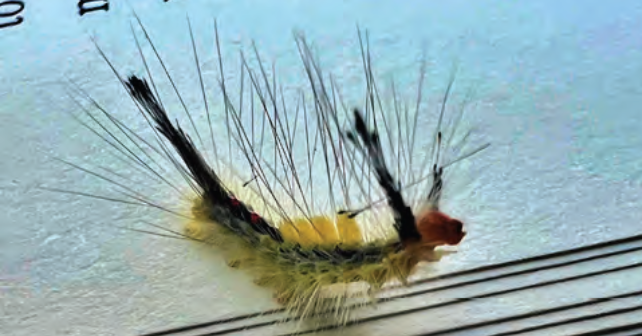
Toxicology Answer: the White-Marked Tussock Moth Caterpillar

By Jason Hack, MD, FACEP | on June 11, 2024 | 0 Comment
Toxicology Q&A
  • Tweet
  • Click to email a link to a friend (Opens in new window) Email
Print-Friendly Version

As an additional defense, these urticating hairs have a venom gland at their base that can cause significant erythema and pronounced swelling.4 The toxin is not well characterized but can cause a local release of histamine and a broad itchy rash in sensitive individuals.

You Might Also Like
  • Toxicology Q&A: Which Plant’s Sap Is Toxic to the Eyes?
  • Toxicology Answer: Milkweed (Asclepias)
  • Toxicology Answer: What toxin makes this pretty plant one to watch for—and avoid?
Explore This Issue
ACEP Now: Vol 43 – No 06 – June 2024

These hairs (and fragments) are also found in the cocoon matrix—the egg-laying female rubs her setae on the structure to embed them as protection for the maturing insects. These hairs have also been found floating in the air of forests with high caterpillar concentration.

Injury

The eye is the organ most sensitive to caterpillar hairs. These hairs cause severe local discomfort and pain, foreign body sensation, photophobia, lacrimation, lid edema, conjunctival injection, and blepharospasm; conjunctival irritation and congestion; chemosis; linear corneal abrasions; and punctate corneal lesions.

There is a well-described ocular disease process from this injury—ophthalmia nodosa. Schön first described it as an inflammatory reaction of the eyes to the mechanical and toxicologic attributes of caterpillar hairs that causes a characteristic immunologically mediated granulomatous nodular response primarily of the conjunctiva.8 These appear as small yellowish-red conjunctival nodules surrounding an embedded hair. When these fine, pointed hairs contact the surface of the eye, they can travel more deeply due to movement of the globe, blinking, and eye rubbing, which leads to further injury.

Symptoms usually begin between 30 minutes and three hours.3

These injuries are so common, a five-degree ocular injury scale, designed to measure injury caused by caterpillars, was developed and ranges from Type 1 (acute inflammation: chemosis, inflammation, epiphora, foreign body sensation) to Type 5 (vitreoretinal involvement with migration of the hair into the anterior chamber, iris, or lens).2

Skin and Mucous Membrane Exposures

Contact with the caterpillar hairs can result in imbedding, causing mild to severe local urticaria. This is made worse with rubbing, which further embeds the spines.

Treatment

Initial care is copious irrigation of the eyes or exposed skin and an attempt to locate the hairs and remove them. Further care depends on the extent of the injury; because the hairs do not dissolve with time, the setae will require physical removal from the eye—often using fine needle techniques.

Topical medications for erythema, irritation, and swelling include ice, topical steroids, and topical antibiotics if superinfection is suspected.

Most eye injuries will need ophthalmologic referral for a second examination to search for retained hairs and due to the risk of migration of hairs causing intra-ophthalmologic insults evidenced by cells and flare, such as vitritis and lens injury, which may require invasive interventions.6,9,7

Pages: 1 2 3 | Single Page

Topics: PoisonToxin

Related

  • Toxicology Answer: Oil of Wintergreen

    October 28, 2025 - 0 Comment
  • Toxicology Question: What Minty Plant Oil Can Cause Poisoning and Death in Children?

    October 28, 2025 - 0 Comment
  • Toxin-Induced Hypotension Treatment Tips

    July 3, 2025 - 0 Comment

Current Issue

ACEP Now: November 2025

Download PDF

Read More

No Responses to “Toxicology Answer: the White-Marked Tussock Moth Caterpillar”

Leave a Reply Cancel Reply

Your email address will not be published. Required fields are marked *


*
*


Wiley
  • Home
  • About Us
  • Contact Us
  • Privacy
  • Terms of Use
  • Advertise
  • Cookie Preferences
Copyright © 2025 by John Wiley & Sons, Inc. All rights reserved, including rights for text and data mining and training of artificial technologies or similar technologies. ISSN 2333-2603