Logo

Log In Sign Up |  An official publication of: American College of Emergency Physicians
Navigation
  • Home
  • Multimedia
    • Podcasts
    • Videos
  • Clinical
    • Airway Managment
    • Case Reports
    • Critical Care
    • Guidelines
    • Imaging & Ultrasound
    • Pain & Palliative Care
    • Pediatrics
    • Resuscitation
    • Trauma & Injury
  • Resource Centers
    • mTBI Resource Center
  • Career
    • Practice Management
      • Benchmarking
      • Reimbursement & Coding
      • Care Team
      • Legal
      • Operations
      • Quality & Safety
    • Awards
    • Certification
    • Compensation
    • Early Career
    • Education
    • Leadership
    • Profiles
    • Retirement
    • Work-Life Balance
  • Columns
    • ACEP4U
    • Airway
    • Benchmarking
    • Brief19
    • By the Numbers
    • Coding Wizard
    • EM Cases
    • End of the Rainbow
    • Equity Equation
    • FACEPs in the Crowd
    • Forensic Facts
    • From the College
    • Images in EM
    • Kids Korner
    • Medicolegal Mind
    • Opinion
      • Break Room
      • New Spin
      • Pro-Con
    • Pearls From EM Literature
    • Policy Rx
    • Practice Changers
    • Problem Solvers
    • Residency Spotlight
    • Resident Voice
    • Skeptics’ Guide to Emergency Medicine
    • Sound Advice
    • Special OPs
    • Toxicology Q&A
    • WorldTravelERs
  • Resources
    • ACEP.org
    • ACEP Knowledge Quiz
    • Issue Archives
    • CME Now
    • Annual Scientific Assembly
      • ACEP14
      • ACEP15
      • ACEP16
      • ACEP17
      • ACEP18
      • ACEP19
    • Annals of Emergency Medicine
    • JACEP Open
    • Emergency Medicine Foundation
  • About
    • Our Mission
    • Medical Editor in Chief
    • Editorial Advisory Board
    • Awards
    • Authors
    • Article Submission
    • Contact Us
    • Advertise
    • Subscribe
    • Privacy Policy
    • Copyright Information

Toxicology Answer: the Lovely Lily of the Valley

By Jason Hack, MD | on March 21, 2022 | 0 Comment
Toxicology Q&A
  • Tweet
  • Click to email a link to a friend (Opens in new window) Email
Print-Friendly Version
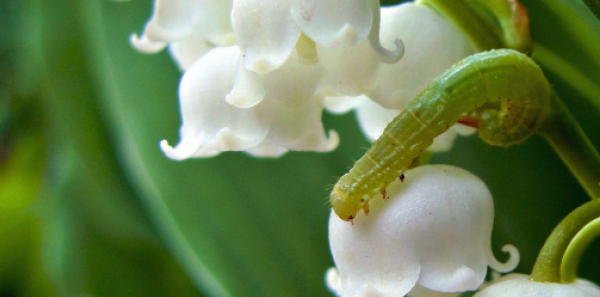
: Jason Hack (Oleander Photography)
Jason Hack (Oleander Photography)

Answer: Lily of the valley

You Might Also Like
  • Toxicology Answer: Don’t Eat the Lovely Iris
  • Toxicology Answer: What Are the Side Effects of Chewing This Beautiful Bloom?
  • Toxicology Answer: What Flower Did the Greek Army Use Against a City?
Explore This Issue
ACEP Now: Vol 41 – No 03 – March 2022

Description

Although part of the asparagus family and potentially deadly, the flower has a scent that makes it one of the most beloved plants in the world. The flowers grow from underground rhizomes, so they will spread and take over an area of the garden if not planted with boundaries.

In the spring, each stem produces two long pointed leaves and a central raceme (a flower cluster with individual blossoms along a central stem) with five to 15 bonnet-shaped white flowers. Later in the growing season, the flowers are replaced by berries that range in color from red to orange.

Toxin and Dose

The plant contains a long list of toxins, mainly cardiac glycosides (some authors report 20–40)—primarily convallarin and convallamarin—that affect the heart and saponins that affect the gastrointestinal (GI) tract. The entire plant contains toxins; its leaves, berries, stems and roots are all poisonous.

It is reported that severe poisoning might occur after ingestion of a seemingly small amount or “two stems with leaves.” The water that cut stems are placed in may also contain enough toxins to poison someone trying to “taste the perfume.”

Symptoms of toxicity include nausea, vomiting, general malaise, chest pain, weakness, altered mental status, very slow heart rate, irregular heartbeat, ectopy and cardiac arrest.

Treatment is primarily supportive. GI decontamination with activated charcoal can be considered. Although there is no clear antidotal therapy, the use of digoxin-specific Fab fragments has been suggested.

Similar Poisons

Other naturally occurring compounds with structures similar to these cardioactive steroids include bufadienolides (Bufo spp of toads), fireflies (Photinus spp), oleandrin (Nerium spp), cerebins (from Cerbera odollam, pong-pong or “suicide” tree) and ouabain (Acokanthera schimperi tree). This last one deserves some attention as it is where the African crested rat sources the poison it wicks into its fur—it’s the only known mammal that intentionally coats itself in poison! It’s totally worth a look if you are unfamiliar with this awesome animal.*

Cultural Background

Did you know the lily of the valley is the national flower of Finland?

It is often used in bouquets, in tabletop floral arrangements and as scent in soaps and perfumes. Bridal bouquets, including those of royal families, use it for its sweet perfume, and it was in the bouquets of Catherine, Duchess of Cambridge, and Princess Grace Kelly of Monaco. Plus, it is said to be Queen Elizabeth II’s favorite flower. In the language of flowers, lily of the valley symbolizes purity, humility and a return to happiness.

The flower is traditionally associated with May Day, especially in France where the muguet is handed out at special events. The lily of the valley image is a frequently used motif in artwork, including those by Marc Chagall, Marx Reichlich, Carl Fabergé and others.

*Listen to this three-minute NPR podcast on the African crested rat. 

Pages: 1 2 | Single Page

Topics: PoisonToxin

Related

  • Toxicology Answer: Oil of Wintergreen

    October 28, 2025 - 0 Comment
  • Toxicology Question: What Minty Plant Oil Can Cause Poisoning and Death in Children?

    October 28, 2025 - 0 Comment
  • Toxin-Induced Hypotension Treatment Tips

    July 3, 2025 - 0 Comment

Current Issue

ACEP Now: November 2025

Download PDF

Read More

About the Author

Jason Hack, MD

Dr. Hack (Oleander Photography) is chief of the division of medical toxicology and vice chair for research at East Carolina University in Greenville, North Carolina. He enjoys taking photographs of beautiful toxic, medicinal, and benign flowers that he stumbles upon or grows in his garden. Contact him at ToxInRI@gmail.com, www.toxinRI.com, or on Instagram @oleanderphotography.

View this author's posts »

No Responses to “Toxicology Answer: the Lovely Lily of the Valley”

Leave a Reply Cancel Reply

Your email address will not be published. Required fields are marked *


*
*


Wiley
  • Home
  • About Us
  • Contact Us
  • Privacy
  • Terms of Use
  • Advertise
  • Cookie Preferences
Copyright © 2025 by John Wiley & Sons, Inc. All rights reserved, including rights for text and data mining and training of artificial technologies or similar technologies. ISSN 2333-2603