
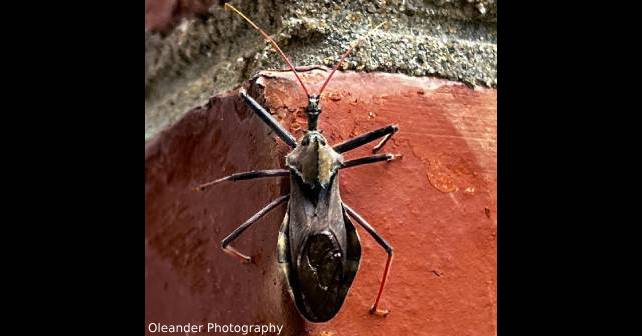
Toxicological Importance
Normally, the garden variety assassin bugs have no interest in humans and prefer to hide. However, when disturbed and handled, they can inflict a painful response. Although repeatedly referred to as a “bite” in the literature, the injury actually occurs through a stab of your skin by their needle-like rostrum and a dose of their defensive/digestive product—described as “10 times worse” than stings from bees, wasps, or hornets. The sensation has been described as a burning, very sharp pain that can be followed by numbness in the local area for several days.
Explore This Issue
ACEP Now: July 2025The local skin area reactions vary from focal pain and redness; to broad areas that are reddened, urticarial, and hot; to punctum-associated abscesses. Broad rash and anaphylaxis have been described in patients sensitized from previous bites.3 Healing times vary but may take two weeks or longer for full resolution.
Dr. Hall described in detail the effects of two “bites” to the right fifth digit of his 10-yearold daughter from Arilus c.4 The bite pain was described by her as a “bee” sting. The wound later developed horn-like “papillomata” at the punctures, and compared with her other digits, the affected finger “still was warmer than the others a year later.” More recent investigations into assassin bug venom—specifically in bee-killer assassin bug (Pristhesancus plagipennis)— revealed the production of two separate venoms (one for paralysis and digestion, and one for producing pain for defense) from two distinct groups of glands.5
Treatment
There is no antidote. Treatment of A. cristatus and other assassin bug stings depends on the reaction to the insult. Local reaction treatments are generally treated supportively with local corticosteroids and antihistamines. If more generalized allergic reactions occur, treat with standard oral antihistamines and steroids. Anaphylaxis treatment is again standard, with epinephrine and intravenous antihistamines as indicated. Infected bites should be treated with antibiotics, and abscesses incised and drained.6,7
 Dr. Hack is chief of the division of medical toxicology and vice chair for research at East Carolina University in Greenville, N.C.
References
- Smith FD, Miller NG, Carnazzo SJ, Eaton WB. Insect bite by Arilus cristatus, a North American reduviid. AMA Arch Derm. 1958;77(3):324-330.
- Froeschner RC. Contributions to a synopsis of the Hemiptera of Missouri, Pt. III. American Midland Naturalist. 1944;31:638-683.
- Boswell ND, Elston DM. What‘s eating you? Triatoma and Arilus cristatus bugs. Cutis. 2023;111(6):289-291.
- Hall MC. Lesions due to the bite of the wheel-bug, Arilus cristatus (Hemiptera; Reduviidae). Arch Intern Med (Chic). 1924;33(4):513-515.
- Walker AA, Mayhew ML, Jin J, et al. The assassin bug Pristhesancus plagipennis produces two distinct venoms in separate gland lumens. Nat Commun. 2018;9:755.
- Moffitt JE, Venarske D, Goddard J, et al. Allergic reactions to Triatoma bites. Ann Allergy Asthma Immunol. 2003;91:122-128.
- Burnett JW, Calton GJ, Morgan RJ. Triatoma: the “kissing bug”. Cutis. 1987;39(5):399.
Pages: 1 2 3 | Single Page



One Response to “Toxicology Answer: the Assassin Bug”
November 25, 2025
JohnI’ve been hit 3 times by an assiassin bug. Once was a positive ID because I saw it sitting on my finger before the bite.
Far worse pain than honey bees (I used to raise them), yellow jackets, or red wasps. Plus the AB sting hurts intensely for days whereas the others for maybe a couple of hours.
One “sting” has resulted in a continuing red spot now more than 4 years later. I guess I should call a tattoo at this point.
Thanks for a good article.