
Ingestion of one teaspoon (one toddler mouthful, 5 mL) contains approximately 7 g of salicylate, which is equivalent to approximately 22 325-mg aspirin tablets5.
Explore This Issue
ACEP Now: November 2025Although food and many consumer products have MS concentrations of <1 percent, some liniments and joint pain creams may be 5 to 20 percent.2 Products with >5 percent must be labeled in containers stating, “Keep away from children.”
Approximately 10-20 percent of MS is absorbed through the skin within 10 hours of topical application. The kinetics and degree of absorption are affected not only by the thickness of the skin, but by the presence of other ingredients.6 Interestingly, when mixed with menthol or camphor, the conversion of MS to salicylic acid through esterase activity is significantly inhibited.7
There are many reports of MS products causing salicylism, injury, and even death.8-14
Treatment
Treatment is similar to managing aspirin overdoses: Decontaminate the skin of any topically applied creams with wiping and washing, GI decontamination in appropriate circumstances, and salicylate level monitoring. Pay attention to acid base, fluid, glucose, and electrolytes abnormalities. Promote enhanced elimination with urinary alkalinization or hemodialysis, as needed. A case report has described exchange transfusion as a treatment in one episode of overdose.10

Dr. Hack is chief of the division of medical toxicology and vice chair for research at East Carolina University in Greenville, North Carolina.
References
- The National Formulary, 18th ed.; United States Pharmacopeial Convention: Rockville, MD, USA, 1994; pp. 2266–2267
- Anderson A, McConville A, Fanthorpe L, Davis J. Salicylate Poisoning Potential of Topical Pain Relief Agents: From Age Old Remedies to Engineered Smart Patches. Medicines (Basel). 2017; Jun 30;4(3):48. doi: 10.3390/medicines4030048. PMID: 28930263; PMCID: PMC5622383.
- Angier, Bradford. “Field Guide to Medicinal Plants.” Stackpole BooksMechanicsburg, Pa.,1978; pp. 56-60.
- Chyka PA, Erdman AR, Christianson G, et al. Salicylate poisoning: An evidence-based consensus guideline for out-of-hospital management, Clin Toxicol 2007; 45:2, 95-131.
- Wolowich WR, Hadley CM, Kelley MT, et al. Plasma salicylate from methyl salicylate cream compared to oil of wintergreen. J Toxicol Clin Toxicol 2003;41:355-358.
- Morra P,Bartle WR, Walker SE, et al. Serum concentrations of salicylic acid following topically applied salicylate derivatives. Ann Pharmacother 1996;(30): 935-940.
- Yano T, Kanetake T, Saita M, Noda K. Effect of l-menthol and dl-camphor on the penetration and hydrolysis of methyl salicylate in hairless mouse skin. Pharmacobiodyn 1991;14: 663-669.
- Cann HM, Verhulst HL. The salicylate problem with special reference to methyl salicylate. J Pediatr 1958; 53:271-276.
- Diamond EF, DeYoung VR. Acute poisoning with oil of wintergreen treated by exchange transfusion. AMA J Dis Child 1958; (95)3:309-310.
- Done AK, Otterness LJ. Exchange transfusion in the treatment of oil of wintergreen (methyl salicylate) poisoning. Pediatrics 1956; 18(1):80-85.
- Howrie DL, Moriarty R, Breit R. Candy flavoring as a source of salicylate poisoning. Pediatrics 1985; 75(5):869-871.
- Lester H, Davis K. Oil of wintergreen. Vet Hum Toxicol 1984; 26:308.
- Malik AS, Zabidi MH, Noor AR. Acute salicylism due to accidental ingestion of a traditional medicine. Singapore Med J 1994; 35:215-216.
- Stevenson CS. Oil of wintergreen (methyl salicylate) poisoning. Report of three cases, one with autopsy, and a review of the literature. Am J Med Sci 1937; 193:772-788.
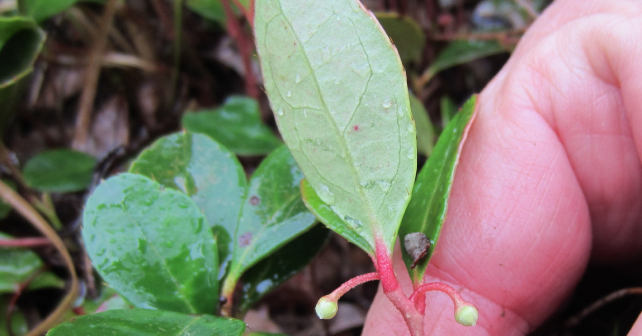
*Images of Gaultheria procumbens are from Smithsonian public domain (free of copyright restrictions).
Pages: 1 2 3 | Single Page



No Responses to “Toxicology Answer: Oil of Wintergreen”