Logo

Log In Sign Up |  An official publication of: American College of Emergency Physicians
Navigation
  • Home
  • Multimedia
    • Podcasts
    • Videos
  • Clinical
    • Airway Managment
    • Case Reports
    • Critical Care
    • Guidelines
    • Imaging & Ultrasound
    • Pain & Palliative Care
    • Pediatrics
    • Resuscitation
    • Trauma & Injury
  • Resource Centers
    • mTBI Resource Center
  • Career
    • Practice Management
      • Benchmarking
      • Reimbursement & Coding
      • Care Team
      • Legal
      • Operations
      • Quality & Safety
    • Awards
    • Certification
    • Compensation
    • Early Career
    • Education
    • Leadership
    • Profiles
    • Retirement
    • Work-Life Balance
  • Columns
    • ACEP4U
    • Airway
    • Benchmarking
    • Brief19
    • By the Numbers
    • Coding Wizard
    • EM Cases
    • End of the Rainbow
    • Equity Equation
    • FACEPs in the Crowd
    • Forensic Facts
    • From the College
    • Images in EM
    • Kids Korner
    • Medicolegal Mind
    • Opinion
      • Break Room
      • New Spin
      • Pro-Con
    • Pearls From EM Literature
    • Policy Rx
    • Practice Changers
    • Problem Solvers
    • Residency Spotlight
    • Resident Voice
    • Skeptics’ Guide to Emergency Medicine
    • Sound Advice
    • Special OPs
    • Toxicology Q&A
    • WorldTravelERs
  • Resources
    • ACEP.org
    • ACEP Knowledge Quiz
    • Issue Archives
    • CME Now
    • Annual Scientific Assembly
      • ACEP14
      • ACEP15
      • ACEP16
      • ACEP17
      • ACEP18
      • ACEP19
    • Annals of Emergency Medicine
    • JACEP Open
    • Emergency Medicine Foundation
  • About
    • Our Mission
    • Medical Editor in Chief
    • Editorial Advisory Board
    • Awards
    • Authors
    • Article Submission
    • Contact Us
    • Advertise
    • Subscribe
    • Privacy Policy
    • Copyright Information

Toxicology Answer: An Illustrated Case of Ethylene Glycol, Direct and Indirect

By Jason Hack, MD | on October 10, 2023 | 0 Comment
Toxicology Q&A
  • Tweet
  • Click to email a link to a friend (Opens in new window) Email
Print-Friendly Version

Ethylene glycol (EG), also known as ethane-1,2-diol, with the molecular formula CH2OHCH2OH, is a colorless, odorless, water-soluble liquid commonly used as antifreeze fluid in automobile radiators, and remains an important cause of significant and sometimes fatal toxicity in the United States, with approximately 6,000 exposures and 20 deaths reported to poison centers in 2021.1 After possible exposures, early diagnosis and treatment are critical for preventing morbidity and mortality. However, the diagnosis of EG exposures continues to be problematic due to inconsistent history, restricted availability of EG-specific testing, and inconsistent time-sensitive indirect clues in laboratory analysis.

You Might Also Like
  • Toxicology Q&A Answer: Castor Beans Can Kill, and the Oil Is Iffy, Too
  • Toxicology Q&A Answer: Yes, the Amanita Muscaria Mushroom Is Toxic
  • Toxicology Answer: the Lovely Lily of the Valley
Explore This Issue
ACEP Now: Vol 42 – No 10 – October 2023

Case

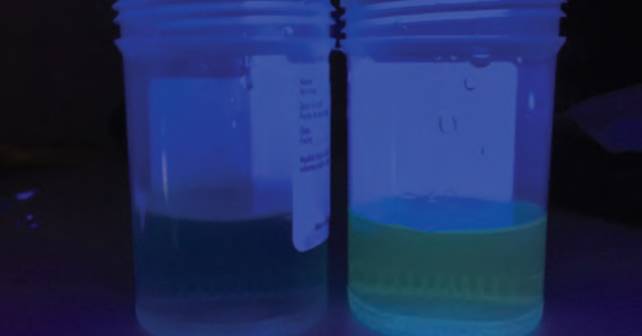
A young adult male with a prior history of self-harm presented 30 minutes after stating he “might have drunk half a gallon of antifreeze.” Physical examination revealed an awake, anxious-appearing, tachycardic man with no other abnormalities. Laboratory data were notable for normal renal function, osmol gap 24 (normal range, -14 to +10), anion gap 10 (normal range, 3 to 13), and normal urine without crystals. He was empirically loaded with fomepizole (15 mg/kg). The patient’s urine was obtained and compared with the urine of his emergency physician using a Wood’s lamp, and the patient’s was found to be brightly fluorescent, supporting the presumptive diagnosis of EG poisoning. After 12 hours, his initial EG level returned 130 mg/dL. After resolution of EG poisoning, he was transferred to psychiatry and ultimately discharged home without complication.

Discussion

The diagnosis of EG ingestion is problematic, often made on suggestive indirect information, and must be made quickly because time represents renal injury. The bedside physician must gather as many direct and indirect, classically suggestive data as possible and decide which are “bad” (they probably drank it), or “good” (they probably didn’t). The presence of urine fluorescence might be additive to this data collection.

History

Someone saw them drink the EG. This is bad (direct evidence). Their experience drinking the liquid. For example:

Doctor: “I bet it was terrible when you drank it, huh?”

Patient: “You know Doc, it wasn’t so bad, actually sort of sweet.”

This is bad (indirect evidence).

Laboratory Results

Osmol gap: If the gap is large—this is bad (indirect evidence). However, it is the parent alcohol that causes the gap, and with a typical half-life of three to six hours (peaking at 30 to 60 minutes) once it has been metabolized, the gap goes away.2 Additionally, there are large variations in the range of osmol gaps depending on the equation used to calculate osmolarity and the fact that some people naturally have negative osmol gaps. Because of this large range of values, small osmol gaps cannot be used to eliminate the possibility of toxic alcohol ingestion.3,4

Pages: 1 2 3 4 | Single Page

Topics: antifreezeCase ReportsClinicalpolyethylene glycol

Related

  • Non-Invasive Positive Pressure Ventilation in the Emergency Department

    October 1, 2025 - 0 Comment
  • Emergency Department Management of Prehospital Tourniquets

    October 1, 2025 - 0 Comment
  • ACEP’s October 2025 Poll: How Often Do You Read Your Own X-Rays?

    September 30, 2025 - 0 Comment

Current Issue

ACEP Now: November 2025

Download PDF

Read More

No Responses to “Toxicology Answer: An Illustrated Case of Ethylene Glycol, Direct and Indirect”

Leave a Reply Cancel Reply

Your email address will not be published. Required fields are marked *


*
*


Wiley
  • Home
  • About Us
  • Contact Us
  • Privacy
  • Terms of Use
  • Advertise
  • Cookie Preferences
Copyright © 2025 by John Wiley & Sons, Inc. All rights reserved, including rights for text and data mining and training of artificial technologies or similar technologies. ISSN 2333-2603
