Logo

Log In Sign Up |  An official publication of: American College of Emergency Physicians
Navigation
  • Home
  • Multimedia
    • Podcasts
    • Videos
  • Clinical
    • Airway Managment
    • Case Reports
    • Critical Care
    • Guidelines
    • Imaging & Ultrasound
    • Pain & Palliative Care
    • Pediatrics
    • Resuscitation
    • Trauma & Injury
  • Resource Centers
    • mTBI Resource Center
  • Career
    • Practice Management
      • Benchmarking
      • Reimbursement & Coding
      • Care Team
      • Legal
      • Operations
      • Quality & Safety
    • Awards
    • Certification
    • Compensation
    • Early Career
    • Education
    • Leadership
    • Profiles
    • Retirement
    • Work-Life Balance
  • Columns
    • ACEP4U
    • Airway
    • Benchmarking
    • Brief19
    • By the Numbers
    • Coding Wizard
    • EM Cases
    • End of the Rainbow
    • Equity Equation
    • FACEPs in the Crowd
    • Forensic Facts
    • From the College
    • Images in EM
    • Kids Korner
    • Medicolegal Mind
    • Opinion
      • Break Room
      • New Spin
      • Pro-Con
    • Pearls From EM Literature
    • Policy Rx
    • Practice Changers
    • Problem Solvers
    • Residency Spotlight
    • Resident Voice
    • Skeptics’ Guide to Emergency Medicine
    • Sound Advice
    • Special OPs
    • Toxicology Q&A
    • WorldTravelERs
  • Resources
    • ACEP.org
    • ACEP Knowledge Quiz
    • Issue Archives
    • CME Now
    • Annual Scientific Assembly
      • ACEP14
      • ACEP15
      • ACEP16
      • ACEP17
      • ACEP18
      • ACEP19
    • Annals of Emergency Medicine
    • JACEP Open
    • Emergency Medicine Foundation
  • About
    • Our Mission
    • Medical Editor in Chief
    • Editorial Advisory Board
    • Awards
    • Authors
    • Article Submission
    • Contact Us
    • Advertise
    • Subscribe
    • Privacy Policy
    • Copyright Information

Tips for Reducing Falls in Your ED Via Process and Design Changes

By Shari Welch, MD, FACEP | on October 16, 2018 | 0 Comment
Special OPs
  • Tweet
  • Click to email a link to a friend (Opens in new window) Email
Print-Friendly Version
Photo: shutterstock.com

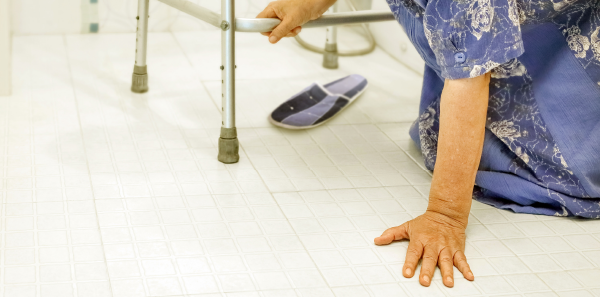
The direction a bathroom door opens can increase or decrease patient falls. When the door opens into the bathroom, the patient becomes crowded into the sink or commode and can fall, so it is best for the restroom door to swing outward. In some new modular designs, the commode folds down from the wall right next to the patient’s bedside so the patient does not travel far. New room designs include a family space to encourage family members to monitor their loved ones for safety.

You Might Also Like
  • Design Emergency Departments to Boost Patient, Staff Satisfaction
  • Emergency Department Benchmarking Alliance Reports on Data Survey for Next-Generation ED Design
  • New Study: EPs Key to Reducing Health Care Costs
Explore This Issue
ACEP Now: Vol 37 – No 10 – October 2018

The height of furniture, especially beds and toilets, can be tricky. You will often read that these should be low for ill patients, but that is not entirely correct. Research from the Center for Health Design suggests beds and toilets be high so that patients, whose limb girdle muscles are the first to weaken during illness, do not have to lower themselves a long way down to the furniture. On the other hand, lower beds and commodes are associated with less severe injuries when the patient does fall.

A final design change associated with decreasing fall rates is one still not widely popular with nurses: decentralized nurse stations. Clinical units are being designed with work stations scattered throughout the department to allow nurses more opportunity to do paperwork while observing patients. Decentralization offers other advantages, too, including decreased noise levels, which is critical to patient satisfaction, and decreased amounts of walking for nurses who have to work from multiple sites.

The Potential

How much can these kinds of process and design changes reduce falls? The Center for Health Design estimates design changes alone can reduce patient falls by as much as 17 percent. Methodist Hospital in Indianapolis, Indiana, ramped up its fall-reduction program with rigorous procedures and design changes that included a family space in every patient room and decentralized nurse stations. These efforts resulted in a reduction of patient falls from six per 1,000 patients to two per 1,000 patients in a cardiac care unit.2

As many emergency departments consider adding geriatric service lines to their departments, the issue seems even more relevant than in the past. Shouldn’t we apply some of these strategies in the emergency department?

References

  1. Chang JT, Morton SC, Rubenstein LZ, et al. Interventions for the prevention of falls in older adults: Systematic review and meta-analysis of randomized clinical trials. BMJ. 2004 Mar 20;328(7441):680.
  2. Hednrich A, Fay J, Sorrells A. Courage to heal: comprehensive cardiac critical care. Healthcare Design website. Accessed September 26, 2018.

Pages: 1 2 3 | Single Page

Topics: Elderlyelderly fallsfallspatient falls

Related

  • Patterns of Injury in Elder Abuse

    November 6, 2025 - 0 Comment
  • Tips for Managing Acute Agitation in the Elderly

    June 13, 2022 - 0 Comment
  • Geriatric Trauma Myths and Misperceptions: Part 2

    November 23, 2021 - 0 Comment

Current Issue

ACEP Now: November 2025

Download PDF

Read More

About the Author

Shari Welch, MD, FACEP

Shari Welch, MD, FACEP, is a practicing emergency physician with Utah Emergency Physicians and a research fellow at the Intermountain Institute for Health Care Delivery Research. She has written numerous articles and three books on ED quality, safety, and efficiency. She is a consultant with Quality Matters Consulting, and her expertise is in ED operations.

View this author's posts »

No Responses to “Tips for Reducing Falls in Your ED Via Process and Design Changes”

Leave a Reply Cancel Reply

Your email address will not be published. Required fields are marked *


*
*


Wiley
  • Home
  • About Us
  • Contact Us
  • Privacy
  • Terms of Use
  • Advertise
  • Cookie Preferences
Copyright © 2025 by John Wiley & Sons, Inc. All rights reserved, including rights for text and data mining and training of artificial technologies or similar technologies. ISSN 2333-2603