Logo

Log In Sign Up |  An official publication of: American College of Emergency Physicians
Navigation
  • Home
  • Multimedia
    • Podcasts
    • Videos
  • Clinical
    • Airway Managment
    • Case Reports
    • Critical Care
    • Guidelines
    • Imaging & Ultrasound
    • Pain & Palliative Care
    • Pediatrics
    • Resuscitation
    • Trauma & Injury
  • Resource Centers
    • mTBI Resource Center
  • Career
    • Practice Management
      • Benchmarking
      • Reimbursement & Coding
      • Care Team
      • Legal
      • Operations
      • Quality & Safety
    • Awards
    • Certification
    • Compensation
    • Early Career
    • Education
    • Leadership
    • Profiles
    • Retirement
    • Work-Life Balance
  • Columns
    • ACEP4U
    • Airway
    • Benchmarking
    • Brief19
    • By the Numbers
    • Coding Wizard
    • EM Cases
    • End of the Rainbow
    • Equity Equation
    • FACEPs in the Crowd
    • Forensic Facts
    • From the College
    • Images in EM
    • Kids Korner
    • Medicolegal Mind
    • Opinion
      • Break Room
      • New Spin
      • Pro-Con
    • Pearls From EM Literature
    • Policy Rx
    • Practice Changers
    • Problem Solvers
    • Residency Spotlight
    • Resident Voice
    • Skeptics’ Guide to Emergency Medicine
    • Sound Advice
    • Special OPs
    • Toxicology Q&A
    • WorldTravelERs
  • Resources
    • ACEP.org
    • ACEP Knowledge Quiz
    • Issue Archives
    • CME Now
    • Annual Scientific Assembly
      • ACEP14
      • ACEP15
      • ACEP16
      • ACEP17
      • ACEP18
      • ACEP19
    • Annals of Emergency Medicine
    • JACEP Open
    • Emergency Medicine Foundation
  • About
    • Our Mission
    • Medical Editor in Chief
    • Editorial Advisory Board
    • Awards
    • Authors
    • Article Submission
    • Contact Us
    • Advertise
    • Subscribe
    • Privacy Policy
    • Copyright Information

Tips for Reducing Falls in Your ED Via Process and Design Changes

By Shari Welch, MD, FACEP | on October 16, 2018 | 0 Comment
Special OPs
  • Tweet
  • Click to email a link to a friend (Opens in new window) Email
Print-Friendly Version
Photo: shutterstock.com

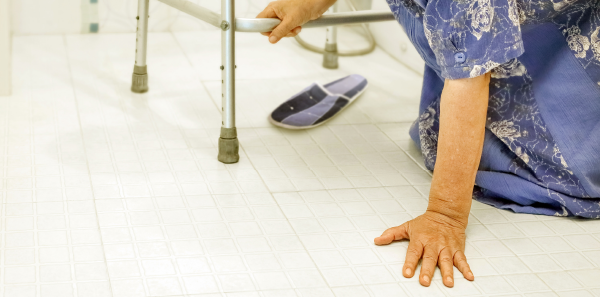
The cost of patient falls in elderly persons is expected to reach $32.4 billion dollars in 2020.1 Patients fall most often in their bedrooms, followed by the bathroom; this holds true both at home and in the hospital. Fortunately, a growing body of research surrounding falls in the hospital helps us understand some of the conditions and circumstances that contribute to falls.

You Might Also Like
  • Design Emergency Departments to Boost Patient, Staff Satisfaction
  • Emergency Department Benchmarking Alliance Reports on Data Survey for Next-Generation ED Design
  • New Study: EPs Key to Reducing Health Care Costs
Explore This Issue
ACEP Now: Vol 37 – No 10 – October 2018

Identify and Communicate

Process and design changes exist that can reduce the risk of falls for emergency department patients. One important process change is identifying patients who are fall risks; checklists at intake can help identify them. Risk factors for falling include:

  • History of recent falls
  • Decreased level of consciousness
  • Use of a walking aid
  • Difficulty rising from a chair
  • Balance problems
  • Hypotension/orthostasis
  • Presence of:
    • Foley catheter
    • Brace or cast
    • Feeding tube
    • IV or heparin lock
  • Certain diseases such as stroke, seizures, or Parkinson’s
  • Taking three or more medications
  • Visual or hearing impairment

Once falling risk factors have been identified, how do you effectively communicate that information to all members of the emergency department team? Noting the patient is a fall risk in the chart has become commonplace, and using more visual cues is gaining momentum. Some organizations use color-coded booties (typically red), and these booties often include nonskid design elements. These brightly colored booties are readily identifiable by staff, including transport techs, radiology techs, and ED techs, who may have only brief encounters with the patient and inadvertently put the patient at risk. Commercial products such as the Patient Care Sign allow staff to use sign icons on the patient door such as Fall Risk, NPO, Isolation, etc.

The point: Identification alone will not reduce falls if the risk is not conveyed to staff and there are not policies and procedures in place to reduce the risk.

Design Changes

So what are some of the procedures and policies that have become part of effective fall-reduction programs? Use of a low-rise bed, easy access to call lights, nonskid slippers or floor mats, alarm mats that chime when the patient gets out of bed, and decreased clutter in patient rooms all can reduce falls.

Other design features have demonstrated potential for reducing falls as well. Slippery floors (the proverbial polished linoleum) contribute to falls, and there is much experimentation afoot using antibacterial carpet tiles with nonskid surfaces. Adding floor lighting to improve visibility for visually impaired patients and installing adequate railings can improve safety in clinical areas.

Pages: 1 2 3 | Single Page

Topics: Elderlyelderly fallsfallspatient falls

Related

  • Patterns of Injury in Elder Abuse

    November 6, 2025 - 0 Comment
  • Tips for Managing Acute Agitation in the Elderly

    June 13, 2022 - 0 Comment
  • Geriatric Trauma Myths and Misperceptions: Part 2

    November 23, 2021 - 0 Comment

Current Issue

ACEP Now: November 2025

Download PDF

Read More

About the Author

Shari Welch, MD, FACEP

Shari Welch, MD, FACEP, is a practicing emergency physician with Utah Emergency Physicians and a research fellow at the Intermountain Institute for Health Care Delivery Research. She has written numerous articles and three books on ED quality, safety, and efficiency. She is a consultant with Quality Matters Consulting, and her expertise is in ED operations.

View this author's posts »

No Responses to “Tips for Reducing Falls in Your ED Via Process and Design Changes”

Leave a Reply Cancel Reply

Your email address will not be published. Required fields are marked *


*
*


Wiley
  • Home
  • About Us
  • Contact Us
  • Privacy
  • Terms of Use
  • Advertise
  • Cookie Preferences
Copyright © 2025 by John Wiley & Sons, Inc. All rights reserved, including rights for text and data mining and training of artificial technologies or similar technologies. ISSN 2333-2603