
A 9-month-old male presents to emergency department (ED) with his mother for seizure. The child was diagnosed with seizure disorder at 2 months of age and has had multiple visits to the emergency department (ED) for seizures. The child was delivered at term vaginally, with normal prenatal period and labor. Immunizations are up to date. The child drinks baby formula and has been advancing his diet using baby food. Review of the chart shows that the child has had several negative CT scans and MRIs, and no structural or congenital central nervous system (CNS) abnormalities. The child was started on Levetiracetam and levels always have been normal despite breakthrough seizures. Metabolic conditions were ruled out but the child did have visits with both hyponatremia and hypernatremia present. These resolved during hospitalization. Today, the child is afebrile and vital signs are normal. Examination is unremarkable. Laboratory analysis reveals a sodium of 160 mg/dl. Urine electrolytes were obtained. Pediatric neurology and pediatric intensive care unit PICU were consulted and recommended obtaining anti-epileptic drug levels and starting D5 containing IV fluid. While waiting for bed placement, the RN observes the mother preparing a bottle for the child and comes to you with a concern about what she witnessed. What do you do?
Explore This Issue
ACEP Now: Vol 43 – No 05 – May 2024Discussion
Factitious Disorder Imposed on Another (FDIA), is a psychological disorder in which a caregiver and especially a parent induces the symptoms of a disease or injury in their child, falsifies the child’s medical history, or tampers with the child’s diagnostic specimens to create a situation that typically requires medical attention.1 This is a recognized form of child abuse. The condition was described by Dr. Robert Meadow in 1977, as Munchausen Syndrome by Proxy. It was named after Baron von Munchausen, who was known for having a knack for embellished, elaborate stories.2 Currently the condition has been renamed as Factitious Disorder Imposed on Another (FDIA). The current DSM-5 criteria for the diagnosis of FDIA is, “falsely presenting or causing physician or mental health symptoms in someone else with the intent of deception; authoritatively and falsely presenting another (adult, child, or pet) to others as physically or mentally impaired; the deceptive behavior occurs even when there’s no obvious gain or benefit; and no other mental health condition can explain these behaviors.”2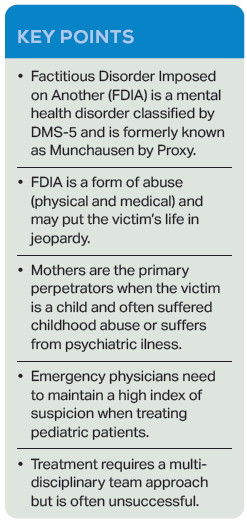
Several risk factors have been identified in both the parent and child.3,4 Perpetrator risk factors include: female sex, mother of child, health care worker, history of obstetric complications, history of childhood maltreatment, and psychiatric illness (factitious disorder imposed on self, borderline personality disorder, histrionic personality disorder, and depression). Their motive is often to seek sympathy or attention. Victim risk factors include: young children especially younger that 6 years old, sibling of victims of FDIA, elderly, and the disabled. By far, the majority of victims are children. FDIA is estimated to occur in one percent of the population and carries up to a 12 percent victim mortality rate.5
Pages: 1 2 3 | Single Page



One Response to “Tips for Diagnosing Factitious Disorder Imposed on Another”
July 29, 2025
May BerryYou are not counting the millions of children being abused by FDIA in the family courts due to inadequately educated and trained evaluator and assessments being conducted on both parents (male and female alike) perpetrating this type of ailment abuse! Shame on you so called Medical Healthcare Professionals for singling out WOMEN, when just as many heinous acts of rigid traumatizing males are committing atrocities on so many children annually and your professional APA community is to blame for allowing sub par doctoring to continue in family courtrooms across the country… it’s colluding with these child abusers! Take the “Most are WOMEN” comment out of your definition! Its deceptively inaccurate! Siting the 2022 NY Blue Ribbon Commission on FDIA Child Abuse in the Family Courts for secondary gains (financial victimhood sympathy, best parent actor role–accolades and to gain custody of children).