
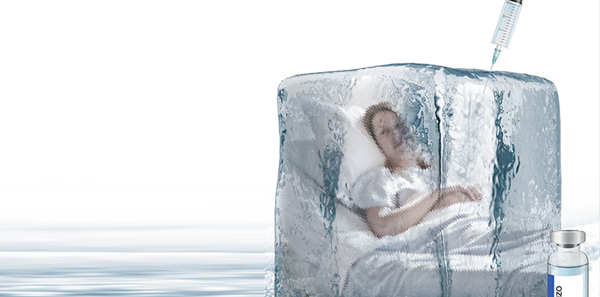
The onset of symptoms is relatively rapid, typically presenting within minutes to hours. Diagnosis can occasionally be delayed until the postoperative period in patients undergoing general anesthesia, as described in the patient in Case 1. The most common presenting symptom is unexplained hypercarbia (a rising end-tidal CO2 despite no change in ventilation), followed by hyperthermia, sinus tachycardia, and masseter muscle spasm.3 Often, these patients will develop rhabdomyolysis, which can lead to hyperkalemia, worsening acidosis, and even cerebral edema. The management of patients with presumed malignant hyperthermia begins with benzodiazepines for muscle relaxation, aggressive cooling measures, and early correction of hyperkalemia. The reversal agent for malignant hyperthermia is dantrolene (initial dose is 2.5 mg/kg IV), a hydantoin derivative that functions by inhibiting calcium release from the sarcoplasmic reticulum by antagonizing ryanodine receptors. Dantrolene can cause diaphragmatic weakness. Close monitoring of respiratory status is recommended. For patients who are untreated, mortality has been reported to be as high as 70 percent versus about 7 percent for those who receive proper management.4 The hotline run by the Malignant Hyperthermia Association of the United States (800-644-9737) can be consulted for assistance in treatment.
Explore This Issue
ACEP Now: Vol 35 – No 12 – December 2016Neuroleptic Malignant Syndrome
Case 2 describes the presentation of NMS, an idiosyncratic reaction secondary to an overall dopamine deficit caused by either excessive dopamine antagonism from certain antipsychotic agents (eg, haloperidol, olanzapine, quetiapine, risperidone) or from withdrawal of dopamine agonists (eg, Parkinson’s patients who abruptly stop their dopamine agonist medications).5 The dopamine deficit in the hypothalamus and basal ganglia leads to hyperthermia as a result of extrapyramidal side effects like sustained muscle contraction and an elevated temperature set point. There is also a theorized removal of tonic inhibition from the sympathetic nervous system, which results in characteristic autonomic instability.6
“Those individuals who were taking an antipsychotic medication as a cause for their NMS can be treated with bromocriptine, a dopamine agonist used to overcome dopaminergic blockade. There are case reports for the use of dantrolene in NMS. However, this remains controversial.”
The onset of symptoms for NMS is longer than the other hyperthermic disorders, typically presenting within days to weeks of starting or increasing the dose of a dopamine antagonist or withholding a dopamine agonist. The classic finding on physical exam is a catatonic patient with lead pipe rigidity and bradykinesia. Other symptoms include Parkinsonian-like manifestations including dystonia, akathisias, and resting tremors. Management again begins in the emergency department with active cooling and benzodiazepines for muscle relaxation. Patients with NMS are also susceptible to developing rhabdomyolysis, although it is less common than in patients with malignant hyperthermia.7 Those individuals who were taking an antipsychotic medication as a cause for their NMS can be treated with bromocriptine, a dopamine agonist used to overcome dopaminergic blockade. There are case reports for the use of dantrolene in NMS. However, this remains controversial. Parkinson’s disease patients who present with NMS secondary to withdrawal should be restarted on their appropriate dopamine agonist medications. In addition, aggressive IV fluid hydration can help prevent acute renal failure and enhance excretion of muscle breakdown products. Each year, approximately 2,000 patients are diagnosed with NMS in the United States, with an overall mortality rate of approximately 10 percent.8 Disposition of patients with NMS, as with the other hyperthermic disorders, involves close monitoring in an intensive care unit.
Serotonin Syndrome
Case 3 represents a patient with serotonin syndrome. Serotonin syndrome presents as a constellation of cognitive, neuromuscular, and autonomic symptoms secondary to an excess of synaptic serotonin. The mechanism of this syndrome is quite complex and involves a combination of interactions involving central catecholamine release, the hypothalamic-pituitary-adrenal axis, the sympathetic nervous system, and skeletal muscle. Often, as described in this case, the syndrome is seen in patients who ingest medications that synergistically increase serotonin, although it can also occur from an overdose of a single serotonergic agent.9 Some of these drugs are listed in Table 2.
Pages: 1 2 3 4 | Single Page



No Responses to “Tips for Diagnosing,Treating Toxin-Induced Hyperthermic Disorders”