
If you have trained in emergency medicine in the past 10 years, thrombolysis for acute stroke is more a way of life than an ongoing dispute. We practice in an environment where institutional focus for early treatment of acute stroke reflects various reportable quality measures favoring thrombolysis and rapid treatment even more so. On the other hand, the academic debate rages on, even in the pages of ACEP Now.1
Explore This Issue
ACEP Now: Vol 40 – No 08 – August 2021Independent of this long-simmering tension over the efficacy of thrombolysis for stroke, a handful of other more troublesome ideas have taken root over the past decade. The most important of these is the mantra that thrombolytic therapy is somehow harmless in stroke mimics. This concept is best encapsulated by the title of a 2014 article in Stroke: “t-PA for Stroke Mimics: Continuing to Be Swift Rather Than Delaying Treatment to Be Sure.”2
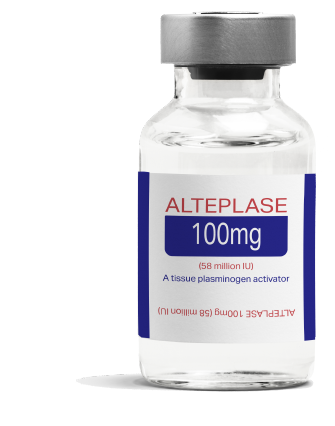 The underlying physiological principle promulgated is an assertion no harm from thrombolytic therapy can come to those without underlying cerebral infarction. These claims are supported by citations from observational case series of stroke mimics, in which the authors report the absence of symptomatic intracranial hemorrhage (ICH) following inadvertent thrombolysis. The largest sample, from the Get With The Guidelines Stroke Registry, pools 2,517 stroke mimics and reports a 0.4 percent incidence of symptomatic ICH.3 Thus, erroneously administering thrombolytic therapy to stroke mimics is to be considered undeniably safe.
This is undeniably a willful misapplication of these data to practice. Because the rosiest presentation of these data fits with the prevailing narrative, any limitations are conveniently swept away. The fundamental flaw is ascertainment bias (see “Bias 101,” above right), a type of sampling bias in which an analyzed cohort is more likely to include certain patients than others. While evaluating the true frequency and risks to stroke mimics, ascertainment bias is introduced by the criteria used to ultimately differentiate mimics from cerebral ischemia.
Bias in Action
The best evidence demonstrating the effect of ascertainment bias on the diagnosis of stroke mimics comes from the dramatic variation in reported incidence across studies. The neurology literature is replete with estimates of stroke mimic treatment rates as low as 1 to 2 percent and exceeding 20 percent.4 The wide range in estimates relates primarily to the lack of standardized assessment of patients following thrombolysis. In some studies, patients were classified as stroke mimics only if a treating clinician established a conclusive nonstroke diagnosis. Conversely, in other studies, patients systematically underwent MRI to radiographically document the sequelae of an ischemic lesion to confirm stroke. With this rigorous latter approach, rates of thrombolysis in stroke mimics reach 20 percent.
Confirmation bias further influences the low observed rate of ICH in treated mimics. If the prevailing messaging declares ICH after thrombolysis in a stroke mimic to be rare, it becomes tautological that any ICH would be attributed to a true stroke, not a stroke mimic. Thus, few cases of ICH would ever be attributed to thrombolysis of a stroke mimic, particularly the most severe ICH. Furthermore, there would only be biases away from documenting serious complications occurring in a stroke mimic on an individual professional level, from an administrative quality assurance standpoint and a medicolegal view. It is also possible to imagine a financial bias away from seeking out stroke mimics, as the stroke thrombolysis average diagnosis related group reimbursement is nearly triple that of a stroke mimic treated with thrombolysis.5
Pages: 1 2 3 | Single Page




No Responses to “Thrombolysis in Stroke Mimics Is Not Harmless”