Logo

Log In Sign Up |  An official publication of: American College of Emergency Physicians
Navigation
  • Home
  • Multimedia
    • Podcasts
    • Videos
  • Clinical
    • Airway Managment
    • Case Reports
    • Critical Care
    • Guidelines
    • Imaging & Ultrasound
    • Pain & Palliative Care
    • Pediatrics
    • Resuscitation
    • Trauma & Injury
  • Resource Centers
    • mTBI Resource Center
  • Career
    • Practice Management
      • Benchmarking
      • Reimbursement & Coding
      • Care Team
      • Legal
      • Operations
      • Quality & Safety
    • Awards
    • Certification
    • Compensation
    • Early Career
    • Education
    • Leadership
    • Profiles
    • Retirement
    • Work-Life Balance
  • Columns
    • ACEP4U
    • Airway
    • Benchmarking
    • Brief19
    • By the Numbers
    • Coding Wizard
    • EM Cases
    • End of the Rainbow
    • Equity Equation
    • FACEPs in the Crowd
    • Forensic Facts
    • From the College
    • Images in EM
    • Kids Korner
    • Medicolegal Mind
    • Opinion
      • Break Room
      • New Spin
      • Pro-Con
    • Pearls From EM Literature
    • Policy Rx
    • Practice Changers
    • Problem Solvers
    • Residency Spotlight
    • Resident Voice
    • Skeptics’ Guide to Emergency Medicine
    • Sound Advice
    • Special OPs
    • Toxicology Q&A
    • WorldTravelERs
  • Resources
    • ACEP.org
    • ACEP Knowledge Quiz
    • Issue Archives
    • CME Now
    • Annual Scientific Assembly
      • ACEP14
      • ACEP15
      • ACEP16
      • ACEP17
      • ACEP18
      • ACEP19
    • Annals of Emergency Medicine
    • JACEP Open
    • Emergency Medicine Foundation
  • About
    • Our Mission
    • Medical Editor in Chief
    • Editorial Advisory Board
    • Awards
    • Authors
    • Article Submission
    • Contact Us
    • Advertise
    • Subscribe
    • Privacy Policy
    • Copyright Information

This Emergency Physician Leader Works on Patients and Policy

By Aisha T. Terry, MD, MPH, FACEP | on October 11, 2024 | 0 Comment
Leadership Spotlight
  • Tweet
  • Click to email a link to a friend (Opens in new window) Email
Print-Friendly Version

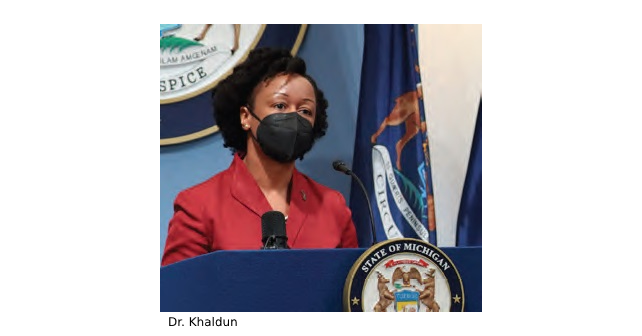
DR. KHALDUN: I think that progress is not linear. Do I believe that as a country we are in a better place than we were 100 years ago or 50 years ago? Absolutely. There’s no question. Think about my 97-year-old grandmother, who just passed away recently, may she rest in peace. She was orphaned at 6, lost both of her parents and was raised by her 11 siblings. She talked to me a lot about picking cotton. She never got past 6th grade, and you know, she came to Detroit for a better life with one of her older siblings, and she walked miles to clean other people’s homes and take care of their children while she had her own children at home. That’s the opportunity that she had, and she managed. I forgot how much it was, but somebody gave her and my grandfather a small amount of money to buy their house in an all-white neighborhood in Detroit. She made a life for herself there, and I’m benefiting from her hard work. My life will never be as challenging as hers was.

You Might Also Like
  • EM Physician Appointed to COVID-19 Health Equity Task Force
  • How a Texas Emergency Physician Lives and Works Down Under
  • Emergency Physician Finds Career Calling In Coaching, Motivating
Explore This Issue
ACEP Now: Vol 43 – No 10 – October 2024

Have we made progress? Absolutely. But like I said, progress is not linear. If you look back through history, there have always been ebbs and flows. This work of health equity, the core work of it, is not new. It has been around for decades. Now it’s called different things, right? I think progress has been made. I think the challenge is to get beyond, as a society, the rhetoric and speeches. How do we get to the point where you embed that health equity lens into how you make decisions, how you look at data, how your policies impact people who might have been left behind. But I’m optimistic that there are many people, a lot of expertise, a lot of folks who want to do this work well. We just have to kind of stay the course and do the work.

DR. TERRY: There are people, some of whom are colleagues, suggest that health equity and focusing on things like social determinants of health are not in our lane as physicians – that we should just focus on the Science of medicine, the pathophysiology – taking care of patients in that way and leave the rest up the social workers or community activists. What would your response be to that?

Dr. KHALDUN: Everyone has their own reason for why they went into medicine or emergency medicine. I don’t pretend to speak for everyone. But I know I certainly went into medicine because I wanted to help people be healthier. We know that most things that make people unhealthy have nothing to do with what we do inside the walls of an emergency department. And we also know that for many of our patients, especially as emergency physicians, we are the only touch point. And there are all kinds of reasons for that. It’s not ideal, but it’s a fact. For many of our patients, the health care system has failed them.

Pages: 1 2 3 4 5 | Single Page

Topics: Dr. Joneigh S. KhaldunEquityhealth equityHealth InequityLeadership

Related

  • ACEP4U: the ACEP/CORD Teaching Fellowship

    November 4, 2025 - 0 Comment
  • ACEP Announces Michael Fraser, PhD, MS, CAE, as Executive Director

    October 28, 2025 - 0 Comment
  • Get to Know ACEP’s Leadership

    October 21, 2025 - 0 Comment

Current Issue

ACEP Now: November 2025

Download PDF

Read More

No Responses to “This Emergency Physician Leader Works on Patients and Policy”

Leave a Reply Cancel Reply

Your email address will not be published. Required fields are marked *


*
*


Wiley
  • Home
  • About Us
  • Contact Us
  • Privacy
  • Terms of Use
  • Advertise
  • Cookie Preferences
Copyright © 2025 by John Wiley & Sons, Inc. All rights reserved, including rights for text and data mining and training of artificial technologies or similar technologies. ISSN 2333-2603
