Logo

Log In Sign Up |  An official publication of: American College of Emergency Physicians
Navigation
  • Home
  • Multimedia
    • Podcasts
    • Videos
  • Clinical
    • Airway Managment
    • Case Reports
    • Critical Care
    • Guidelines
    • Imaging & Ultrasound
    • Pain & Palliative Care
    • Pediatrics
    • Resuscitation
    • Trauma & Injury
  • Resource Centers
    • mTBI Resource Center
  • Career
    • Practice Management
      • Benchmarking
      • Reimbursement & Coding
      • Care Team
      • Legal
      • Operations
      • Quality & Safety
    • Awards
    • Certification
    • Compensation
    • Early Career
    • Education
    • Leadership
    • Profiles
    • Retirement
    • Work-Life Balance
  • Columns
    • ACEP4U
    • Airway
    • Benchmarking
    • Brief19
    • By the Numbers
    • Coding Wizard
    • EM Cases
    • End of the Rainbow
    • Equity Equation
    • FACEPs in the Crowd
    • Forensic Facts
    • From the College
    • Images in EM
    • Kids Korner
    • Medicolegal Mind
    • Opinion
      • Break Room
      • New Spin
      • Pro-Con
    • Pearls From EM Literature
    • Policy Rx
    • Practice Changers
    • Problem Solvers
    • Residency Spotlight
    • Resident Voice
    • Skeptics’ Guide to Emergency Medicine
    • Sound Advice
    • Special OPs
    • Toxicology Q&A
    • WorldTravelERs
  • Resources
    • ACEP.org
    • ACEP Knowledge Quiz
    • Issue Archives
    • CME Now
    • Annual Scientific Assembly
      • ACEP14
      • ACEP15
      • ACEP16
      • ACEP17
      • ACEP18
      • ACEP19
    • Annals of Emergency Medicine
    • JACEP Open
    • Emergency Medicine Foundation
  • About
    • Our Mission
    • Medical Editor in Chief
    • Editorial Advisory Board
    • Awards
    • Authors
    • Article Submission
    • Contact Us
    • Advertise
    • Subscribe
    • Privacy Policy
    • Copyright Information

This Emergency Physician Leader Works on Patients and Policy

By Aisha T. Terry, MD, MPH, FACEP | on October 11, 2024 | 0 Comment
Leadership Spotlight
  • Tweet
  • Click to email a link to a friend (Opens in new window) Email
Print-Friendly Version

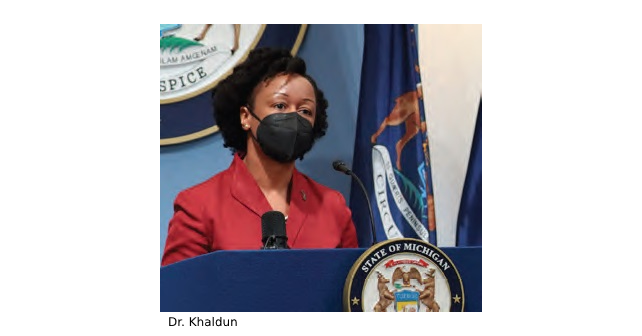
DR. KHALDUN: There are some things that you learn, at least that I’ve learned in my career, which is when you get into leadership roles, the important thing is not your technical knowledge. The important things are often how you inspire and lead teams, how you address problems, how you determine what’s urgent, what’s not urgent, what’s important, what’s not important. It’s also how you build a team, how you manage a budget, how you work through change. In my roles, I’ve done that and then some. Those are similar things that I do at CVS Health. That’s what leadership is.

You Might Also Like
  • EM Physician Appointed to COVID-19 Health Equity Task Force
  • How a Texas Emergency Physician Lives and Works Down Under
  • Emergency Physician Finds Career Calling In Coaching, Motivating
Explore This Issue
ACEP Now: Vol 43 – No 10 – October 2024

Yes, I’m in a company that is publicly traded now, right. It is a little different; how you engage is a little different. It’s also a company with 300,000 colleagues and businesses within the company. Things move very fast, so it’s fun. My ER doc self loves different things.

DR. TERRY: Did you seek out these roles, or were you sought after for the roles you’ve had?

DR. KHALDUN: What I’ve always sought out is an opportunity to be helpful. I sought out, of course, the fellowship at George Washington University because I had this itch where I wanted to get more training and understanding of health policy, and how I could be helpful for my career. I serendipitously was asked to be in those roles in in the city of Baltimore, city of Detroit, for the state of Michigan. But throughout my career I’ve taken chances and leaps. I’ve taken jobs where there was no job description where I wasn’t quite sure exactly what I was going to be doing, but I knew the true north of this seems to be an opportunity where I can potentially do some good and work with great people. And it is not lost on me that, as a Black woman from Detroit, I was behind the scenes doing operations but also trying to lead the masses of people. What it meant for there to be a woman of color in that role, and working on operations but also working behind the scenes on policies and decisions that were being made. I feel like I made an impact, and it matters that there’s diversity in the room when policies are being made.

DR. TERRY: You’ve spent your entire career trying to push the needle, certainly in your role in Michigan during the pandemic and pushing for positive change when it comes to health inequities. In the pandemic, there was amplification around how certain communities were impacted compared to others. Do you think we’re making progress when it comes to closing the gaps?

Pages: 1 2 3 4 5 | Single Page

Topics: Dr. Joneigh S. KhaldunEquityhealth equityHealth InequityLeadership

Related

  • ACEP4U: the ACEP/CORD Teaching Fellowship

    November 4, 2025 - 0 Comment
  • ACEP Announces Michael Fraser, PhD, MS, CAE, as Executive Director

    October 28, 2025 - 0 Comment
  • Get to Know ACEP’s Leadership

    October 21, 2025 - 0 Comment

Current Issue

ACEP Now: November 2025

Download PDF

Read More

No Responses to “This Emergency Physician Leader Works on Patients and Policy”

Leave a Reply Cancel Reply

Your email address will not be published. Required fields are marked *


*
*


Wiley
  • Home
  • About Us
  • Contact Us
  • Privacy
  • Terms of Use
  • Advertise
  • Cookie Preferences
Copyright © 2025 by John Wiley & Sons, Inc. All rights reserved, including rights for text and data mining and training of artificial technologies or similar technologies. ISSN 2333-2603
