

Screening for Suicide Risk in Emergency Departments
Starting in 2010, The Joint Commission recommends all medical patients in hospitals be screened for suicide risk. Although “at-risk” patients may be seen in primary care or inpatient settings, for more than 1.5 million youth, the emergency department is their only point of contact with a health care provider. Screening in the emergency department may also be more acceptable to patients and their families and, in many cases, is nondisruptive to workflow.
Explore This Issue
ACEP Now: Vol 38 – No 05 – May 2019In 2012, three pediatric emergency departments developed a brief instrument for the emergency department. The Ask Suicide-Screening Questions tool recommends asking four less-specific questions before moving to the all-important, “Are you having thoughts of killing yourself right now?” More information about the Ask Suicide-Screening Questions tool may be found on the National Institute of Mental Health website at www.nimh.nih.gov/labs-at-nimh/asq-toolkit-materials.
Risk Reduction
The CDC has developed a conceptual framework for the prevention and local containment of suicide clusters.13 The recommendations advocate for a coordinated interdisciplinary approach led by a community coordinating committee composed of representatives from the school district, municipal government, mental health services, medical facilities, emergency medical services, academia, clergy, parent organizations, survivor support groups, and the media. Emergency departments should coordinate with the community coordinating committee to ensure timely patient referral for appropriate counseling.
When suicide is the cause of death of an emergency department patient, the attending emergency physician may have an opportunity to shape media coverage. Whenever possible, emergency physicians communicating with reporters should sensitize them to the problem of suicide contagion and remind or familiarize them with the CDC’s recommended reporting best practices designed to prevent additional deaths.
Teen Suicide Resources
National resources are available to assist communities in providing support to those affected by adolescent suicide. Nonprofit organizations have focused resources on the increasing incidence of cyberbullying and on disadvantaged youth. States also have online resources available that contain a wealth of information. There is a list on resources with links at www.acep.org/SuicideContagionInAdolescents.
References
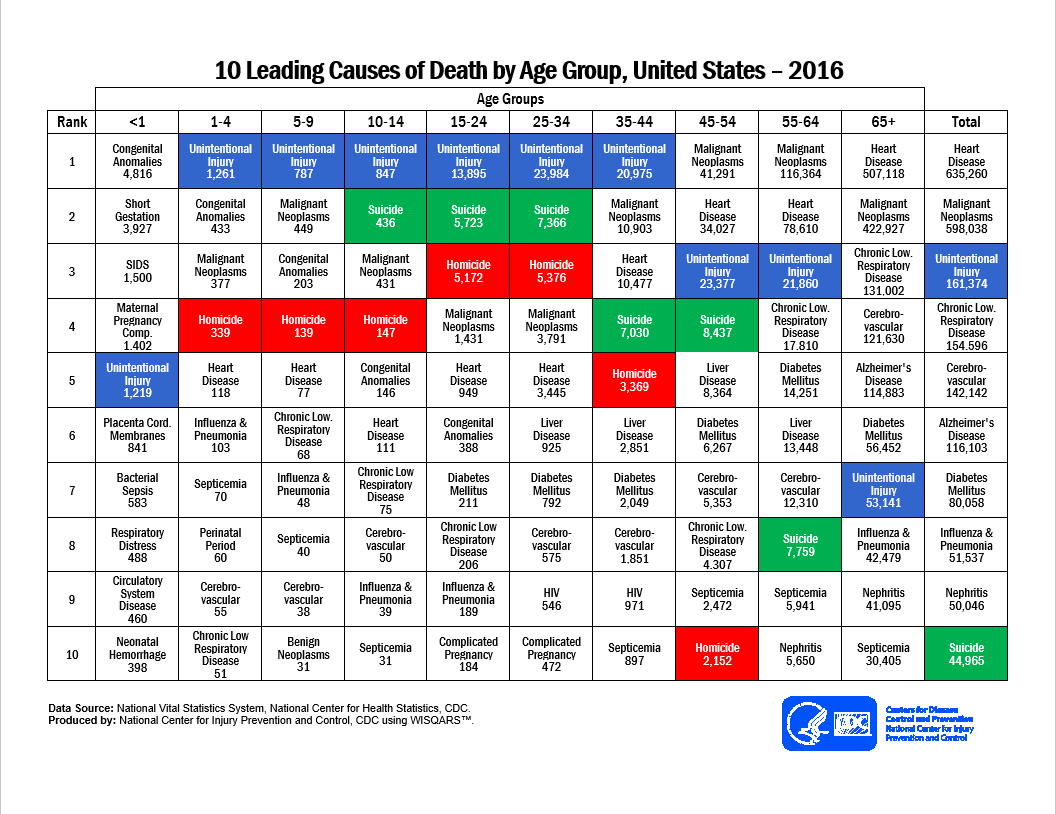
- 10 leading causes of death by age group, United States–2016. Centers for Disease Control and Prevention website. Accessed April 16, 2019.
- 2016, United States suicide injury deaths and rates per 100,000. Fatal injury reports 1981-2016. Centers for Disease Control and Prevention website. And data generated by the WISQARS fatal injury reports, national, regional and state, 1981-2017. Accessed and generated on April 15, 2018.
- Youth risk behavior surveillance system results: suicide-related behaviors. Centers for Disease Control and Prevention website. Accessed April 16, 2019.
- Ting SA, Sullivan AF, Boudreaux ED, et al. Trends in US emergency department visits for attempted suicide and self-inflicted injury, 1993-2008. Gen Hosp Psychiatry. 2012;34(5):557-565.
- Joiner TE. The clustering and contagion of suicide. Curr Dir Psychol Sci. 1999;8(3):89-92.
- Zonfrillo MR, Melzer-Lange M, Gittelman MA. A comprehensive approach to pediatric injury prevention in the emergency department. Pediatr Emerg Care. 2014;30(1):56-62.
- NanayakkaraS, Misch D, Chang L, et al. Depression and exposure to suicide predict suicide attempt. Depress Anxiety. 2013;30(10):991-996.
- Kann L, Kinchen S, Shaklin SL, et al. Youth risk behavior surveillance–United States, 2013. MMWR Suppl. 2014;63(4):1-168.
- Robertson L, Skegg K, Poore M, et al. An adolescent suicide cluster and the possible role of electronic communication technology. Crisis. 2012;33(4):239-245.
- Stack S. Media coverage as a risk factor in suicide. J Epidemiol Community Health. 2003;57(4):238-240.
- Pirkis J, Blood RW. Suicide and the media. Part I: reportage in nonfictional media. Crisis. 2001;22(4):146-154.
- Caruso K. Stop saying ‘committed suicide.’ Say ‘died by suicide’ instead. Suicide.org website. Accessed April 16, 2019.
- O’Carroll PW, Mercy JA, Steward JA, et al. CDC recommendations for a community plan for the prevention and containment of suicide clusters. MMWR Suppl. 1988;37(6):1-12.
Pages: 1 2 3 | Single Page



No Responses to “The Suicide Contagion in Adolescents: What’s Emergency Medicine’s Role?”