
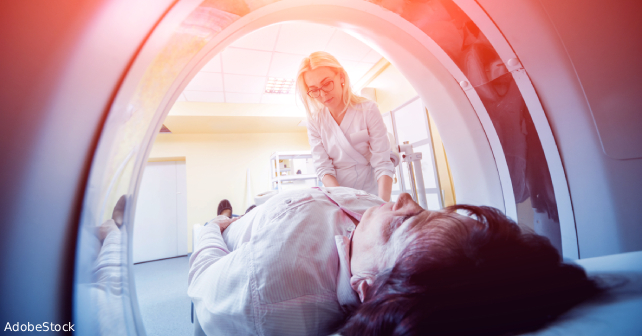
To mitigate the risks associated with CT radiation, emergency physicians must balance the benefits of rapid imaging with judicious clinical judgment. The current trend toward increased imaging driven by clinical scoring systems,15 artificial intelligence–assisted decision tools,16 and workflow pressures should not supplant fundamental diagnostic skills. A thorough history and physical examination,17 coupled with careful clinical reasoning, remain essential safeguards against overreliance on imaging. When appropriate, alternative modalities such as X-ray18,19 or ultrasonography20-22 should be considered.
Explore This Issue
ACEP Now: December 2025 (Digital)Of course, system-level factors, including staffing shortages,23,24 fears of malpractice,25 and challenges communicating diagnostic uncertainty26 contribute to the pervasive use of CT in emergency care.1,27,28 Nonetheless, the increasing availability of diagnostic technologies must not replace sound clinical judgment. Both clinicians and artificial intelligence systems are prone to bias and error,16,29 reinforcing the need for thoughtful application rather than indiscriminate use.
Efforts to reduce unnecessary CT imaging in the ED have been underway for years,30,31 and continued progress depends on clinician engagement. First, greater discretion should be exercised when ordering abdominopelvic CT scans, the region most strongly associated with projected CT-induced cancers (approximately 39,100 cases).5 Second, clinicians should rely on other diagnostic tools such as ultrasonography, X-ray, MRI, or laboratory studies when feasible.18-22,32-34 Third, consideration of alternatives such as observation with serial examinations, expert consultation with specialists, and focused differential diagnoses to minimize radiation exposure to unnecessary body regions must be done.
At a system level, greater transparency with radiation risk when ordering scans,35 dashboards displaying a practitioner’s imaging usage,36 and increasing radiation science education at the undergraduate and graduate medical education level should be considered.35-37 Reinforcing these strategies and revisiting prior initiatives to curtail avoidable imaging31,38 can help reduce ionizing radiation exposure, limit radiation-related cancer risk, and uphold our commitment to both the immediate and long-term well-being of patients.
Chinonso A. Nwakama, BS, is a third-year MD-PhD student at the Icahn School of Medicine at Mount Sinai. He studiedNeuroscience and History at the University of Minnesota – Twin Cities. For his PhD, Chino is researching neurodegeneration in the context of Opioid Use Disorder in the lab of Dr. Yasmin Hurd.
Dr. Bess M. Storch , MD, is an emergency medicine physician at Mount Sinai West-Morningside Hospitals in New York City. She is the co-director of the pre-clerkship clinical skills curriculum and the evidence-based medicine curriculum at the Icahn School of Medicine at Mount Sinai.
Dr. Ugo A. Ezenkwele, MD, MPH, FACEP, is a professor of emergency medicine at the Icahn School of Medicine at Mount Sinai and system vice chair for Strategic Community Engagement and Development for the Department of Emergency Medicine, Mount Sinai Health System. A nationally recognized leader in health equity, diversity, and emergency medicine operations, he has led transformative initiatives in clinical excellence, workforce development, and community engagement, earning multiple national awards for leadership and inclusion.
Pages: 1 2 3 4 | Single Page



One Response to “The Renewed Necessity of Robust Clinical Judgment in CT Scan Utilization”
December 14, 2025
Perry Cox, MDIf I miss something that could have been identified on a CT, the first question in a deposition will be “would a CT have identified this finding.” The answer will be “yes,” and it will be a very short case from there. The day I get sued for someone’s cancer because I ordered a CT scan is the day I will change my practice regarding advanced imaging.
I, and most docs, would love to practice evidence based medicine, but the entire system seems determined to push us in the opposite direction.