
Second, we should measure what matters. Equity-sensitive outcomes (e.g., activation times, patient trust, follow-up rates) must be tracked alongside traditional quality metrics. Numbers tell stories, and without them, inequities remain invisible.
Explore This Issue
ACEP Now: February 2026 (Digital)Third, we must teach history. Incorporate historical lessons such as Freedom House into curricula not as a sidebar, but as an important case study in how equity and excellence reinforce each other. When I share this story with learners, they see that innovation is not only technical, but also social.
Fourth, we must model inclusive care. In daily practice, cultural humility, respect, and advocacy are as essential as technical skills. Freedom House succeeded because its crews embodied empathy as much as clinical competence.
Finally, we must publish and preserve. Equity-driven innovations must be documented and shared. We are fortunate that those who worked with Freedom House told their stories; in my own small way, I have tried to share them here.
Freedom House was not a nostalgic blip. It was a blueprint, showing that excellence in medicine can emerge from opening doors to those once excluded. As clinicians, we inherit that legacy.
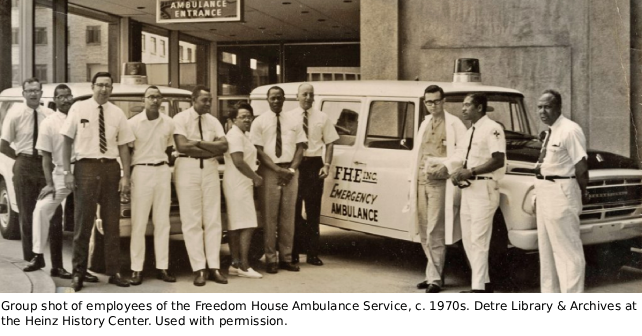
I think often of the Freedom House medics, men once dismissed as “unemployables” who became pioneers of modern paramedicine. Their story reminds me that the most transformative changes in medicine can come from investing in those who have been ignored and daring to do what has never been done; that is, from thinking outside the box.
Remembering Freedom House is more than history, it is a call to action for the profession of healers. If we fail to protect equity-driven pathways, we risk not only injustice but also the stagnation of clinical innovation.
Freedom House is not just a story. It is a standard. And it is ours to uphold.

Dr. Kosoko is an associate professor at the University of Texas Health Science Center at Houston and a dual board‑certified emergency physician in Emergency Medicine and Pediatric Emergency Medicine with training in global health. Her academic interests include equity‑focused medical education, case‑based learning, and the development of practical clinical tools for emergency care across the age spectrum.
References
- Clark J, Bryant J. Short Stuff: Freedom House Ambulance Services [podcast]. iHeartRadio; February 17, 2021. Accessed August 29, 2025. https://www.iheart.com/podcast/105-short-stuff-30006080/episode/freedom-house-ambulance-service-77875511/
- National Academy of Sciences, National Research Council, Committee on Trauma and Committee on Shock. Accidental death and disability: The Neglected Disease of Modern Society. Washington, DC. National Academy of Sciences–National Research Council; 1966.
- Hazzard K. American Sirens: The Incredible Story of the Black Men Who Became America’s First Paramedics. New York: Hachette Books; 2022.
- Kellermann, A. America’s First Paramedics Were Black.Their Achievements Were Overlooked for Decades. Healthforce Center at the University of California San Francisco. 2022. Available at: https://healthforce.ucsf.edu/news/americas-first-paramedics-were-black-their-achievements-were-overlooked-decades. Accessed August 29, 2025.
- Corry M, Keyes C, Page D. Reviving Freedom House: How the storied ambulance company has been reborn. JEMS. 2013;38(3):70–75.
- Caroline NL. Medical Care in the Streets. JAMA. 1977;237:43–46.
Pages: 1 2 3 4 | Single Page


No Responses to “The Historic Freedom House and the Roots of Modern EMS Systems”