
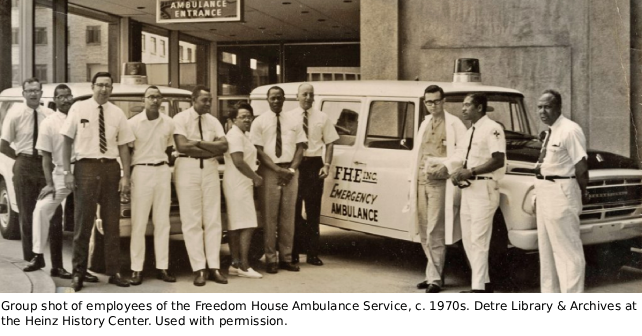
The results were transformative. Trainees moved from intermittent, low-skilled labor into salaried EMT roles, and many later earned degrees in nursing, public health, or medicine.3 Their skills proved transferable, opening doors to broader health careers and diversifying the health care workforce.4 Just as importantly, the presence of Black paramedics fostered trust: Residents who had once hesitated to call white-staffed police or funeral home ambulances embraced Freedom House crews, likely improving activation times and cooperation on scene.3
Explore This Issue
ACEP Now: February 2026 (Digital)The clinical outcomes were impressive. In its first year, Freedom House operated five ambulances, responded to nearly 6,000 calls, and transported more than 4,600 patients, including 366 with life-threatening conditions.5 Data collected by Safar’s team estimated that more than 200 lives had been saved.4 Freedom House paramedics performed endotracheal intubation, administered intravenous medications, and transmitted ECG telemetry to receiving hospitals, interventions that were groundbreaking at the time but are now routine in out-of-hospital medicine.6
The curriculum later served as the foundation for the first national paramedic training standards and helped shape enduring protocols in United States EMS systems.6
By 1975, Freedom House was absorbed into Pittsburgh’s new citywide EMS bureau. Framed as a consolidation effort, the transition imposed written exams outside the Freedom House curriculum, reassigned crews, and disqualified individuals with prior criminal records. Within a year, only five of the original medics remained employed.
History is sobering. A system that had proven itself to be clinically excellent was dismantled under the guise of neutrality. The lesson is clear: Equity-driven innovation can transform care, but it can also be erased when policy shifts toward “colorblind” neutrality.
That lesson feels urgent now. Since January 2025, federal directives have dismantled DEI programs, banned race-conscious funding, and stripped equity language from health care mission statements. DEI offices have been shuttered across hospitals and universities.
For clinicians, the implications are immediate: fewer pathways for underrepresented trainees, less culturally concordant care, and the risk of returning to exclusionary practices that undermine trust and outcomes. The destruction of DEI infrastructure risks recreating the very conditions that necessitated Freedom House in the first place.
What can practicing physicians and health care professionals do in this climate? Freedom House offers a framework that remains strikingly relevant.
First, we must protect mentorship pipelines. Sponsoring trainees from diverse backgrounds and advocating for structured pathways in medicine are not abstract ideals, they are practical necessities. In my own experience, I have seen mentorship transform individuals once dismissed as “unemployables” into leaders.
Pages: 1 2 3 4 | Single Page


No Responses to “The Historic Freedom House and the Roots of Modern EMS Systems”