
In medical training, we are all sure to learn the names of Alexander Fleming or Jonas Salk. From the work of Hippocrates to that of Michael Ellis DeBakey, medicine prides itself on its history, and we strive to document it. Yet, how many physicians are familiar with buildings and institutions named after Daniel Hale Williams, Charles R. Drew, Rosalind Franklin, or Carlos Juan Finlay compared to the accomplishments of these trailblazers?
Explore This Issue
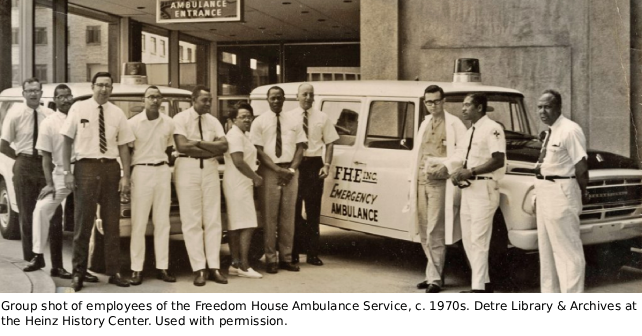
ACEP Now: February 2026 (Digital)I was humbled to discover the story of Pittsburgh’s Freedom House Ambulance Service not in a lecture hall, small group, clinic, conference, or textbook, but in an entertainment podcast called Stuff You Should Know.1 Freedom House was the first organized public emergency medical service in the United States, staffed by Black workers who were among the first Americans formally trained in out-of-hospital medicine. This group laid the groundwork for the modern EMS systems we rely on today.
That realization unsettled me. The protocols we take for granted were born from a deliberate investment in a marginalized workforce and community. To omit that context is to miss the deeper lesson: excellence in medical care and equity are not opposites but mutually reinforcing.
In 1966, the National Academy of Sciences–National Research Council published Accidental Death and Disability: The Neglected Disease of Modern Society, sounding a national alarm about the unacceptable state of out-of-hospital care in the United States.2 At the time, most ambulance crews were untrained, unregulated, and focused on rapid transport rather than providing any medical intervention.
In Pittsburgh’s Hill District, a predominantly Black neighborhood where disparities were especially stark, a coalition of activists, philanthropists, and physicians responded by founding the Freedom House Ambulance Service in 1967. Already renowned for his work in developing modern cardiopulmonary resuscitation (CPR), Dr. Peter Safar designed the clinical framework for Freedom House, outfitting ambulances as mobile intensive care units. He was joined by Dr. Nancy Caroline, who developed the paramedic curriculum, served as the service’s first medical director, and later authored the first textbook for out-of-hospital care.
Freedom House’s origin story carried an explicit mandate: to modernize out-of-hospital care, to empower a marginalized workforce, and to serve an underserved community.
In 1967, the program recruited 25 men from Pittsburgh’s Hill District. Many of them were Vietnam War veterans, most were unemployed, and many were without a high school diploma. Once labeled “unemployables” by the city,these recruits entered a groundbreaking program that combined clinical rigor with social investment. 2 Over 32 weeks, they completed 300 hours of hospital-based instruction in anatomy, physiology, advanced first aid, CPR, ECG interpretation, defibrillation, and defensive driving. Alongside this training, they pursued GED coursework and life skills coaching, followed by nine months of supervised field internships in the Hill District and Oakland neighborhoods. This educational model was unprecedented; deliberately designed to build both workforce capacity and community trust.3
Pages: 1 2 3 4 | Single Page


No Responses to “The Historic Freedom House and the Roots of Modern EMS Systems”