The First National Congress on Emergency Medical Care, held in Kyiv, Ukraine, in September 2025, marked a turning point for the nation’s out-of-hospital and emergency medicine community. For the first time, the entire spectrum of emergency care — out-of-hospital practitioners, hospital teams, civil disaster agencies, and military medical staff — gathered with international partners to shape the future of Ukrainian emergency medicine.
Explore This Issue
ACEP Now: December 2025 (Digital)The Congress opened with an address by Judith Tintinalli, MD, MS, FACEP, one of the most prominent figures in American emergency medicine and editor of the field’s landmark textbook, “Tintinalli’s Emergency Medicine: A Comprehensive Study Guide,” in its ninth edition worldwide. Her presence symbolized both global solidarity and the recognition that Ukraine’s system transformation is now part of the international conversation. “The emergency medicine situation in Ukraine requires a training model that is a hybrid of civilian and military emergency medicine, and that must fit the heart and soul of the Ukrainian people,” she told ACEP Now.
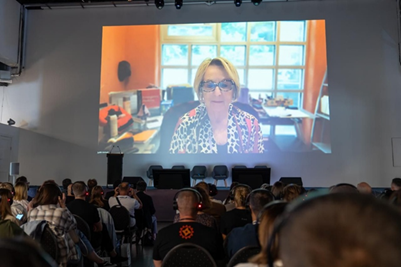
Alongside Dr. Tintinalli, American, Canadian, Japanese and European faculty joined Ukrainian colleagues in plenary sessions, workshops, and policy discussions. Their involvement emphasized a central theme: Ukraine’s integration with Western and NATO standards of emergency and disaster medicine.
A Conference in Wartime
The context made this event unlike any other. The Congress convened under the daily reality of missile alerts, drone strikes, and sustained attacks on medical facilities, ambulances, and health care personnel.
The Pochayna Event Hall was selected for its large capacity and built-in safety measures. Redundant power systems, encrypted communications, and clearly marked air-raid shelters ensured the program could proceed even during alerts — a logistical achievement that mirrored the incredible resilience that Ukrainian emergency responders demonstrate every day.
Led by Dr. Vitaliy Krylyuk, director of Ukraine’s National Center for Emergency Care and Disaster Medicine and ACEP’s liaison to Ukraine, the organizing team gathered representatives from every sector of emergency health care. Delegates included the Ministries of Health and Internal Affairs, the State Emergency Service, the Armed Forces Medical Service, universities, non-governmental organizations, and international partners, such as the World Health Organization.
“The reform of Ukraine’s emergency medical care system began in 2019. Despite the start of the full-scale Russian–Ukrainian war in 2022, this reform has continued successfully,” said Dr. Krylyuk. “Over the past three years, many changes have been implemented, adapted to the realities of war. We are ready to cooperate with international partners and committed to introducing the best global practices in Ukraine. The Congress provides an opportunity to unite the efforts of key experts in this field.”
Scientific and Educational Highlights
The program blended plenary lectures, workshops, and simulation competitions.
Plenary topics included trauma system design, mass-casualty triage, hemorrhage control (including out-of-hospital blood transfusion), advanced airway management, prolonged access to blood products in damage-control resuscitation, telemedicine support for out-of-hospital providers, and evacuation and repatriation protocols.
“Preparing for mass casualty management solely in the hospital setting is an insufficient focus on saving the living,” Dr. Tintinalli added. “Control of bleeding, splinting, and recognizing danger signs of treatable injuries can be taught to the community. Expansion of the community mass-training concept is a fundamental base of the only population-based specialty — emergency medicine.”
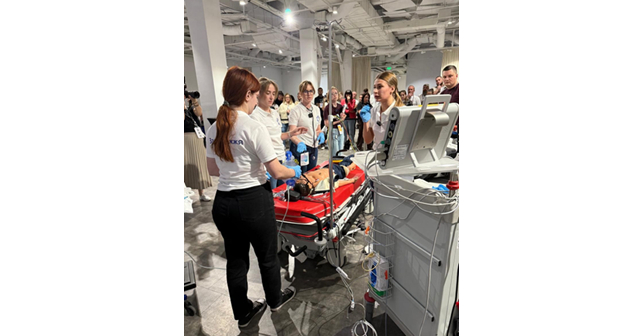
Workshops allowed Ukrainian teams to practice advanced interventions under the supervision of international faculty. Simulation competitions between regional ambulance and disaster teams tested readiness, promoted collaboration, and highlighted areas for improvement. Policy sessions focused on outcome metrics, data systems, and the development of national registries to track performance and guide system-level change.
Themes and Innovations
Several unifying themes emerged: Resilience under fire, Civil-military interoperability, International knowledge exchange, and Commitment to outcome-driven practice.
Ukrainian clinicians continue to innovate and adapt despite targeted strikes on the health care system. Ministries, emergency services, and the armed forces collaborated to design a model of care aligned with Western standards of care and NATO doctrine.
Faculty from the U.S., Canada, Japan and Europe provided insights into Western models of pre- and in-hospital emergency medicine but also learned from Ukraine’s unique experience in disaster and frontline medicine.
New protocols emphasized measurable reductions in preventable death and disability, supported by data collection and continuous quality improvement.
“International partnership is critically important for the development of Ukraine’s emergency medical care system. Our main goal is to build a system like those already established in EU countries and the United States,” explained Dr. Krylyuk. “At the same time, Ukraine’s experience is unique…[it] can help the world better understand how to respond to prolonged emergencies under limited resources. Such cooperation benefits everyone: It allows us not only to evaluate the quality of emergency medical care, but also to continuously improve it.”
Significance for Ukraine and Beyond
This Congress positioned Ukraine as a leader in out-of-hospital and disaster medicine. It institutionalized Ukraine’s voice in shaping NATO-aligned emergency systems and showcased the moral courage of clinicians working under direct threat. Next steps include developing national clinical guidelines, expanding data-driven outcome monitoring, and establishing this Congress as a recurring event. Regional workshops could extend lessons across the country, ensuring that both frontline teams and policymakers continue to benefit.
The First National Congress on Emergency Medical Care in Kyiv was more than a medical meeting — it was a statement of resilience, an operational and scientific laboratory, and the beginning of a new chapter for Ukraine’s integration into the international emergency medicine community.
John Quinn, MD, MPH, PhD, EMT-P, practices emergency medicine in the United Kingdom and has volunteered regularly in Ukraine since 2014. He is an international ACEP member with a particular focus on disaster medicine and global health.
Tim Bongartz, MD, MS, CTropMed, is an assistant professor of emergency medicine and internal medicine at Vanderbilt University Medical Center with a research focus on operational medicine and combat casualty care. He works at the intersection of academic medicine and military readiness, developing innovative approaches to trauma care and battlefield resuscitation.


No Responses to “The First National Congress on Emergency Medical Care in Ukraine”