
Busting Bougie Myths
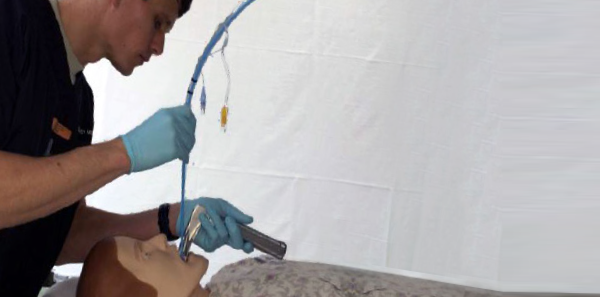
One common misconception about bougie use is that it should only be used when the vocal cords are not visualized (ie, Cormack-Lehane views IIB, III, and IV). However, it can be argued that without routine use of a bougie, the likelihood of success (ie, proper placement of bougie, confirmation with tracheal clicks or hold-up sign, railroading of tube over the bougie without dislodgment from the trachea, etc.) with a true grade III or IV view may be much less likely. There is literature that points to this. In a study looking at the National Emergency Airway Registry III (NEAR III), a bougie was used in only 3.5 percent of intubations and had a somewhat dismal success rate of 69 percent.10 Unfortunately, there are no data on how often tracheal clicks or the hold-up sign were used during these attempts. Some detractors of bougies report having never felt clicks while using the device. Both of these observations (the low success rate found in NEAR III and anecdotal reports of failing to detect tracheal clicks) are likely related to inadequate training and practice with the devices. In other words, using the bougie all of the time will make its benefit more likely to be noticed in the smaller number of cases where it stands to impart its greatest effect. In a sense, the BEAM trial provides some evidence for this. In that study, tracheal clicks were reported in a full 91 percent of the attempts. In fairness, that observation also obliquely highlights one of the main limitations of that trial, which is that was a single-center study conducted in a facility where bougies were already in routine use during first-pass attempts. This likely bolstered its findings but also provides support for the idea that practice with the bougie can lead to such positive outcomes. So one might view this less as a limitation and more as an indication of the utility of teaching and promoting the use of a bougie.
Explore This Issue
ACEP Now: Vol 40 – No 02 – February 2021Another concern some have is that the bougie contributes to an increased risk of airway trauma and pneumothorax. There is no high-quality evidence that supports this claim. In fact, the BEAM trial showed no significant difference in rates of pneumothorax, lip laceration, bleeding from the oropharynx or perilaryngeal structures, dental trauma, or direct airway injury between the bougie and stylet groups. A letter in Anesthesia in 2003 found just a single case report of trauma unambiguously caused by a bougie.11 The case involved a patient who required reintubation due to an expanding hematoma soon after undergoing glossectomy and radical neck dissection, and the patient suffered a pharyngeal wall perforation.12 Meanwhile, stylet use itself (which many anesthesiologists shun) and multiple attempts to intubate have both been associated with airway trauma.13,14 If bougies lead to increased first-pass success, it follows that a corresponding fewer number of intubation attempts would lower the risk of airway trauma.
Pages: 1 2 3 4 | Single Page



2 Responses to “The Bougie as an Airway Savior”
March 9, 2021
Robert ProsserAMEN. I’be been practicing EM for 45 years, residency trained, etc, trauma centers, etc. Especially in this covid where rapid intubation is important to limit contamination, it can be slipped in much quicker than the tube and reduces failures. In C-L IV, you can slip the bougie under the epiglottis without seeing the cords and feel the clicking to know the location is correct. I ALWAYS have one open when I intubate, and usually use one. Every time I have had to help someone with a failed airway, this has saved us.
March 14, 2021
George KovacsThanks for your nice review. Your readers may be interested in recently released deep dive into bougie use we posted to support our AIME programming (A Canadian, National airway program) that has been supporting airway learners and practitioners for over 20 years. It’s all FOAM materials:
1. Laryngoscopy and Bougie Pearls and Pitfalls Part 1: When and Why:
https://www.youtube.com/watch?v=hjF0KgQVLvA&ab_channel=AIMEAirway
2. Laryngoscopy and Bougie Pearls and Pitfalls Part 2: How to
https://www.youtube.com/watch?v=CfU_ZdJ9hzA&ab_channel=AIMEAirway
Note website is being modified