Logo

Log In Sign Up |  An official publication of: American College of Emergency Physicians
Navigation
  • Home
  • Multimedia
    • Podcasts
    • Videos
  • Clinical
    • Airway Managment
    • Case Reports
    • Critical Care
    • Guidelines
    • Imaging & Ultrasound
    • Pain & Palliative Care
    • Pediatrics
    • Resuscitation
    • Trauma & Injury
  • Resource Centers
    • mTBI Resource Center
  • Career
    • Practice Management
      • Benchmarking
      • Reimbursement & Coding
      • Care Team
      • Legal
      • Operations
      • Quality & Safety
    • Awards
    • Certification
    • Compensation
    • Early Career
    • Education
    • Leadership
    • Profiles
    • Retirement
    • Work-Life Balance
  • Columns
    • ACEP4U
    • Airway
    • Benchmarking
    • Brief19
    • By the Numbers
    • Coding Wizard
    • EM Cases
    • End of the Rainbow
    • Equity Equation
    • FACEPs in the Crowd
    • Forensic Facts
    • From the College
    • Images in EM
    • Kids Korner
    • Medicolegal Mind
    • Opinion
      • Break Room
      • New Spin
      • Pro-Con
    • Pearls From EM Literature
    • Policy Rx
    • Practice Changers
    • Problem Solvers
    • Residency Spotlight
    • Resident Voice
    • Skeptics’ Guide to Emergency Medicine
    • Sound Advice
    • Special OPs
    • Toxicology Q&A
    • WorldTravelERs
  • Resources
    • ACEP.org
    • ACEP Knowledge Quiz
    • Issue Archives
    • CME Now
    • Annual Scientific Assembly
      • ACEP14
      • ACEP15
      • ACEP16
      • ACEP17
      • ACEP18
      • ACEP19
    • Annals of Emergency Medicine
    • JACEP Open
    • Emergency Medicine Foundation
  • About
    • Our Mission
    • Medical Editor in Chief
    • Editorial Advisory Board
    • Awards
    • Authors
    • Article Submission
    • Contact Us
    • Advertise
    • Subscribe
    • Privacy Policy
    • Copyright Information

Studies Bolster Statin Use for Emergency Department Patients With Suspected Acute Coronary Syndrome

By W. Richard Bukata, MD | on September 13, 2016 | 0 Comment
Unconventional Wisdom
  • Tweet
  • Click to email a link to a friend (Opens in new window) Email
Print-Friendly Version

Only one of the studies was ED-based and involved only 171 patients, comparing 80 mg versus 10 mg of atorvastatin. The ED study had an extraordinarily low rate of major adverse cardiac events, and so the difference between high- and low-dose statins didn’t achieve statistical significance. However, the rate was substantially lower in the high-dose statin group (5.8 percent versus 10.6 percent). It’s hard to conceive that such an underpowered study would be performed. But it suggests that high-dose statins are beneficial (and this perhaps could have been proven if the study was adequately powered).

You Might Also Like
  • How to Manage Suspected Non–ST-Elevation Acute Coronary Syndrome
  • Is That Chest Pain Unstable Angina or Acute Coronary Syndrome?
  • Less-Aggressive Approach to Non-ST Segment Elevation Acute Coronary Syndromes Advised
Explore This Issue
ACEP Now: Vol 35 – No 09 – September 2016

Here’s the result of the meta-analysis: Statin loading was associated with a reduction in the combined endpoint of death, spontaneous MI, and target vessel revascularization (odds ratio, 0.59; 95 percent CI, 0.38–0.92, P = 0.02), but this benefit was observed only in the subgroup of patients undergoing PCI for NSTE-ACS (odds ratio, 0.18; P = 0.0005).

Well, isn’t an NSTEMI an AMI? Even though there are prior studies suggesting value of statin loading in non-AMI patients, I’m happy with the conclusion of this paper. Although often a trap, a pathophysiologic argument would suggest that if statins work in NSTEMIs, why would they not work in STEMIs?

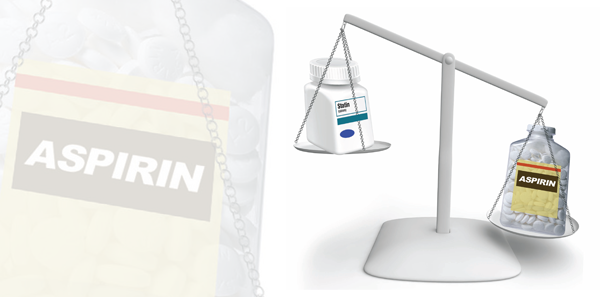
So here are the options: Wait 10 years for the definitive randomized controlled trial demonstrating that all suspected ACS patients be given a single high-dose statin in the emergency department and potentially allow 10 years’ worth of patients to receive no benefit, or begin now based on the evidence presented above. No one will be hurt if you do give a single dose of statins—some ACS patients will likely be helped.

So be courageous and take this article to the cardiology committee at your hospital and tell them that you want to do this. Like giving aspirin, it’s also a no-brainer.


dr_bukataDr. Bukata is the executive editor of Emergency Medical Abstracts and a clinical professor of emergency medicine at the Keck School of Medicine of USC in Los Angeles.

Pages: 1 2 3 | Single Page

Topics: CardiovascularED Critical CareEmergency DepartmentEmergency MedicineEmergency PhysicianPatient CarePractice ManagementQuality & SafetyStatin

Related

  • Florida Emergency Department Adds Medication-Dispensing Kiosk

    November 7, 2025 - 1 Comment
  • Q&A with ACEP President L. Anthony Cirillo

    November 5, 2025 - 0 Comment
  • Let Core Values Help Guide Patient Care

    November 5, 2025 - 0 Comment

Current Issue

ACEP Now: November 2025

Download PDF

Read More

No Responses to “Studies Bolster Statin Use for Emergency Department Patients With Suspected Acute Coronary Syndrome”

Leave a Reply Cancel Reply

Your email address will not be published. Required fields are marked *


*
*


Wiley
  • Home
  • About Us
  • Contact Us
  • Privacy
  • Terms of Use
  • Advertise
  • Cookie Preferences
Copyright © 2025 by John Wiley & Sons, Inc. All rights reserved, including rights for text and data mining and training of artificial technologies or similar technologies. ISSN 2333-2603