Logo

Log In Sign Up |  An official publication of: American College of Emergency Physicians
Navigation
  • Home
  • Multimedia
    • Podcasts
    • Videos
  • Clinical
    • Airway Managment
    • Case Reports
    • Critical Care
    • Guidelines
    • Imaging & Ultrasound
    • Pain & Palliative Care
    • Pediatrics
    • Resuscitation
    • Trauma & Injury
  • Resource Centers
    • mTBI Resource Center
  • Career
    • Practice Management
      • Benchmarking
      • Reimbursement & Coding
      • Care Team
      • Legal
      • Operations
      • Quality & Safety
    • Awards
    • Certification
    • Compensation
    • Early Career
    • Education
    • Leadership
    • Profiles
    • Retirement
    • Work-Life Balance
  • Columns
    • ACEP4U
    • Airway
    • Benchmarking
    • Brief19
    • By the Numbers
    • Coding Wizard
    • EM Cases
    • End of the Rainbow
    • Equity Equation
    • FACEPs in the Crowd
    • Forensic Facts
    • From the College
    • Images in EM
    • Kids Korner
    • Medicolegal Mind
    • Opinion
      • Break Room
      • New Spin
      • Pro-Con
    • Pearls From EM Literature
    • Policy Rx
    • Practice Changers
    • Problem Solvers
    • Residency Spotlight
    • Resident Voice
    • Skeptics’ Guide to Emergency Medicine
    • Sound Advice
    • Special OPs
    • Toxicology Q&A
    • WorldTravelERs
  • Resources
    • ACEP.org
    • ACEP Knowledge Quiz
    • Issue Archives
    • CME Now
    • Annual Scientific Assembly
      • ACEP14
      • ACEP15
      • ACEP16
      • ACEP17
      • ACEP18
      • ACEP19
    • Annals of Emergency Medicine
    • JACEP Open
    • Emergency Medicine Foundation
  • About
    • Our Mission
    • Medical Editor in Chief
    • Editorial Advisory Board
    • Awards
    • Authors
    • Article Submission
    • Contact Us
    • Advertise
    • Subscribe
    • Privacy Policy
    • Copyright Information

Strategies to Reduce Ambulance Patient Offload Delays

By Marc Gautreau, MD, MBA, and Clayton Kazan, MD | on December 7, 2024 | 1 Comment
Opinion
  • Tweet
  • Click to email a link to a friend (Opens in new window) Email
Print-Friendly Version

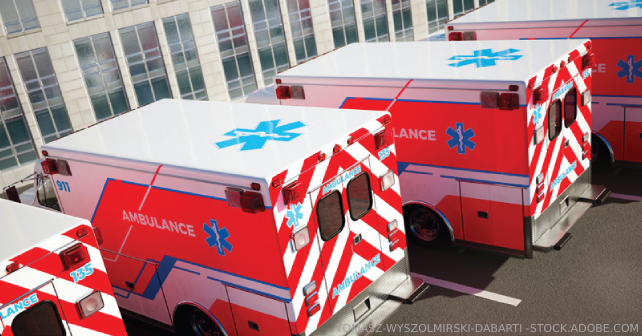
Holding ambulances is almost always an unnecessary and dysfunctional response to hospital boarding and ED overcrowding that has tragically become normalized. EMS represents a shared community resource that must remain available and accessible, at all times, to respond to critically ill and injured residents. We cannot allow the dysfunction of hospital boarding to consume the EMS system and flow out into the streets.

You Might Also Like
  • Hospital-Wide Strategies for Reducing Inpatient Discharge Delays and Boarding
  • Research Shows Ambulance Equipment Contaminated with MRSA
  • Is Uber the New Ambulance? Financial Concerns May Be Driving This Trend for Many Emergency Department Patients
Explore This Issue
ACEP Now: Vol 43 – No 12 – December 2024

Dr. Gautreau is clinical professor of emergency medicine, director of pre-hospital care, director of EMS Fellowship at Stanford University School of Medicine, and medical director at the San Jose Fire Department.



Dr. Kazan is assistant clinical professor of emergency medicine at the David Geffen School of Medicine at UCLA, Charles Drew University, and medical director at the Los Angeles County Fire Department.

Pages: 1 2 3 | Single Page

Topics: Ambulanceambulance delaysAmbulance Diversionambulance holdBoardingOvercrowding

Related

  • November 2025 News from the College

    November 4, 2025 - 0 Comment
  • Pediatric Patients in Acute Mental Health Crisis Face Long Waits

    August 29, 2025 - 0 Comment
  • Hospital at Home Is Here: An Opportunity EM Can’t Ignore

    August 25, 2025 - 0 Comment

Current Issue

ACEP Now: November 2025

Download PDF

Read More

One Response to “Strategies to Reduce Ambulance Patient Offload Delays”

  1. January 8, 2025

    Ev Reply

    Unfortunately, in many hospitals we’ve already exhausted all of those options and still getting overwhelmed with ambulance traffic. I work in a 30 bed ED that typically has 20+ boarded inpatients and still receiving 30+ ambulances on a typical night shift. We already utilize most of these strategies (other than waiting room/triage MD/PA as we don’t have the staffing to add that as an extra shift). No option to go on divert as the nearest alternate ED is 2 hours away. Lots of pressure from hospital leadership and above to get the ambulances offloaded, so often a CTAS 3 who arrived by ambulance 2 hours ago will get roomed prior to a CTAS 2 who has been in the waiting room for 6-8 hours. Sometimes we’ll even take over the ambulatory care clinic behind the ED to house admitted inpatients at night so we have space to see ED patients, but we have to vacate by morning.

    To me another solution that needs to be included is that the entire hospital shares the burden. More patients need to be boarded in hallways upstairs so that the ED can still function. Ten inpatient ward nurses having to take one extra patient each is certainly safer than and the ED nurses having to carry 4-5 inpatients in addition to taking care of a full load of ED patients who are being stuffed into every nook, cranny, and broom closet in the ED.

Leave a Reply Cancel Reply

Your email address will not be published. Required fields are marked *


*
*


Wiley
  • Home
  • About Us
  • Contact Us
  • Privacy
  • Terms of Use
  • Advertise
  • Cookie Preferences
Copyright © 2025 by John Wiley & Sons, Inc. All rights reserved, including rights for text and data mining and training of artificial technologies or similar technologies. ISSN 2333-2603