Logo

Log In Sign Up |  An official publication of: American College of Emergency Physicians
Navigation
  • Home
  • Multimedia
    • Podcasts
    • Videos
  • Clinical
    • Airway Managment
    • Case Reports
    • Critical Care
    • Guidelines
    • Imaging & Ultrasound
    • Pain & Palliative Care
    • Pediatrics
    • Resuscitation
    • Trauma & Injury
  • Resource Centers
    • mTBI Resource Center
  • Career
    • Practice Management
      • Benchmarking
      • Reimbursement & Coding
      • Care Team
      • Legal
      • Operations
      • Quality & Safety
    • Awards
    • Certification
    • Compensation
    • Early Career
    • Education
    • Leadership
    • Profiles
    • Retirement
    • Work-Life Balance
  • Columns
    • ACEP4U
    • Airway
    • Benchmarking
    • Brief19
    • By the Numbers
    • Coding Wizard
    • EM Cases
    • End of the Rainbow
    • Equity Equation
    • FACEPs in the Crowd
    • Forensic Facts
    • From the College
    • Images in EM
    • Kids Korner
    • Medicolegal Mind
    • Opinion
      • Break Room
      • New Spin
      • Pro-Con
    • Pearls From EM Literature
    • Policy Rx
    • Practice Changers
    • Problem Solvers
    • Residency Spotlight
    • Resident Voice
    • Skeptics’ Guide to Emergency Medicine
    • Sound Advice
    • Special OPs
    • Toxicology Q&A
    • WorldTravelERs
  • Resources
    • ACEP.org
    • ACEP Knowledge Quiz
    • Issue Archives
    • CME Now
    • Annual Scientific Assembly
      • ACEP14
      • ACEP15
      • ACEP16
      • ACEP17
      • ACEP18
      • ACEP19
    • Annals of Emergency Medicine
    • JACEP Open
    • Emergency Medicine Foundation
  • About
    • Our Mission
    • Medical Editor in Chief
    • Editorial Advisory Board
    • Awards
    • Authors
    • Article Submission
    • Contact Us
    • Advertise
    • Subscribe
    • Privacy Policy
    • Copyright Information

It’s OK to Order Angiography Tests for Strangulation Victims

By Gary Gaddis, MD, PhD, FACEP, FIFEM; William M. Green, MD, FACEP; Ralph Riviello, MD, MS, FACEP; and Michael L. Weaver, MD, FACEP, CDM | on June 14, 2022 | 0 Comment
Features
  • Tweet
  • Click to email a link to a friend (Opens in new window) Email
Print-Friendly Version

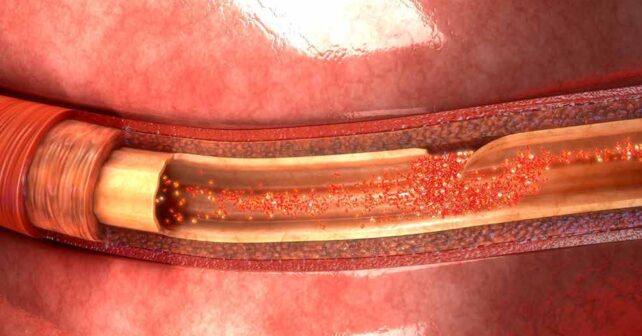
Zuberi et al., also raised concerns about radiation exposure from CTA of the neck, toward justifying a denial of a request for such imaging.1 We have not found data regarding the lifetime risk for cancer as a consequence of neck CTA, but the lifetime cancer risk of CTA imaging of the head has been estimated as 26 per million patients, or .0026 percent.8 In contrast, four significant vascular injuries were observed among the 142 patients studied.  Thus, the prevalence of a significant vascular injury was 2.8 percent, which is three orders of magnitude greater than the approximate estimated risk of subsequent death due to radiation exposure. We believe most patients would accept this risk of angiography, because subsequent prevention of a stroke after heparinization would favorably impact their quality of life.

You Might Also Like
  • How to Evaluate Strangulation
  • Fast Angiography Not Helpful for Unconscious Cardiac Arrest Patients Without STEMI
  • Can Ottawa Subarachnoid Hemorrhage Rule Determine which Headache Patients Need More Tests?
Explore This Issue
ACEP Now: Vol 41 – No 06 – June 2022

In fairness to the authors, we commend them for their persistence in studying this rare disease. Zuberi et al. required more than seven years to accrue their 142 patients at a single Level 1 trauma center, because relatively few of these patients present each year. 

Also, the authors attempted to identify strongly predictive history or physical examination clues toward the diagnosis of vascular injury. However, their predictive efforts were doomed from the start, given the approximately three percent prevalence of vascular injury among patients. Generally, if a highly accurate clinical predictive rule is to be derived, one needs at least 10 patients with the disease for which testing is done per each step or element in the rule.9 Thus, if a rule has four predictive variables, one needs at least 40 patients with a dissection to have been included in the study.  With a prevalence of dissections in the range of three percent, this would require enrollment of 1,333 strangled patients. If all of the 11 variables in the TISP’s guideline were represented in a rule, the authors would have needed to enroll more than 3,600 patients. Clearly, to assemble a sufficient cohort of patients to enable development of a clinical prediction rule would have required many more patients than Zuberi et al., could possibly have enrolled.

While we salute Zuberi et al., for their achievement of assembling their sizable case series, we find fault with the interpretation of their findings. Emergency physicians should not let themselves be persuaded against ordering appropriate angiographic imaging of strangled patients by the authors’ relatively low frequency of detection of significant findings.1 Emergency physicians should gently remind radiologists of their mutual obligations under EMTALA, as well as their ethical duty to the patient, when they press for the provision and performance of appropriate post-strangulation angiographic imaging, even if the radiologist attempts to dissuade.

Pages: 1 2 3 4 | Single Page

Topics: AngiographyCervical-Artery DissectionImaging & UltrasoundStrangulation

Related

  • ACEP’s October 2025 Poll: How Often Do You Read Your Own X-Rays?

    September 30, 2025 - 0 Comment
  • Case Report: Rapid Diagnosis of Acute Aortic Dissection with POCUS

    June 11, 2025 - 1 Comment
  • How Well Does Ultrasound Detect Volvulus in Infants?

    September 5, 2024 - 0 Comment

Current Issue

ACEP Now: November 2025

Download PDF

Read More

No Responses to “It’s OK to Order Angiography Tests for Strangulation Victims”

Leave a Reply Cancel Reply

Your email address will not be published. Required fields are marked *


*
*


Wiley
  • Home
  • About Us
  • Contact Us
  • Privacy
  • Terms of Use
  • Advertise
  • Cookie Preferences
Copyright © 2025 by John Wiley & Sons, Inc. All rights reserved, including rights for text and data mining and training of artificial technologies or similar technologies. ISSN 2333-2603
